
It was in the press: Outside of Official Negotiations, Gender Justice Gains Momentum on the Streets of Belém.
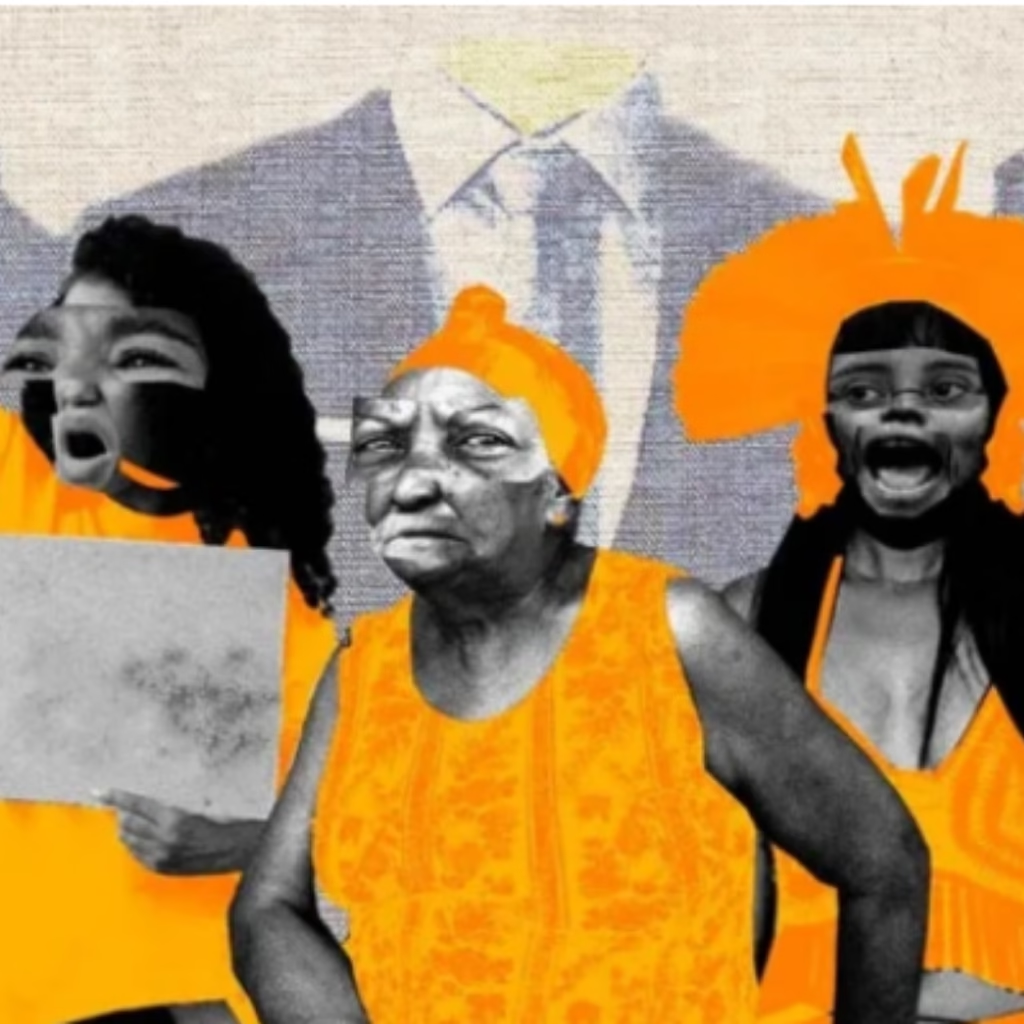
The People’s Summit delivers a 15-point charter to the COP30 president and reaffirms that climate justice depends on feminist justice By: Flávia Santos Edited by: Jane Fernandes and Mariana Rosetti Translated by Diego Lopes/Verso Tradutores “We want a world with feminist justice,” calls the People’s Charter, a document produced by the People’s Summit, which brought together more than 23,000 accredited individuals between November 12 and 16 at the Federal University of Pará (UFPA). The document, which contains 15 points summarizing the demands of popular movements worldwide to address the climate crisis, was delivered to Ambassador André Corrêa do Lago, president of COP30. This text is the result of a mobilization that began in 2024, bringing together social movements, Indigenous Peoples, quilombola communities, artisanal fishermen, and civil society organizations to press for effective political participation in climate discussions. While gender justice remains on the margins of official climate conference negotiations, as AzMina showed in this text, the story is different on the streets of Belém. The final document was constructed during the conference, through six axes of convergence that guided the debates and assemblies throughout the week. One of them was specifically dedicated to “popular feminism and women’s resistance in the territories,” where it was discussed how the climate crisis impacts women’s lives differently and how they have been protagonists in the solutions built. “Our bodies and territories are targets of attacks, but they are also spaces of care and strength. We are the ones who sustain life in the communities, who take care for the land, the water, the home, and the elders. To speak of climate justice is also to speak of gender, race, and territorial justice,” declared Ediene Kirixi, a leader of the Munduruku People, at one of the events of the People’s Summit. The other five themes addressed living territories and food sovereignty; historical reparations and the fight against environmental racism; a just and inclusive transition; democracy and the internationalism of peoples; and just cities and urban peripheries. Women in the letter The People’s Charter was delivered to the COP ambassador on Sunday (17). In the introduction, the text addresses the reality of women and states that “peripheral communities are the most affected by extreme weather events and environmental racism” and face “a lack of justice and reparation actions, especially for women, young people, impoverished and non-white people.” Environmental racism is the term used to describe how Black, Indigenous, and impoverished populations are disproportionately exposed to environmental risks—living closer to landfills, landslide areas, floodplains, and contaminated zones. Data shows that these communities are the ones that most often lose their homes, livelihoods, and, frequently, their lives when a climate disaster occurs. In this context, women bear the additional burden of ensuring the survival of their families amidst the chaos. According to the 2022 Demographic Census, the population residing in favelas and urban communities in Brazil is 51.7% female. Among the 15 demands, the ninth is entirely dedicated to care work, which is predominantly performed by women. “The work of reproducing life must be made visible, valued, understood for what it is—work—and shared within society as a whole and with the State.“ Furthermore, the letter emphasizes that women should not be held individually responsible for caregiving. Not coincidentally, among those who report performing paid domestic and/or care work, 93.9% are women and only 6.1% are men, according to the Institute for Applied Economic Research (IPEA). The block concludes by saying: “We want a world with feminist justice, autonomy and participation of women.” Throughout the document, the word “women” appears five times. In addition to the points mentioned, it appears in the list of groups that participated in the construction of the Summit, in the denunciation of the Palestinian genocide that primarily affects children, women, and the elderly, and again in the section on female autonomy and participation. Issues that intersect with gender issues The letter touches upon issues that intersect with gender discussions, even when it doesn’t explicitly name them. “There is no life without nature. There is no life without ethics and care work. That is why feminism is a central part of our political project ,” the document states. Food sovereignty, for example, is one of the main points of the charter and is directly related to women’s lives. The concept is based on the premise that it is not enough to have sufficient food, but it is necessary to have control over how that food is produced, distributed, and consumed. It is the peasant, Indigenous, and quilombola women who safeguard the heirloom seeds, maintain the traditional knowledge of planting and harvesting, and ensure the communities’ food supply. When the letter calls for “popular agrarian reform and the promotion of agroecology to guarantee food sovereignty,” it is directly addressing the work of these women. A just transition is another term that appears prominently in the document. The proposal is not simply to replace fossil fuels with renewable sources while maintaining the same logic of exploitation. A just energy transition requires that workers and affected communities be the protagonists of the process and have their rights guaranteed. Mobilization in the streets The gender agenda was also present on the streets of Belém, the host city of COP30. Last Saturday (15), the Global March for Climate Justice brought together thousands of people. The demonstration brought together Indigenous Peoples, quilombolas, artisanal fishermen, students, trade unionists and activists from more than 60 countries. Kirtana Chandrasekaran, executive director of Friends of The Earth International said she went to the march in solidarity with the thousands of people participating. “We know we are fighting against the same system. The capitalist, patriarchal, colonialist, and imperialist system that is causing the crisis we see today,” she commented. On Sunday (16), the Summit held the “Banket-rally” in República Square, with free distribution of food to the population. The event, organized in partnership with food security movements, served meals prepared with food that would be discarded by fairs and supermarkets, but which was still
It was reported in the press: The People’s Summit, a parallel event to COP 30, ends in Belém.
Published in the press: COP 30 – People’s Summit comes to an end in Belém.

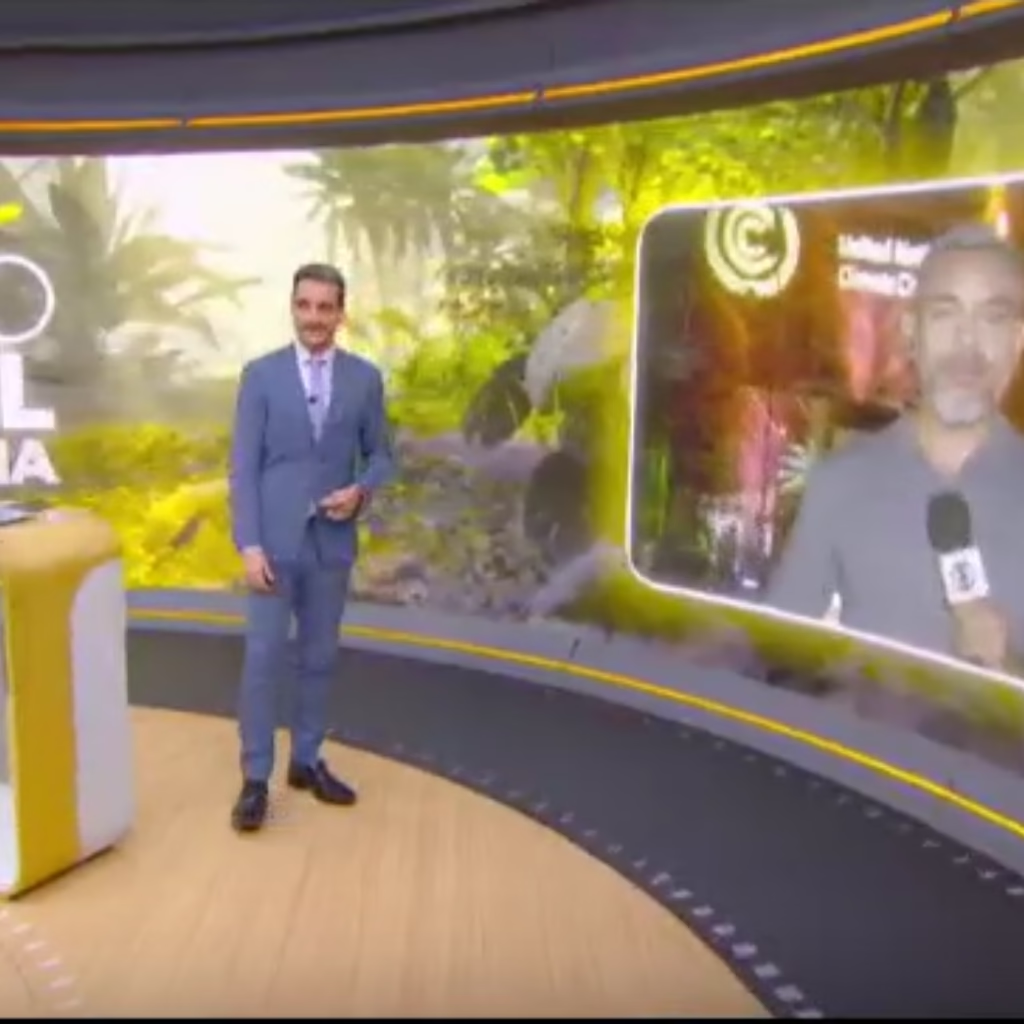
Civil society organizations released a letter with demands that will be presented during the final week of the United Nations Climate Change Conference. By Fantástico11/16/2025 – 9:05 pm The People’s Summit, a parallel event to COP 30, came to an end on Sunday (16) in Belém. Civil society organizations released a letter with demands that will be presented during the final week of the United Nations Climate Change Conference. Read the Fantástico report through the link HERE.
It was in the press: Social Movements and COP 30, Transnational Alliances Against the Global Extractivist Offensive.
El Informante There is movement in Belém. On one side, the official summit, inaugurated yesterday (10N, ed.), where for two weeks country delegations will discuss whether it is possible to advance in terms of mitigation, financing, and mechanisms for a just transition. On the other, a variety of forums and meeting spaces where organizations and social groups from around the world, especially from Latin America, are trying these days to revitalize internationalist alliances to counter the global extractivist offensive. From the outset, in fact, not much can be expected. For far too long, COPs have become a ritual in which the world’s main leaders parade — on this occasion, not even those from the highest-emitting countries China, the United States, India, and Russia — to issue solemn statements of intent and promote new mechanisms that, once the summits end, fail to translate effectively into timelines and budgets. “We do not want this to be a market of ideological products; we want something serious, with decisions that are implemented,” stated the president of Brazil, acknowledging the inefficiencies of some of the dynamics that oscillate between greenwashing and business as usual. In the latter space, however, renewed hopes can be found. In parallel to COP 30 — or one could even say in contrast to the official summit — a multitude of Indigenous, environmental, labor, feminist, and anti-capitalist organizations and movements gathered in Belém to rethink strategies and reactivate international bodies to strengthen processes of struggle and resistance. Drawing on the experience of the World Social Forum and efforts to overcome the contradictions of progressive governments, the aim is to promote processes of community self-organization that renew the social fabric and look beyond the constant demands placed on the State. People’s summits People’s summits have been held for thirty years alongside the climate summits promoted by the United Nations. This year, after three COP editions held in countries characterized by the criminalization of the right to protest and the persecution of activists and organizations critical of governments, social groups have renewed their interest in this forum. At the People’s Summit in Belém, representatives from more than 1,200 organizations from around the world will gather around a shared goal “to strengthen popular mobilization and converge on unified agendas socio-ecological, anti-patriarchal, anti-capitalist, anti-racist, and anti-colonial, based on human rights, and a manifesto”. The national summit will begin tomorrow, November 12, with a river march of more than 200 boats carrying around 5,000 people. Through this nautical caravan, the movements participating in this alternative summit “joined forces to make their condemnation echo through the waters against the decisions of the ZP that perpetuate this model of territorial exploitation”. As one of the initiative’s spokespersons stated, “the waters of the Amazon carry voices that the world needs to hear those that defend life, territories, and the climate”. Dozens of talks, workshops, and assemblies taking place over four days within the People’s Summit will culminate on Saturday, November 15, with large demonstrations, followed by decentralized actions in many other countries. On Sunday the 16th, the demands of the National Summit will be presented in the plenary of the Community of Practice. At this event, the largest gathering of activists and social organizations around COP 30, one of the issues certain to be debated is the relationship between the movement and progressive governments. Just three weeks ago, the state-owned company Petrobras received authorization from the Lula government to explore oil in deep waters about 500 kilometers from the mouth of the Amazon River. In a city decorated for the occasion with thousands of colorful advertising posters emphasizing the importance of caring for the Amazon, the distance between the usual rhetoric of green capitalism and the repeatedly postponed urgency of transforming the primary export matrix will once again become evident. Yet this is by no means the only space taking place in Belém outside initiatives sponsored by the Brazilian government. From November 8 to 11, the Second Ecosocialist Meeting of Latin America and the Caribbean brought together two hundred activists from different countries to reflect, based on experiences of struggle against territorial plunder, on strategies to strengthen a common internationalist front capable of confronting the socio-ecological crisis. Likewise, from November 7 to 12, the Fourth International Meeting of People Affected by Dams took place, the result of a three-decade-long process of international coordination of community struggles against large dams and hydroelectric plants. Peoples against extractivism On a planet immersed in climate emergencies and extreme inequality created by the Capitalocene — and by policies that paint capitalism green — diverse voices of resistance to the extractivist model have come together in a coalition Peoples Against Extractivism. This space was founded in Belém on November 9 to unite and articulate movements, communities, and organizations that confront dispossession and commit to a profound transformation of a system that threatens lives and territories. This international network brings together experiences mainly from Latin America and Europe, with a determination to expand its presence on the African continent. The coalition includes local movements, Indigenous peoples, Afro-descendant and peasant communities, as well as diverse mass social organizations. All fight, from different fronts, against the same enemy the extractivist model that sustains the continuous overexploitation of common goods and the expansion of production frontiers into territories deemed “unproductive”. It is not limited to mining or oil. It also includes monocultures, agribusiness, biofuels, and mega energy projects that consolidate dependent models and generate the reprimarization of peripheral economies. For this network, extractivism is not only an economic practice but also a form of power organization within liberal democracies and a mechanism of domination that conditions community life. In this new phase of capitalist accumulation, dispossession — cynically transformed into sacrifice zones — is imposed on people and territories, now justified in the name of the energy transition. Within this militarized green capitalism, the European Union, the United States, and China compete for control of the minerals needed to sustain the economic metabolism of the capitalist core. In
It was in the press:: CIVIL SOCIETY – COP30 President Pledges to Attend Cúpula dos Povos and Present Movements’ Declaration at the Conference
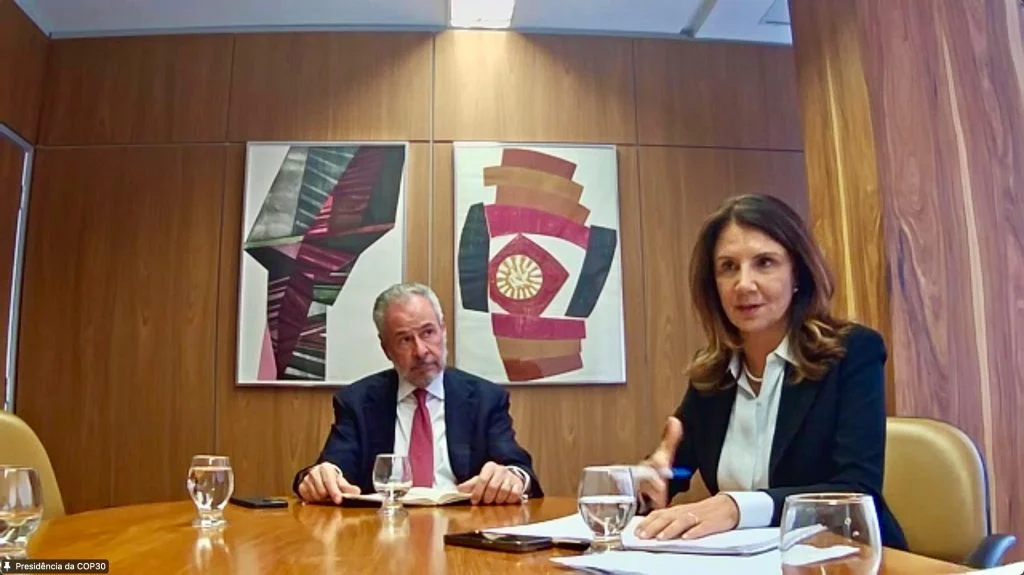
Popular movements coordinate proposals and demand meaningful participation in the climate conferenceAugust 12, 2025 – 6:00 PM, São Paulo (SP)By Editorial Team Em julho, o ato “Mutirão dos Povos” em frente ao Centro de Convenções de Belém, exigiu participação popular na COP30 – João Paulo Guimarães The president of the 30th UN Climate Conference (COP30), Ambassador André Corrêa do Lago, confirmed that he will attend the Cúpula dos Povos on November 16, the closing day of the gathering that will bring together thousands of representatives from movements, networks, and popular organizations in Belém. The commitment includes reading the Declaration of the Peoples in the official plenary—a document consolidating guidelines and actions deemed essential by movements to tackle the climate crisis. The confirmation came during a meeting on Monday, August 11, between the Cúpula’s Political Commission and COP30 representatives. The meeting was attended by Lago, the conference’s executive director Ana Toni, and leaders from national and international organizations such as Via Campesina, the Federation of Social and Educational Assistance Organizations (Fase), the Pan-Amazon Ecclesial Network (Repam), the Brazilian Committee of Human Rights Defenders, the Global Campaign to Demand Climate Justice, Friends of the Earth International, and the Movement of People Affected by Dams (MAB). COP30 President André Corrêa do Lago and Executive Director Ana Toni during a meeting with the Cúpula dos Povos Political Commission (Photo: Cúpula dos Povos/Disclosure) President Corrêa do Lago recognized the Cúpula as a legitimate space for popular movement coordination and advocated that the proposals discussed be incorporated into the official agenda. He suggested expanding integration with the conference’s action agenda and dialogue channels to include the accumulated debates and experiences of the parallel event. In addition to delivering the declaration, the organizations presented demands related to the effective participation of their leaders in official spaces, including the distribution of credentials to grassroots entities. They also requested guarantees for freedom of expression during the conference, particularly for acts in solidarity with the Palestinian people, which have faced restrictions in previous editions. The Declaration of the Peoples will be built around six thematic axes, including just transition, combating environmental racism, defending cities and vibrant peripheries, popular and food sovereignty, as well as popular feminism and women’s resistance in the territories. The Cúpula dos Povos will take place from November 12 to 16 on the campus of the Federal University of Pará, in parallel with COP30, scheduled from November 10 to 21. Edited by: Thalita Pires REPRODUCTION OF THE NEWSPAPER BRASIL DE FATO. CLICK HERE
It was in the press: COP30 – People’s Summit fights for climate justice
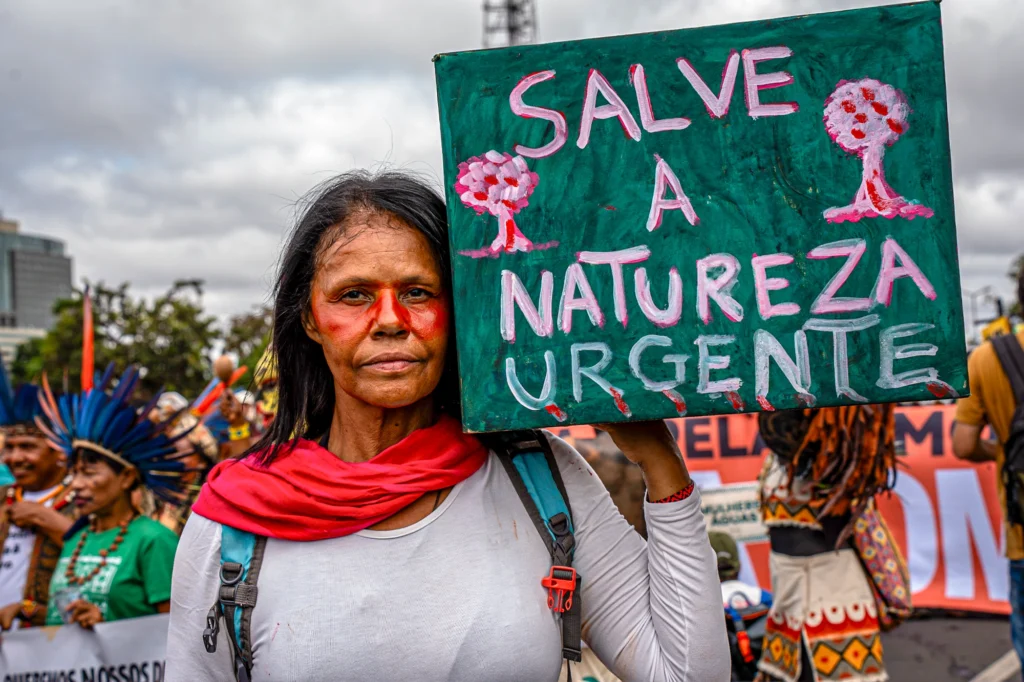
Social Movements and Traditional Communities Organize Parallel Space to the Global Climate Conference in the Amazon Jesuan XavierJune 11, 2025 With the world’s eyes on Belém (PA), host of the 30th United Nations Climate Change Conference (Conference of the Parties), COP30, taking place in November 2025, social movements, Indigenous peoples, quilombolas, riverine communities, peasants, and urban peripheral populations are organizing to break through the barrier of official negotiations and gain greater protagonism in the main international gathering on the global climate crisis. Since 2023, leaders of the so-called “excluded” have been meeting periodically to organize a space that will operate in the same location and in parallel with COP30, from November 12 to 16: the People’s Summit for Climate Justice. The organizers expect to gather around 20,000 people in this space, which will feature political, cultural, and spiritual programming. The highlight will be on November 15, with a large international mobilization planned to amplify the voices of the territories. In February 2025, social and environmental leaders from 16 countries, including France, the Philippines, Kenya, South Africa, Togo, and Ecuador, met in Rio de Janeiro for a series of preparatory meetings. The goal was to advance the construction of an agenda reflecting the realities of rural areas, forests, and urban peripheries worldwide. Speaking to Radis, Araê Cupim, member of the Movement for Popular Sovereignty in Mining (MAM) and of the People’s Summit political commission, stated that the parallel event “is indeed a space of resistance, but also of proposals. It is a response to the systematic exclusion of populations most affected by climate change.” He acknowledges the importance of the COP, but does not hold back criticism of its structure and model. “The COP is not made by us, nor for us. The negotiations are more concerned with facilitating the carbon market than listening to those truly affected by the climate crisis,” he says. “The COP is not made by us, nor for us. The negotiations are more concerned with facilitating the carbon market than listening to those truly affected by the climate crisis.”Araê Cupim March during the Free Land Camp (ATL) in Brasília (April 10) advocating for Indigenous peoples’ participation in COP30 — Photo: Juliana Duarte Climate Injustices In August 2024, around 600 organizations signed and published the People’s Summit Political Charter (https://cupuladospovoscop30.org/manifesto/). “Real solutions are urgent, and civil society worldwide must be a protagonist in all debate spaces on this agenda. COP30 needs to represent a turning point in this scenario and address the necessary actions to confront the climate crisis,” demands the document. This is not the first time COP organizers have faced a parallel space of resistance and demands. Similar initiatives occurred during Rio+20 (2012). The People’s Summit has established itself as an alternative space for critique and proposals, present in nearly all World Climate Conferences. In November, representatives of social movements and traditional populations will discuss proposals to tackle climate challenges with justice, focusing on the realities of the territories, popular sovereignty, and well-being. Over the past two years, numerous debates, meetings, and plenaries have defined four main work axes: water, territory and people’s sovereignty; climate justice; just, popular, and inclusive transition; and youth, children, adolescents, women, and LGBTQIAPN+ diversities at the center of decision-making. Currently, the People’s Summit aims to pressure and convince the Brazilian government to lead the proposal of bolder global temperature reduction targets. Since its launch at the end of 2024, the Political Charter has been delivered to the President of Brazil, Luiz Inácio Lula da Silva, to the National Operative Secretariat of COP30 (Secop), and to executive and legislative representatives. The proposals include agrarian and urban reform, incentives for a solidarity economy, protection of traditional populations, and the fight against environmental and structural racism. “Extreme climate events, droughts, floods, landslides, and false climate solutions serve to deepen inequality and environmental and climate injustices, particularly in the territories, cruelly affecting those who contributed least to the climate, ecological, and civilizational crisis,” the document states. Indigenous peoples gathered at the ATL emphasize that land demarcation and the protagonism of traditional populations should be a priority in climate and environmental debates — Photos: Juliana Duarte Living Without Destroying The Summit also advocates a zero-deforestation policy and greater accountability for large corporations. Araê expresses additional concern about the current debate on a “just energy transition.” To him, the term merely masks a continuation of extractivist logic. “We don’t believe in this proposed transition. It doesn’t change the way nature is exploited, it only intensifies it. What is at stake is justifying accumulation and the expansion of capitalism with new mineral resources,” he stresses. Another organizer, Eduardo Soares, Secretary of Articulation of the Pan-Amazon Ecclesial Network (Repam), tells Radis that representatives of religious communities will also participate actively. He is part of the Inter-Religious Tapiri, which brings together churches, ecumenical organizations, terreiro communities, Indigenous spiritualities, and other faith traditions in Brazil. “It is an ecumenical articulation that will also be present at the People’s Summit. We will discuss religious fundamentalism and defend freedom of expression and worship.” Eduardo believes it will be a unique opportunity to show the world that it is possible to live without destroying. “Our spirituality, our way of living, our relationship with the forest, the river, and other living beings—all this is part of an integral ecology. It’s not just about reducing carbon, but changing the logic that destroys,” he asserts. For him, the People’s Summit expresses territorial resistance to false market solutions. “It is a space where real life, thriving in communities, gains voice and proposes pathways,” he points out. Genuine Participation of the Territories Eduardo emphasizes the importance of this autonomous civil society space, committed to realities lived in the territories. “The Summit is born from the demands of the territories, not in a vertical way but horizontally, where communities and peoples can express impacts often caused by large corporations. Impacts that, within the COPs, are often distorted,” he argues. “Voices arise from the territories. The affected populations must
It was in the press: Traditional Peoples from Brazil and Abroad Demand Protagonism in COP30 and the Fight Against Climate Change
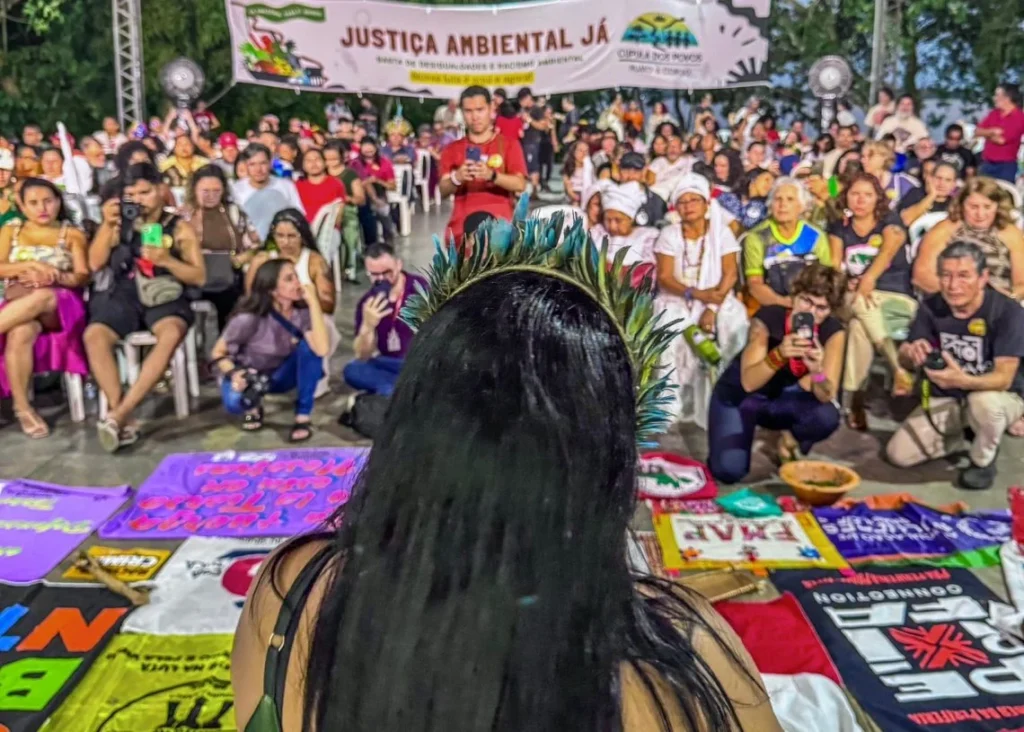
MEETING IN BELÉMTraditional Peoples from Brazil and Abroad Demand Protagonism in COP30 and the Fight Against Climate Change Over 70 Organizations Gather in Belém to Reaffirm the Protagonism of Amazonian PeoplesMay 31, 2025, 3:03 PMUpdated June 24, 2025, 2:11 PMBelém (Pará)Mariana Castro Over 70 organizations gather in Belém to reaffirm the protagonism of Amazonian peoples – Photo: Caetano Scannavino On Friday (May 30), representatives of more than 70 popular movements, organizations, and traditional peoples from 13 countries gathered in a political action held in Belém, where it was officially announced that the Federal University of Pará (UFPA) will serve as the central venue for the People’s Summit discussions during COP30. The event emphasizes the demand that Amazonian peoples be the true protagonists of the climate struggle, through listening, dialogue, and the proposal of public policies that consider traditional knowledge and lived experiences. Under the theme “From the Amazon to the World: Climate Justice Now!”, peoples from Latin America, Africa, Asia, and Europe proclaim: there is no solution to the climate crisis that does not originate with and involve Indigenous and traditional peoples. Representing Indigenous peoples of Brazil, Auricélia Arapiun, an Indigenous leader from Baixo Tapajós (PA) and member of the Coordination of Indigenous Organizations of the Brazilian Amazon (COIAB), participated in the event. “The answer is us, who have long been saying that we have the solution. If they had the solution, we would not be heading toward the end of the world, as we are today. On the contrary, at every COP the situation only worsens because we are not inside, we are not heard, and we will not be,” emphasized Auricélia. During her speech, Auricélia strongly highlighted regressive actions by the National Congress, such as the approval of Bill 2159/2021, popularly known as the “Devastation Bill,” which establishes a new framework for environmental licensing in Brazil to the detriment of traditional peoples’ rights. “What kind of COP30 do we want for Brazil if the National Congress is attacking our territories, attacking the environment, if the Devastation Bill is advancing, destroying our lands? Have they approved the regressive bill on Indigenous land demarcation? It is unacceptable that we are heading in this direction while Brazil and the Pará government position themselves as leaders in tackling the climate crisis,” Auricélia denounced. The launch of the People’s Summit territory marks the UFPA public space to reaffirm ancestral, community, and popular practices as concrete and viable paths to address the climate crisis with social justice. “This Summit plays a fundamental role in popularizing and involving the people, placing them at the center of debates, engaging them in the climate discussion, and proposing—through their concrete and real practices—the transformation of this world that belongs to everyone. And we are saying that popular participation is necessary, so that COP, the Summit, and the Brazilian government demonstrate, in fact, a commitment to change,” explained Pablo Neri, from the national leadership of the Landless Workers’ Movement (MST). People’s Summit Goes Beyond COP30 The event is part of a four-day agenda that consolidates collective strategies for the main event in November, when the Summit expects to gather around 15,000 people in Belém for an extensive program, including the participation of over 700 organizations and social networks. However, organizations emphasize that COP30 does not conclude the collective construction of the People’s Summit, which goes beyond pre-determined calendars and aims to be a space ensuring ongoing and internationalist dialogue and struggle in defense of the Amazon, its peoples, and territories. As part of the internationalist delegation, Sophie Ogutu, from Nairobi, Kenya, and member of the International Committee of the World March of Women, emphasized the importance of this space dedicated to the peoples. “Solutions for the world will never come with a pen stroke. We are here, and we have the solutions. I am very grateful to be here at the University of Pará, in this space that was given to us. And look, back in Kenya, everyone says that of all the COPs, they would most like to be at this one in Brazil, because here we have a voice, here you make space for everyone,” assured Sophie. Firmly, Denisse Chavez highlights women’s protagonism in the struggle for climate justice. Photo: Thaigon Arapiun From Peru, activist and feminist Denisse Chavez, from the group Mujeres y Cambio Climático (GIMCC), reiterates that the struggle for climate justice is inseparable from the fight for justice in all its forms. “We continue this struggle and will persist to leave a better world for our daughters and granddaughters. And we will only achieve this by demanding climate justice, gender justice, and environmental justice for all men, women, and diverse communities,” she emphasized. People’s Summit Since 1992, the People’s Summit has been a cry for resistance and justice through an autonomous space where communities most affected by the climate crisis—such as Indigenous peoples, quilombolas, traditional communities, and urban periphery residents—join forces to amplify their voices and demands. In November 2025, Brazil will host the 30th Conference of the Parties to the United Nations Framework Convention on Climate Change (COP30). In this context, over 700 organizations, networks, and collectives have joined to build a broad mobilization process so that COP in Brazil becomes a turning point in climate crisis discussions. Edited by: Rodrigo Durão Coelho Reproduction from Brasil de Fato
Published in the press: Belém hosts public act and international meeting of the People’s Summit toward COP30.
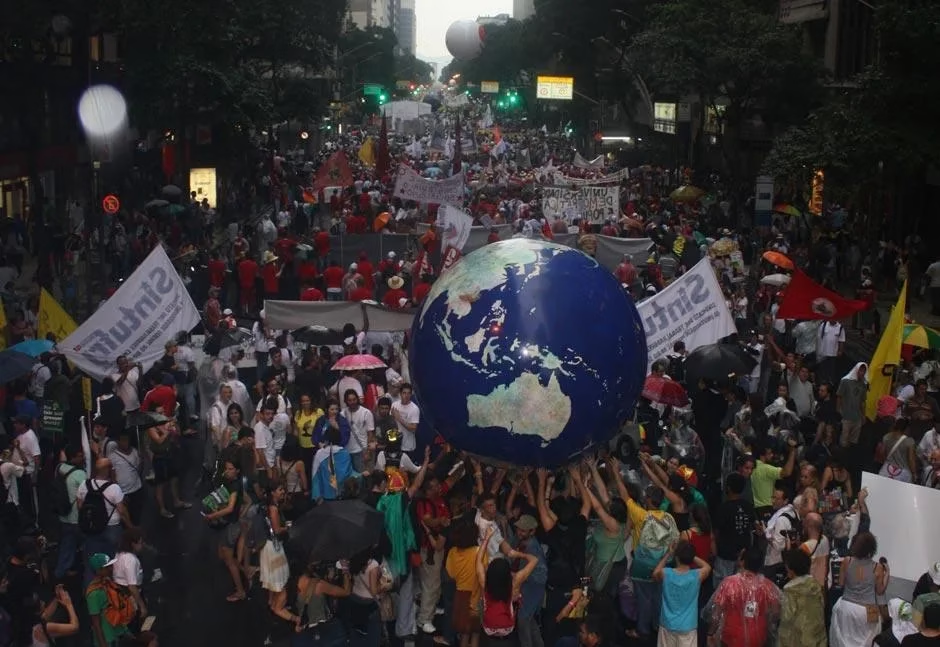
More than 60 organizations from Brazil and around the world will gather in the COP30 host city to map out strategies of global resistance and demand climate justice** By Casa NINJA Amazônia From May 30 to June 2, Belém do Pará, in the Brazilian Amazon, will become the center of a global articulation for climate justice. The city will host, for the first time, the in-person meeting of the Political Commission of the People’s Summit toward COP30, bringing together more than 60 organizations, networks and social movements from Brazil, Latin America, Africa, Asia and Europe. The agenda begins with a political act on May 30 at 4 pm at the Federal University of Pará (UFPA), under the theme “From the Amazon to the World. Climate Justice Now!” With the slogan “All rivers lead to Belém. It is time to listen to the voices of the territories. There is no future without us,” the act will be an international call to action and denunciation against environmental racism, false solutions and the climate collapse advancing over the most vulnerable territories and bodies. The mobilization takes place in a critical global context. According to the World Meteorological Organization (WMO), 2024 was the hottest year ever recorded, with a global average temperature 1.55°C above pre-industrial levels. This increase marks a worrying milestone, as it surpasses for the first time the 1.5°C limit set as a target in the Paris Agreement to avoid the worst impacts of climate change. Meanwhile, UN Conferences (COPs) continue to fail to ensure real climate finance for the most affected countries. COP29, held in Baku, approved funding far below what is needed and opened the door to loans that may further indebt the Global South. In the United States, President Donald Trump signed an executive order in January 2025 to withdraw the country from the Paris Agreement for the second time, reinforcing US isolation from global climate initiatives. In Brazil, the climate tragedy in Rio Grande do Sul, with more than 160 deaths caused by floods in 2024, highlights the absence of effective public adaptation policies. In addition, the recent progress of Bill 364/19 in the Brazilian Congress threatens Indigenous peoples, weakens environmental licensing rules and opens even more space for agribusiness and illegal mining. Across Latin America, Africa and Asia, the number of projects that, under the discourse of a “green transition,” expel traditional communities from their territories in the name of carbon offsetting and market-driven bioeconomy is increasing. Violence against environmental defenders is also rising. In 2023, 177 environmental activists were murdered worldwide, 88 of them in Latin America, according to Global Witness. Denunciations from the peripheries will expose COP30 contradictions The political act at UFPA is intended not only as a symbolic moment but as a concrete space to denounce the false solutions presented in the official COP30 forums. Leaders from different territories will show that real responses to the climate crisis are already being built in urban peripheries, traditional communities and quilombos, and that ignoring these solutions means perpetuating the problems. The Summit thus positions itself as a legitimate popular counterpoint to the institutional narrative that prioritizes large infrastructure projects and economic interests over lives in the territories. Among the cases to be denounced are those of the Vila da Barca community and the quilombola territory of Abacatal, which clearly illustrate what social and environmental movements have called environmental racism. Decisions made without consultation shift negative impacts onto Black, peripheral and vulnerable populations, while promoting a “green” image aimed at the outside world. Vila da Barca and environmental racism in the name of revitalization In Vila da Barca, one of the largest stilt-house communities in the Amazon, residents have been facing the direct impacts of the Nova Doca project, one of the urban infrastructure initiatives linked to Belém’s preparation to host COP30. Debris and sewage from wealthier neighborhoods have been dumped near the community, without dialogue or any consultation process. What is presented as revitalization has in practice meant environmental degradation, evictions and rights violations. “It is environmental racism, yes, because they only dump what is worthless in the places where we live,” says Suane Barreirinhas, a popular educator and community leader. This reality will be brought to the act as an example of the gap between the sustainability discourse promoted internationally and the concrete actions implemented in Amazonian cities. Quilombo Abacatal and the road that threatens a quilombola territory The case of the Abacatal quilombo, located in Ananindeua, will also be denounced. The community will be directly impacted by the construction of Avenida Liberdade, a 14 km highway planned to “improve urban mobility” in the Belém metropolitan region. The road will cut through areas of the quilombola territory, affecting water sources, agricultural production spaces and sites of historical and spiritual value to the community. Even after the preparation of a Quilombola Component Study, which found that 100 percent of residents oppose the project, the Pará state government moved forward without complying with ILO Convention 169, which requires free, prior and informed consultation. The violation of rights will be a central point raised by quilombola leaders at the Summit. Territories will present real solutions The experiences and denunciations shared during the act will reinforce the Summit’s purpose of exposing market-based solutions presented as sustainable and affirming ancestral, community-based and popular practices as concrete and viable paths to confront the climate crisis with social justice. Solutions are already being built in the territories in the form of agroecology, community reforestation, people-led water management, solidarity economy, and Indigenous and quilombola knowledge. Making these voices protagonists is what will give legitimacy to the transformations the Amazon and the world need. From the Amazon to the world, the peoples hold the solutions The People’s Summit proposes a territory-rooted agenda that connects climate justice struggles with historic demands such as agrarian reform, agroecology, food sovereignty, a just energy transition, and the fight against racism and climate colonialism. More than 700 organizations and social networks have joined the process since 2023,
It was in the press: Possible Future | Climate justice rally takes place this Tuesday (4) in downtown Rio de Janeiro.
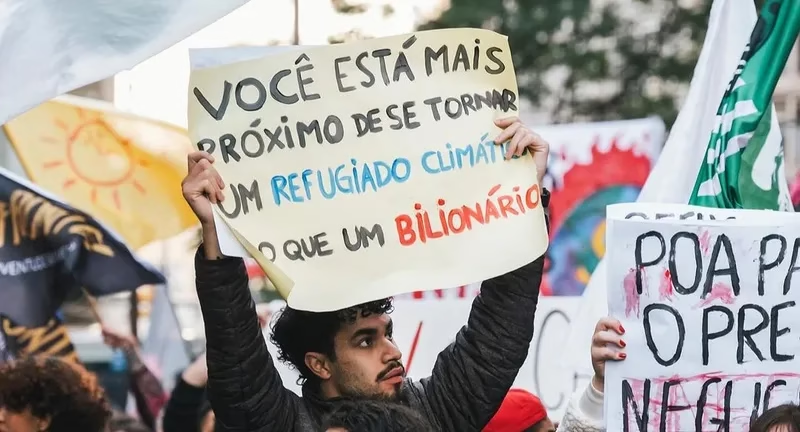
The mobilization is organized by the People’s Summit toward COP30, which will take place from November 12 to 16 in Belém, Pará. This Tuesday (4), social movements, artists, and representatives of international organizations will hold a symbolic act to highlight struggles for climate justice at Cinelândia, in downtown Rio de Janeiro, starting at 5 pm. The activity is organized by the People’s Summit toward the United Nations Climate Change Conference (COP30), which will be held in November in the city of Belém, Pará. “Our act is meant to amplify our demands regarding the advance of climate change. We are feeling these climate shifts firsthand. Developmentalist projects continue to advance through the predatory exploitation of our natural assets, and this exploitation has brought disastrous consequences for us, especially for peoples of the Global South. The drought in the Amazon and the floods in southern Brazil are real examples of the acceleration of climate change,” explains Izabely Miranda, from the national leadership of the Movement for Popular Sovereignty in Mining (MAM), one of the organizations responsible for the Summit, in a statement to Brasil de Fato. The People’s Summit mobilization reconnects with Brazil’s history of hosting major international gatherings alongside organizing processes led by civil society, such as Rio 92 and Rio+20. In addition to the rally, the People’s Summit is holding a series of meetings throughout this week with representatives from countries in Africa, Asia, the Americas, and Europe. According to the organizers, the meeting’s main objective is to map out a collective mobilization strategy to strengthen global advocacy in climate negotiations, build a roadmap and calendar over the next 10 months of joint actions to increase influence on the Conference’s goals and outcomes, and engage local populations, Indigenous peoples, original and traditional communities, and those affected by extreme climate events in this process. “It is urgent that large multinational corporations, responsible for various socio-environmental crimes, be held accountable. If they do not stop, we will reach the point of no return. It is essential to prioritize the climate agenda,” Miranda stresses. Service information Climate Justice Rally Where: Cinelândia, downtown Rio de Janeiro Date: Tuesday, February 4 Time: 5 pm Edited by Jaqueline Deister Reproduced from the Brasil de Fato website. Check out the original HERE.
As reported in the press: In the year of COP-30, movements strengthen the construction of the People’s Summit.
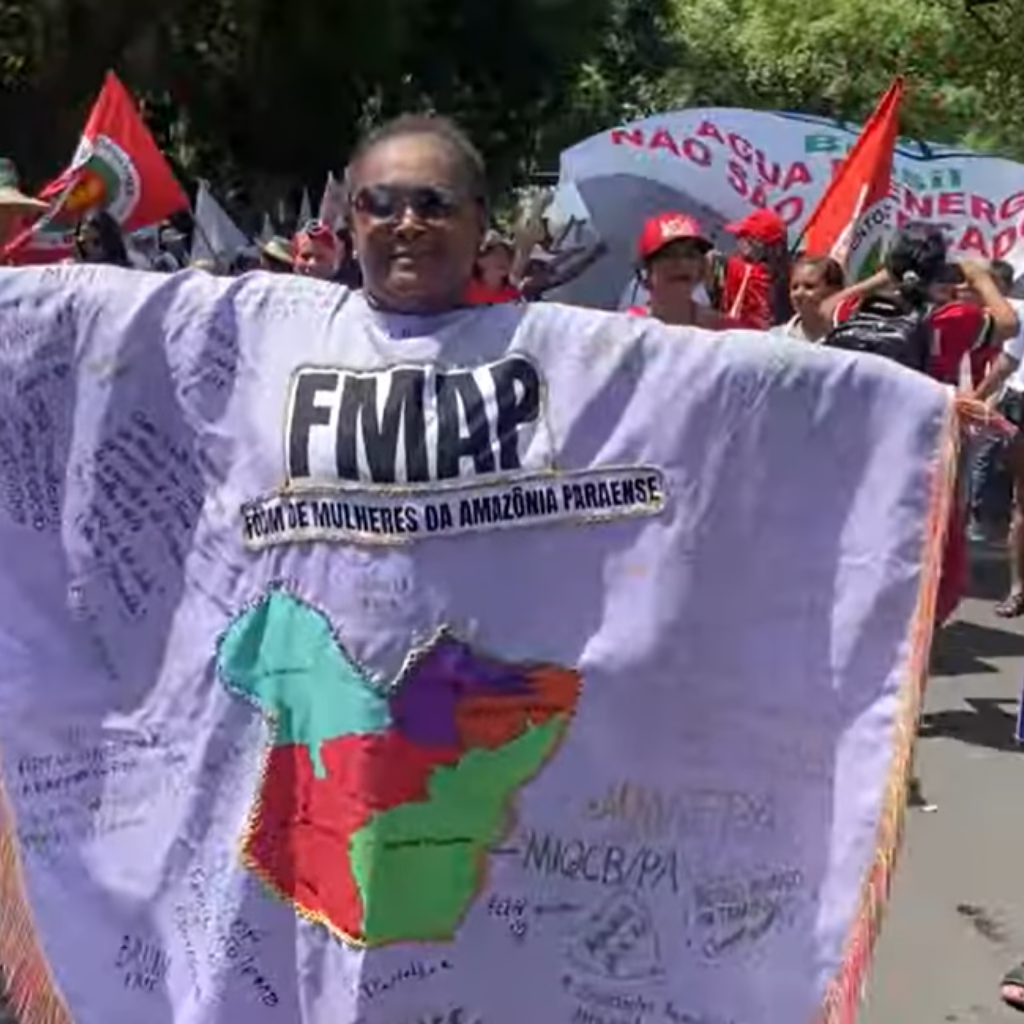
Brasil de Fato Report by Mariana Castro We have reached the year of the 30th United Nations Conference on Climate Change, which should bring together the main world leaders in Brazil. Worldwide, more than 400 popular movements and civil society organizations are also building the People’s Summit. This parallel event to COP-30 should denounce failures in the fight against the climate crisis and present agendas for popular demands. Click HERE