
Manifesto of the Peoples of the Mangrove and the Sea resonates at the Nyéléni World Forum
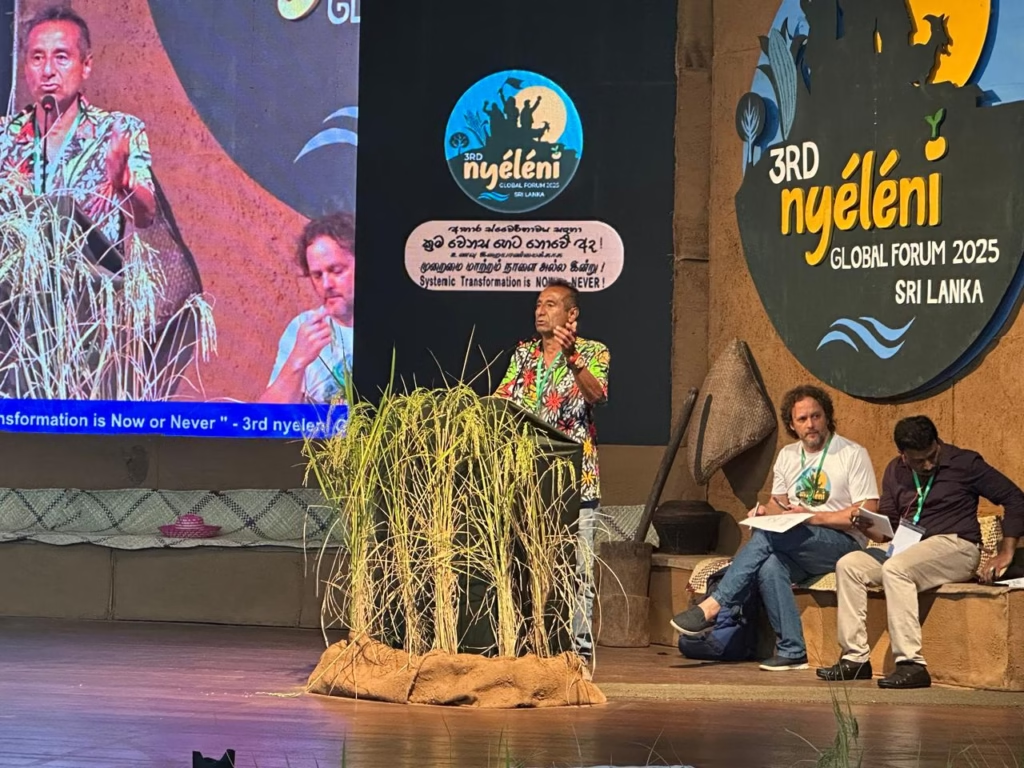
“From the maternity of the seas and oceans, the mangrove” were the words with which the leader of the Peoples of the Mangrove and the Sea, Líder Góngora Farías, began his intervention, representing the Redmanglar Internacional and the World Forum of Fisher Peoples (WFFP). This message, charged with memory, strength, and hope, marked the active participation of our delegations in the Forum and allowed artisanal fishing and gathering to take their place with dignity as true “spaces of life” on the international agenda. Our collective leadership demonstrated that we are not marginal actors, but millenary peoples — Black, Cholos, Montubios, Indigenous, and coastal communities — who have inhabited and cared for the South Pacific for more than 10,000 years before Christ. We are guardians of seas, rivers, mangroves, and coasts, and protagonists in the defense of the commons. We also reminded the world of an irrefutable truth: women shellfish gatherers represent around 50% of the artisanal fishing sector, according to the FAO, and their visibility is a historic right that can no longer be denied. Manifesto of the Peoples of the Mangrove and the Sea At this World Forum we declare: We demand the recognition of our sea territories (maritorios) as territories of life, where sea and community intertwine. We denounce the “blue economy,” industrial fishing, intensive aquaculture, and imposed conservation, which generate dispossession, violence, and destruction. We defend community solutions: restoring mangroves and reefs, guaranteeing fish and shellfish as food, protecting life and not the market. We reaffirm that women are caretakers and decision-makers, and must be fully included in spaces of power and decision-making. We demand climate and energy justice, as well as solidarity with all peoples facing militarization, racism, and dispossession, from Palestine to coastal communities around the world. At this Forum, we placed our voices, struggles, and proposals to be heard on the international stage. We do not leave invisibilized: we leave strengthened, united, and committed to continue defending seas, rivers, mangroves, and coasts as commons for the present and the future. “From the maternity of the mangrove, we continue weaving life, resistance, and hope for all the peoples of the sea.”
Forward! Bolsonaro’s conviction is a historic moment for Brazil and for global struggles for democracy.
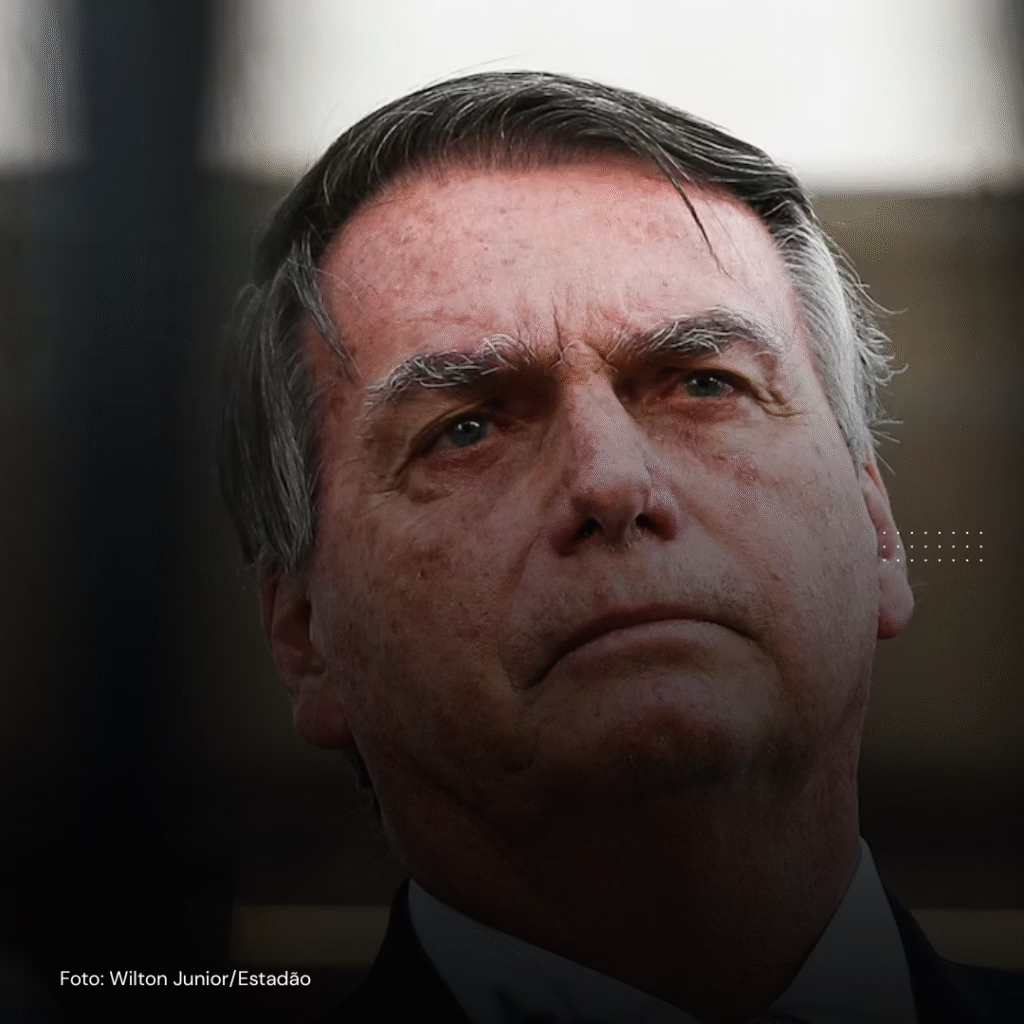
The Federal Supreme Court (STF) has sentenced Brazil’s former president, Jair Bolsonaro (PL), to 27 years in prison for attempting a coup d’état after losing the 2022 elections. The ruling marks a historic moment for social movements, peoples of the territories, and democracy in Brazil, Latin America, and the world. It is the first time a Brazilian ex-president has been punished for this type of crime, despite the country’s experience of a civil-military dictatorship after the coup in its recent past. For leaders of organizations that make up the People’s Summit, the decision shows that mobilizations for democracy must continue resisting. “Today, September 11, on the 52nd anniversary of the civil-military coup in Chile, we celebrate Bolsonaro’s conviction for his coup attempt in Brazil. At a time when Latin America and the world face wars, genocide in Gaza, the threat of the far right, and the loss of democratic freedoms and human rights, the sentence handed down against Bolsonaro and his accomplices is a cause for joy and a positive sign to continue working and fighting for more just and sustainable societies,” said Eduardo Giesen, Latin America and Caribbean coordinator of the Demand Climate Justice campaign (DCJ) and member of the Political Commission of the People’s Summit. For Giesen, one strategy to strengthen this global mobilization that must be revived is the People’s Summit. “Today, more than ever, we believe that the People’s Summit can be a space to restore faith in truly democratic social and political paradigms, far from neoliberalism and extractivism, the only way to achieve climate justice,” he argued. Reparation of the past that goes beyond Brazil and sends a message for the global future For Lúcia Ortiz, from Friends of the Earth Brazil and a member of the Political Commission of the People’s Summit, the conviction carries weight that transcends borders and connects Brazil’s recent history to struggles across Latin America and the Caribbean. These stories intersect not only because they involve atrocities, rights violations, and the search for reparation through Truth Commissions, but also because they feature figures who reappear in history, such as the convicted General Augusto Heleno. “It is important to remember that General Augusto Heleno, one of the masterminds of the coup plot, led the occupation of UN military troops in Haiti, responsible for a series of violations, and defended the 1964 military coup, whose Truth Commission took more than 40 years to be established without leading to justice and reparation for the crimes committed,” she noted. She also stressed the importance of this moment for the global context of resurgent imperialism, fascism, wars, and genocides around the world, at the same time as electoral disputes unfold. “It is a milestone, especially on the eve of COP30 in the Amazon and in a pre-election year, when it is essential to strengthen democracy and internationalist solidarity against commercial and military attacks that threaten the sovereignty of peoples,” she added. Those who lived the atrocities do not forget Vera Paoloni, president of the Unified Workers’ Central in Pará (CUT/PA) and member of the Political Commission of the People’s Summit, stressed that the STF’s decision deeply resonates among social movements and working women, groups heavily attacked by Bolsonaro’s hate campaign and the dismantling of social policies, whether through the scrapping of institutions or the shutdown of programs. “For us in the resistance movements, it is a tremendous joy to see the firmness of the Supreme majority in convicting Bolsonaro and the coup plotters who attacked democracy and the life of the country. Bolsonaro always treated women as inferior, mocked rights, cruelly attacked workers and social movements, and did not even act to secure vaccines during the terrible period of COVID-19,” she said. According to Vera, “all this is in the memory and skin of every working woman and every fighter in Brazil. That is why it is fundamental that he has been convicted – and even more symbolic that the third vote, which sent him to prison, was cast by a woman, Justice Cármen Lúcia. He leaves too late.” “Now we can breathe a little easier and continue the struggle for social rights, for social justice, and for climate justice, knowing that democracy has been safeguarded by this firm stance of the Supreme Court. It is a beautiful day for us, women, for social movements, and for everyone who fights daily for a better Brazil, a better Pará, and the good living of the peoples,” she stated. “He implemented a progressive and systematic plan to attack democratic institutions” Bolsonaro was convicted in a trial by the STF’s First Panel with favorable votes from Justices Alexandre de Moraes, Flávio Dino, Cármen Lúcia, and Cristiano Zanin. Only Justice Luiz Fux voted against conviction. In the vote that sealed the sentence, Justice Cármen Lúcia was emphatic in defending Bolsonaro’s conviction for organizing the crime against national sovereignty. “The prosecution presented conclusive evidence that the group led by Jair Messias Bolsonaro, composed of key figures from the government, the Armed Forces, and intelligence agencies, developed and implemented a progressive and systematic plan to attack democratic institutions with the purpose of undermining the legitimate alternation of power in the 2022 elections and weakening the exercise of the other constituted powers, especially the Judiciary,” she highlighted. She also emphasized the unprecedented nature and representativeness of the trial. “What is unprecedented in this criminal case is that within it beats the Brazil that pains me. This criminal action is almost an encounter between Brazil and its past, its present, and its future in the realm of state institutions and public policies,” she stated. Justice Cármen Lúcia’s stance was widely praised by society. In addition to occupying a space where men are the majority, she is a woman, a group harshly attacked by Bolsonaro in his misogynistic and gender-violent campaigns. These campaigns were replicated by the far-right network that spread across various spheres, both public and private, led by the ex-president. The justices also convicted former Chief of Staff and Defense Minister
People’s Summit takes part in the first meeting of CIM’s Consultative Chambers and calls for territorial solutions to be recognized in climate policies
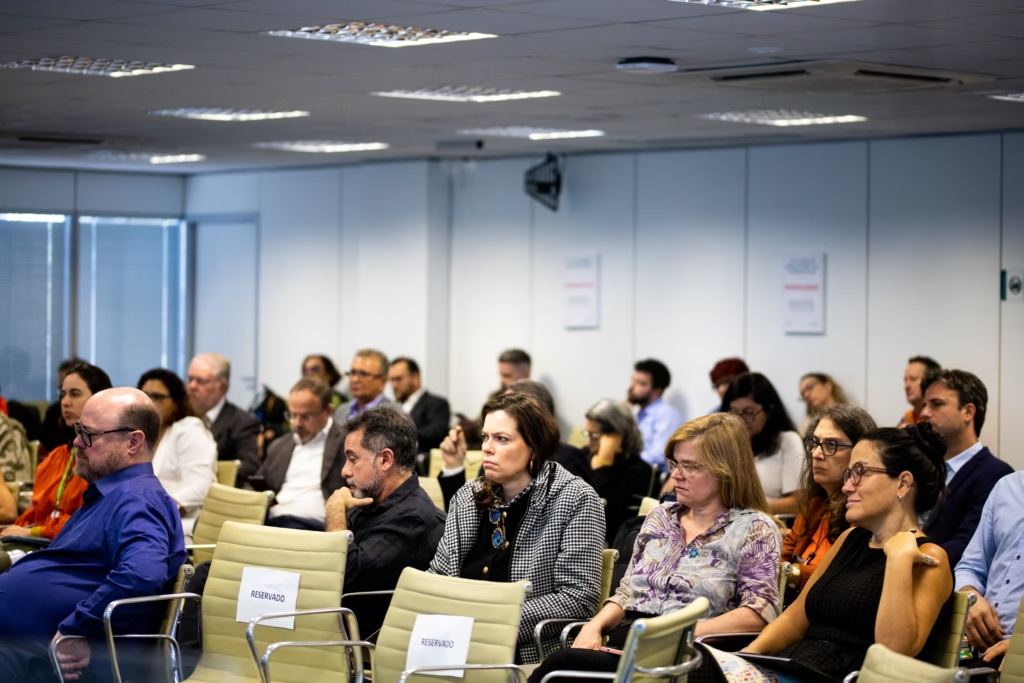
Organizations that make up the People’s Summit, an articulation that brings together around 1,100 social movements and civil society organizations, took part in the launch of the Technical Chambers of Brazil’s Interministerial Committee on Climate Change (CIM), as well as in the first meeting of the Consultative Chambers, which include the Chambers of Social Participation (CPS), Scientific Advisory (CAC), and Interfederative Coordination (CAI). The challenge of this participation is to ensure that public policies advance rights rather than contribute to violations of the rights of peoples. The launch and the first meeting took place this Wednesday and Thursday, the 10th and 11th, respectively, in the Federal District. According to the government, the purpose of the meetings was to bring the federal government closer to civil society organizations, academia, and local representatives, ensuring that diverse perspectives can reach the decision-making level of the Committee. These consultative spaces within the CIM are considered strategic, as they allow social movements to follow and influence policy formulation and monitoring, such as through the CPS. In times of denialism, the CAC plays a role in ensuring that decisions are grounded in reliable scientific knowledge, while the CAI fosters coordination among the Union, states, and municipalities, strengthening environmental federalism. The participation of organizations articulated within the People’s Summit in these spaces highlights the importance of connecting civil society voices to the design and implementation of climate policies, ensuring that federal-level decisions take into account the needs and solutions proposed by territories. Letícia Tura, national director of Fase and member of the Political Commission of the People’s Summit, warns:“Some of the challenges faced by civil society in these technical chambers are to ensure that climate public policies serve as instruments for the guarantee and defense of rights, and not as instruments of rights violations. That civil society’s proposals are taken into account and put into practice, and that the solutions coming from the territories are recognized in domestic public policies to address climate change.” Photos: GIZ Juliana Caribé
On Amazon Day, social movements, pastoral groups, and trade union federations call for the 2025 Cry of the Excluded in Belém
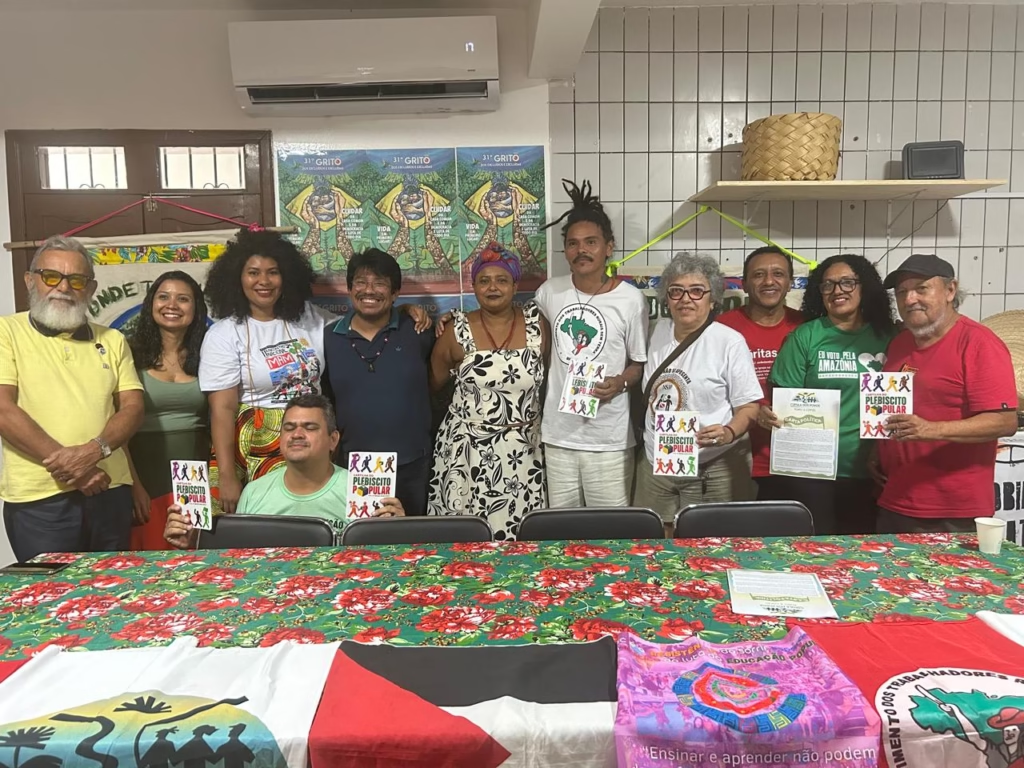
This year, a large turnout is expected in the streets in defense of democracy, sovereignty, and the Popular Plebiscite as tools for mobilization Belém (PA), September 5, 2025 – On Amazon Day, around 26 organizations, including social movements, social pastoral groups, and trade union federations, launched a call for the Cry of the Excluded and the Excluded Women, which will take place on September 7 in the capital of Pará, host city of COP30. In coordination with marches happening across Brazil, the mobilization in Belém will take to the streets in defense of sovereignty, from the perspective of a country that guarantees food on everyone’s table, housing, and respect for territories. The march will also call attention to the Popular Plebiscite, which mobilizes society to debate and defend a fair working day and the taxation of the super-rich. The Cry of the Excluded is a historic mobilization in Brazil. “The Cry of the Excluded and the Excluded Women is part of a collective made up of many social movements, social organizations, social pastoral groups, and political parties, echoing important voices that highlight our demands and the social inequalities present in our society,” explains Katiane Souza, from the Movement for Popular Sovereignty in Mining (MAM). This year’s mobilizing theme is “Life First – Caring for Our Common Home and Democracy Is a Daily Struggle.” It has guided mobilizations throughout the year aimed at engaging and organizing civil society. “This is truly a collective process of uniting forces. So, regarding September 7, beyond bringing people together, it is also about remembering and questioning whether Brazil has truly achieved independence. Especially when we look at a society where the majority are Black people, Black women, who live in contexts of exclusion, who suffer from structural racism, necropolitics, sexism, and lack access to quality education, healthcare, and housing,” she adds. Organizations warn that Brazil is not only experiencing a weakened democracy but a threatened one, in the face of escalating hate speech, rollbacks of rights, and the capture of the State by private interests. For the movements, democracy only exists if it is exercised from the territories, with freedom of expression, popular participation, respect for diverse ways of life, and sovereignty. “For us, sovereignty means food on the table and caring for nature. When people are able to eat properly and healthily, that represents power for the country, it represents sovereignty. When food is free of poison, that is caring for nature, and sovereignty follows that path. When people have their homes and territories respected, that is sovereignty,” says Ricardo Cabano, from the Landless Workers’ Movement (MST). To reinforce these perspectives, the march will feature political speeches, artistic interventions, and the collection of votes for the Popular Plebiscite. The gathering will begin at 8:00 a.m. at the Escadinha of Estação das Docas, followed by a march to the square in front of the Antônio Lemos Palace. Popular Plebiscite: more than votes, a tool for mobilization One of the highlights of the demonstration is the Popular Plebiscite “For a Fairer Brazil,” presented by Ricardo Cabano, from the MST, as a tool for mobilization and political education. The national consultation asks the population about two central issues: whether they support reducing working hours without reducing wages, and whether they support higher taxation on the super-rich while exempting low-income workers. The plebiscite began in July this year, bringing to public debate the end of the 6×1 work schedule (six days of work and one day off). A proposal introduced in Congress by Congresswoman Érica Hilton suggests a 4×3 schedule (four working days and three days off), which would offer workers better conditions to build their lives, Ricardo explains. He also notes that taxing the super-rich aims to correct Brazil’s existing fiscal injustice, where people with vastly different incomes—such as salaried workers and those in vulnerable situations—pay the same prices for goods as the wealthy. “This taxation seeks to reduce that injustice, recognizing that Brazil has a very large working class that already pays a heavy tax burden,” he emphasizes. Ricardo further stresses that the plebiscite serves a broader purpose than consultation alone. “The plebiscite is not just about voting. It is a tool for mobilization and debate about time for life, time for work, and tax justice. It is the people taking into their own hands the right to decide the country’s future,” he says. The Amazon at the center of the Cry The demonstration will also be a space to denounce the realities of the Amazon. In Belém, where the People’s Summit House will be established, movements reinforce that the Amazon cannot be treated as a commodity in global negotiations. “Nothing about us, without us,” says Turi, a leader from the Abacatal territory in Ananindeua, reinforcing the growing demand for the participation of traditional peoples in decisions about their territories. Service Date: September 7, 2025 (Sunday)Gathering: 8:00 a.m., Escadinha of Estação das Docas (Belém, Pará)March: to the square in front of Antônio Lemos PalaceProgram: Cultural interventions, speeches by popular organizations, and collection of votes for the Popular Plebiscite
People’s Summit launches Global Call to Action ahead of COP30, calling for solidarity marches around the world on November 15.

Social and environmental movements from around the world today launched a call to action for a Global Day of Action on 15 November 2025, coinciding with the United Nations COP30 climate negotiations. As part of the Peoples’ Summit, thousands are expected to take to the streets of Belém, Brazil, demanding climate justice and system change. The call urges movements, organisations and peoples everywhere to organise their own marches and actions locally in solidarity, uniting struggles across borders in the fight against inequality, environmental racism and corporate impunity. “From the Amazon to the world, we are saying enough is enough. November 15th is not just about marching in Belém. It is about showing that people everywhere are rising together. The Global Day of Action will demonstrate that climate justice is inseparable from justice for peoples, territories and future generations.” Cleidiane Vieira – Movement of People Affected by Dams (MAB) “We march for life. November 15 will be a historic moment, showing governments and corporations that the world is watching and that we demand change. This is our opportunity to stand shoulder to shoulder across borders, to demand reparations, to hold corporations accountable, and to affirm that life and dignity are worth more than profit and destruction.” Kirtana Chandrasekaran – Friends of the Earth International “The Global Day of Action is an opportunity to amplify the voices of communities defending land, water, jobs, forests and cities. It is a call for international solidarity, reminding the world that the power of resistance lies in the hands of the people and their different forms of organisation, not in the hands of corporations and governments.” Ivan González – CSA-TUCA “November 15th is not a symbolic march. It is a collective act of defiance against the system that destroys our lives and our lands. From Belém to the streets of every city, Indigenous Peoples and traditional communities will show that we refuse to let corporations and governments sacrifice us in the name of profit. We will show that our voices cannot be silenced and that we are essential to building collective solutions. We are the answer!” Toya Manchineri – Indigenous Representative from COIAB
People’s Summit and the Cry of the Excluded join forces to strengthen popular mobilization towards COP30
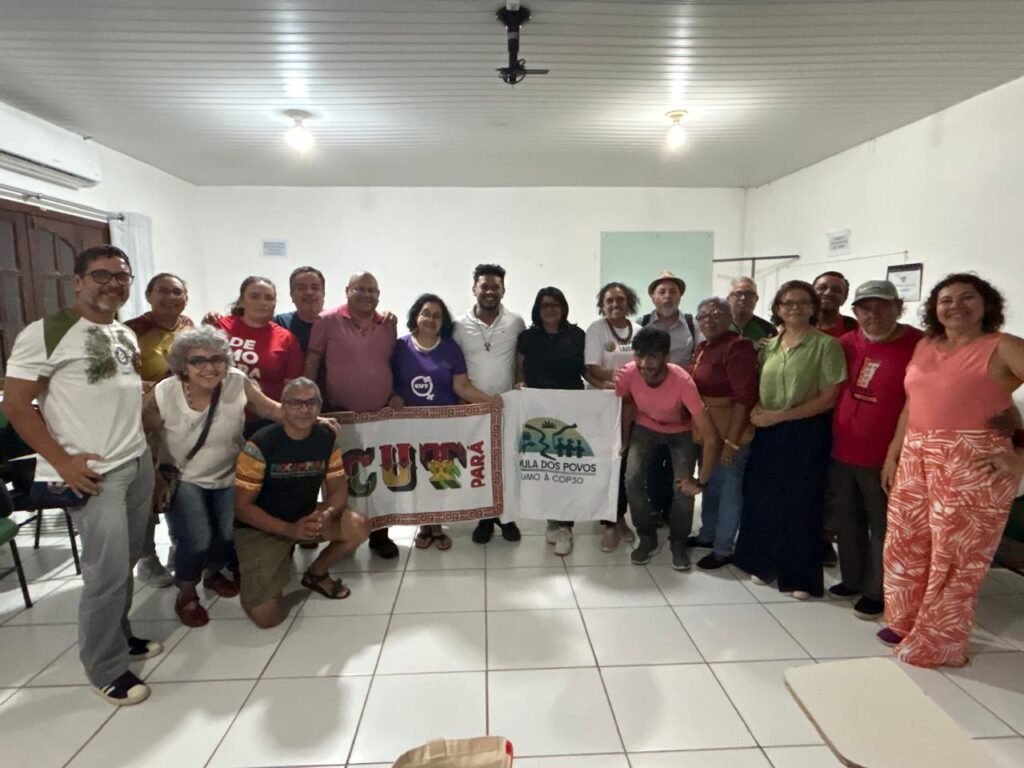
The People’s Summit towards COP30 and the Cry of the Excluded are joining forces to strengthen popular mobilization that will mark both September 7th across Brazil and November 15th in the streets of Belém and in cities around the world preparing for the Global Day of Action. In a meeting held with the support of Father Ari Alberti and the presence of Father José Carlos, from the Cry of Salvador, and Margareth Pinheiro Gondim, from the Cry of Marabá, Pará, a pact of mutual support was established between the two initiatives, recognizing that their struggles converge in the defense of peoples, territories, and democracy. Since 1995, the Cry of the Excluded has denounced the contradictions of a system that concentrates wealth and multiplies inequalities, raising the banner that “life comes first” as the true principle of a just society. This trajectory now meets the construction of the People’s Summit, whose political charter denounces environmental racism, corporate power, and false solutions, while affirming the centrality of climate justice and the sovereignty of peoples in responding to the planetary crisis. The alliance between the Cry and the Summit seeks to echo these voices both in the streets and in formal spaces of political construction. The territorial consultations promoted by the Cry, bringing the demands of excluded communities and of workers, will be incorporated into the process of formulating the People’s Summit’s convergence axes. These axes, debated over the past months as part of the Summit’s preparatory process, will be consolidated in the November plenaries and will serve as the basis for the final charter to be presented to COP30 decision-makers. In this way, the historical demands that mobilize the Cry are added to the climate justice agenda, broadening the reach of popular voices in the world’s largest negotiation space on the planet’s future. Organizers of the People’s Summit and the Cry of the Excluded consider this union a decisive step in building a democratic and plural process towards COP30. The Cry is recognized as a fundamental space of resistance and popular pedagogy in Brazil, and its integration into the Summit reinforces the principle that there can be no climate justice without social justice, without confronting the exclusions that mark our history. Both mobilizations call on social movements, collectives, pastoral groups, and popular organizations across the country to join the process, contribute proposals to the People’s Summit, and participate in the street actions. Together with the Cry of the Excluded, the People’s Summit reinforces its call: it is time to take to the streets and ensure that the voices of territories and urban peripheries are at the center of decision-making at the Climate Conference. March in the cities – In a meeting held on Thursday, the 29th, in Belém, representatives of the Political Commission and the Local Committee of the People’s Summit defined details of the march that will take place on September 7 in the host city of COP30. Around 400 people are expected to join, mobilized by social pastorals, social movements, and workers’ unions.
Now, the Federal Chamber’s SUBCOP and social movements in Belém emphasize: COP30 is not a ballroom, and change will only happen with popular participation.
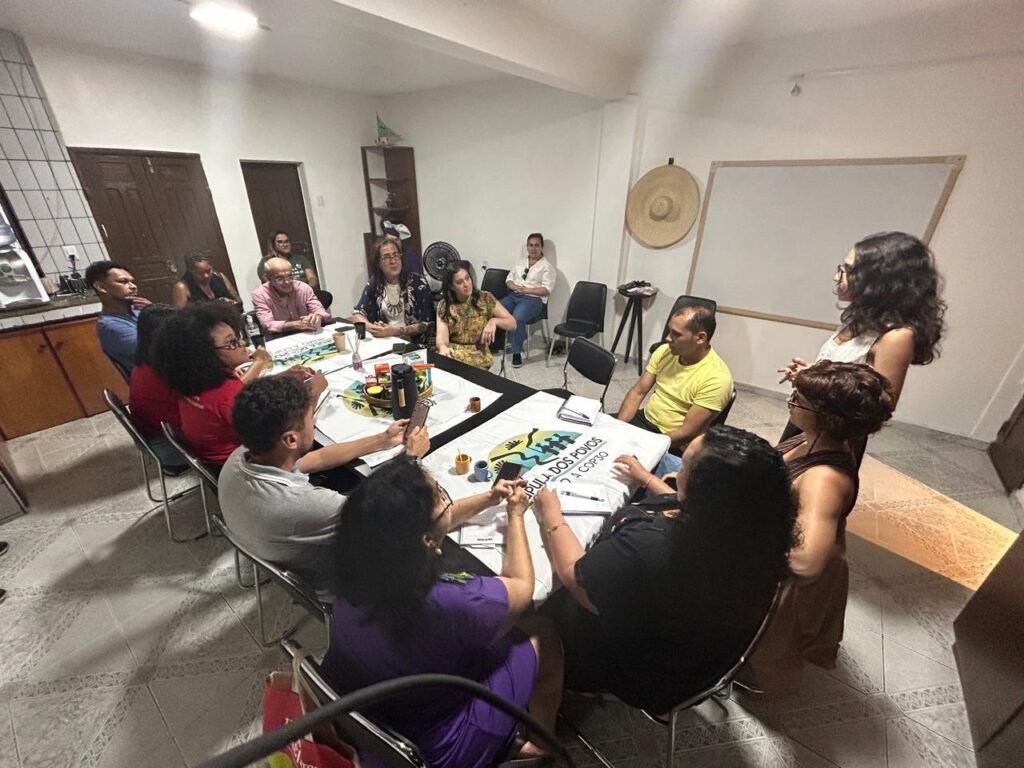
During a visit to the capital of Pará, the Subcommittee of the Chamber of Deputies for COP30 (SUBCOP) met with representatives of the People’s Summit and social movements to discuss the importance of popular participation in the climate conference that Brazil will host in November in Belém. The meeting was marked by calls for greater support for civil society and recognition that there can be no climate justice without the voices of the peoples of the Amazon. Federal Deputy Duda Salabert (PDT/MG), president of SUBCOP, emphasized that Brazil has the opportunity to transform the meaning of the United Nations Climate Conference. “A major concern of COPs in Brazil and of recent COPs has been how to expand popular participation. I am certain that this COP in Brazil will redefine what a COP is. With the People’s Summit, we will be able to organize large mobilizations. There is no climate justice without popular participation. Our role is to build bridges between the parliament, social movements, and the executive branch,” she stated. She reinforced that the commission will demand from the federal and state governments better reception conditions for social movements and real spaces for influence in decision-making. Deputy Bandeira de Mello (PSB-RJ) also highlighted practical challenges that have yet to be resolved in Belém. “I see that COP still faces survival issues. After lunch with the governor, the topic started to be discussed, but it ended up being shifted. It’s not just a question of accommodation,” he said, pointing out that structural problems such as transportation, logistics, and the hosting of delegations and social movements still require urgent solutions. For Bruna Balbi, representative of Terra de Direitos, history shows that the greatest advances in climate negotiations occurred when society was mobilized. “With popular participation, agendas move forward. The last COP where we achieved significant progress was the Paris Agreement, and this only happened because there was a strong social mobilization. The text approved was very important and remains a reference today, but we have not been able to implement the words contained in the Agreement. That is why we need to move beyond it,” she assessed. Balbi highlighted that COP30 faces the challenge of being the conference of implementation. “The federal government is right when it says that this needs to be the COP of implementation. It is the moment for a paradigmatic shift. Social movements have been discussing this need for years, even before many governments realized it, and now is the time to take this step,” she added. Júlia Martins, from the Movement for Popular Sovereignty in Mining (MAM), emphasized that the People’s Summit cannot be treated as a secondary or merely symbolic space. “This space cannot be seen just as a ballroom. It needs to be considered a sacred space, because nature is sacred to us as well. A climate event is not just a meeting of NGOs or companies negotiating their next profits, but a space to articulate the people’s solutions for life. It is a defense of democracy,” she stated. The activist also warned about the political risks surrounding the process. “A climate event is an opportunity to affirm that dictatorships and fascist processes, which are not far from us, may try to seize power if we are careless. That is why we need to ensure that this space is occupied by society, with strength and responsibility,” she added. Deputy Isa Arruda (MDB) recalled the significance of holding COP in the Amazon, the stage of the planet’s main socio-environmental disputes. “Here we have the forest, the rivers, and the people. It is very important that this meeting produces a final document defending the environment and sustainability, including, centrally, the agenda of women,” she declared. The meeting was considered productive by both parliamentarians and representatives of the People’s Summit, who see in the COP30 process a historic opportunity to place the Amazon and its peoples at the center of global climate decisions.
It was in the press:: CIVIL SOCIETY – COP30 President Pledges to Attend Cúpula dos Povos and Present Movements’ Declaration at the Conference
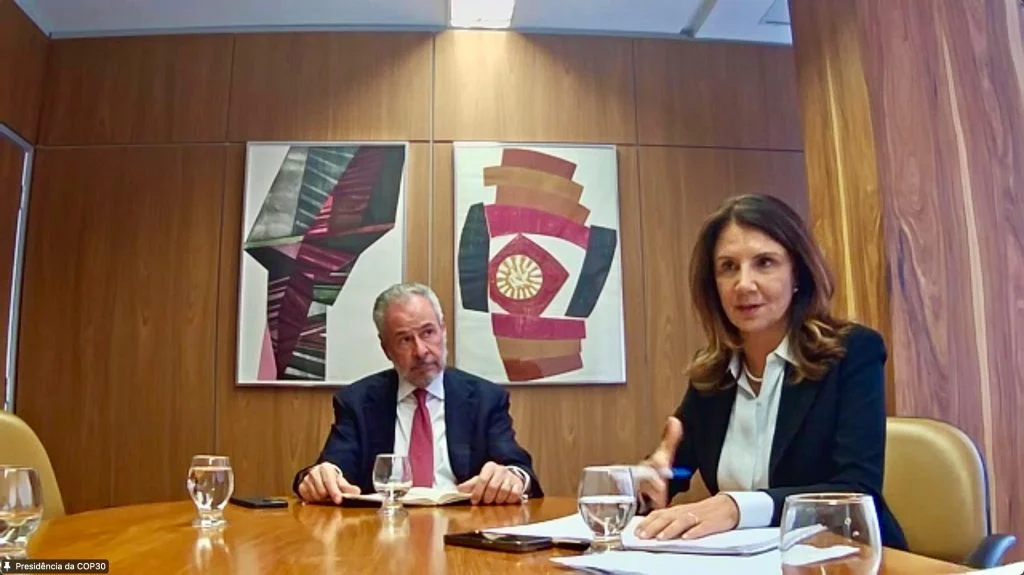
Popular movements coordinate proposals and demand meaningful participation in the climate conferenceAugust 12, 2025 – 6:00 PM, São Paulo (SP)By Editorial Team Em julho, o ato “Mutirão dos Povos” em frente ao Centro de Convenções de Belém, exigiu participação popular na COP30 – João Paulo Guimarães The president of the 30th UN Climate Conference (COP30), Ambassador André Corrêa do Lago, confirmed that he will attend the Cúpula dos Povos on November 16, the closing day of the gathering that will bring together thousands of representatives from movements, networks, and popular organizations in Belém. The commitment includes reading the Declaration of the Peoples in the official plenary—a document consolidating guidelines and actions deemed essential by movements to tackle the climate crisis. The confirmation came during a meeting on Monday, August 11, between the Cúpula’s Political Commission and COP30 representatives. The meeting was attended by Lago, the conference’s executive director Ana Toni, and leaders from national and international organizations such as Via Campesina, the Federation of Social and Educational Assistance Organizations (Fase), the Pan-Amazon Ecclesial Network (Repam), the Brazilian Committee of Human Rights Defenders, the Global Campaign to Demand Climate Justice, Friends of the Earth International, and the Movement of People Affected by Dams (MAB). COP30 President André Corrêa do Lago and Executive Director Ana Toni during a meeting with the Cúpula dos Povos Political Commission (Photo: Cúpula dos Povos/Disclosure) President Corrêa do Lago recognized the Cúpula as a legitimate space for popular movement coordination and advocated that the proposals discussed be incorporated into the official agenda. He suggested expanding integration with the conference’s action agenda and dialogue channels to include the accumulated debates and experiences of the parallel event. In addition to delivering the declaration, the organizations presented demands related to the effective participation of their leaders in official spaces, including the distribution of credentials to grassroots entities. They also requested guarantees for freedom of expression during the conference, particularly for acts in solidarity with the Palestinian people, which have faced restrictions in previous editions. The Declaration of the Peoples will be built around six thematic axes, including just transition, combating environmental racism, defending cities and vibrant peripheries, popular and food sovereignty, as well as popular feminism and women’s resistance in the territories. The Cúpula dos Povos will take place from November 12 to 16 on the campus of the Federal University of Pará, in parallel with COP30, scheduled from November 10 to 21. Edited by: Thalita Pires REPRODUCTION OF THE NEWSPAPER BRASIL DE FATO. CLICK HERE
COP30 President confirms attendance at the People’s Summit and reading of the People’s Declaration at the Conference.
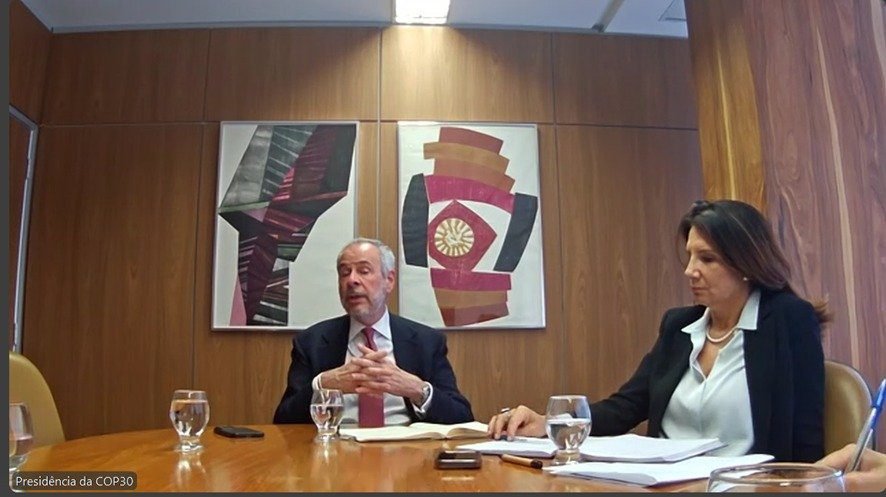
Commitment made in meeting includes support for free demonstrations, including solidarity with Palestine, and closer engagement with the People’s Summit. Belém (PA) – The president of the 30th UN Climate Conference (COP30), Ambassador André Corrêa do Lago, confirmed that he will participate in the People’s Summit on November 16, the closing day of the event that will bring together thousands of representatives of movements, networks, and social organizations from around the world in Belém. Organizations view his presence as a political advance in negotiations for the recognition of social movements in political decision-making on the climate agenda. André Lago and COP30 Executive Director Ana Toni held a meeting with representatives of the Summit’s Political Committee on the afternoon of Monday the 11th. Present in person were Maureen Santos (Fase), Doris Vasconcelos (Pan-Amazonian Ecclesial Network – Repam), Gisele Barbieri (Brazilian Committee of Human Rights Defenders). Virtually participating were Rachitaa Gupta (Global Campaign to Demand Climate Justice – DCJ), Lise Masson (Friends of the Earth International), Francisco Kelvim (Movement of People Affected by Dams – MAB), and Miguel Izaga (Via Campesina). “Considering that the Summit is not only a local, territorial, or national construction but broadly global involving several continents, this space of recognition and participation alongside the official COP30 event, we want to know how you are seeing, feeling, and perceiving the People’s Summit at this very important moment for the country and the planet,” Doris remarked while introducing the demands. During the meeting, Lago recognized the importance of the Summit as a legitimate space for social movements and argued that civil society demands must be connected to the official climate conference process. He invited greater integration with the action agenda and with the envoys, channels that can incorporate the debates accumulated by the Summit. When responding about his participation in a People’s Summit hearing scheduled for November 16 and the delivery of the People’s Summit Declaration in an official space — the document will consolidate guidelines and actions considered essential to confront the climate crisis — he was categorical in confirming. “I am very pleased to receive the people’s declaration on the 16th. Having the reading in the official plenary would be more than natural. Including the issues you discussed, I think we must incorporate them into the action agenda. I am absolutely in favor. We have to support,” he said. Regarding the demand presented by the Committee for credentials for social movement representatives, he said that distributing these passes is more difficult. Maureen Santos pointed out that many civil society organizations already have theirs by acting as observers, but grassroots entities do not. Rachitaa reinforced the importance of ensuring participation beyond the groups currently contemplated, such as indigenous peoples. “It is important that these badges be distributed among leadership,” she advocated. Beyond the dialogue on the climate agenda, the COP30 president was also urged by Rachitaa to guarantee that acts of solidarity with Palestine happen freely, since in Bonn, Germany, the UNFCCC secretariat prevented such acts in the official space. Lago committed to addressing issues related to human rights and freedom of expression within the official conference spaces, including demonstrations in solidarity with Palestine. “As a Brazilian, I support Palestine. At this stage, what is happening in Palestine is unbelievable. I have to check and if I have the authority to do something, I will,” he said after explaining that civil society faces restrictions in expressing itself at UN conferences and that it is essential to guarantee that historic voices, such as those defending the Palestinian people, have space and are heard. People’s Declaration — the document to be delivered to Lago on the 16th will gather proposals built around six thematic axes covering topics such as just transition and combating environmental racism, defending cities and vibrant peripheries, food and popular sovereignty, as well as popular feminism and women’s resistance in the territories. The People’s Summit will take place from November 12 to 16 on the campus of the Federal University of Pará (UFPA), constituting the largest autonomous and critical space of global civil society, in parallel to COP30, which will be held from November 10 to 21 in Belém. As a process, it is being organized as part of a process that will not end in 2025. “We have been building a process because the idea is that we don’t stop in Belém, but that this Summit serves as a space for global civil society to take root, build political alliances, and convergences on essential themes,” Maureen explained.
It was in the press: COP30 – People’s Summit fights for climate justice
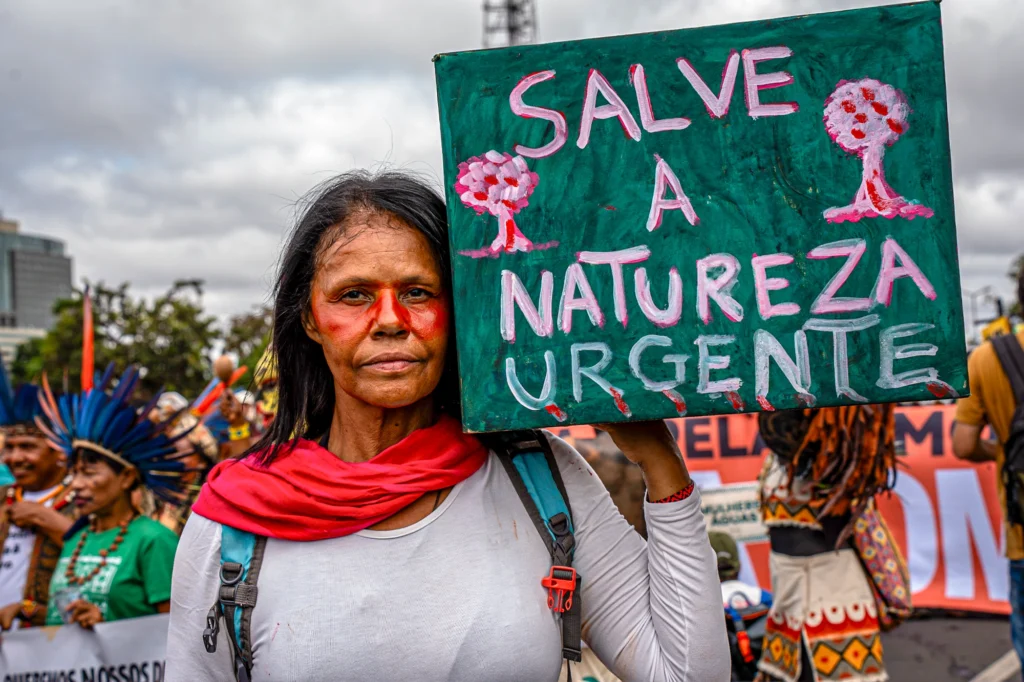
Social Movements and Traditional Communities Organize Parallel Space to the Global Climate Conference in the Amazon Jesuan XavierJune 11, 2025 With the world’s eyes on Belém (PA), host of the 30th United Nations Climate Change Conference (Conference of the Parties), COP30, taking place in November 2025, social movements, Indigenous peoples, quilombolas, riverine communities, peasants, and urban peripheral populations are organizing to break through the barrier of official negotiations and gain greater protagonism in the main international gathering on the global climate crisis. Since 2023, leaders of the so-called “excluded” have been meeting periodically to organize a space that will operate in the same location and in parallel with COP30, from November 12 to 16: the People’s Summit for Climate Justice. The organizers expect to gather around 20,000 people in this space, which will feature political, cultural, and spiritual programming. The highlight will be on November 15, with a large international mobilization planned to amplify the voices of the territories. In February 2025, social and environmental leaders from 16 countries, including France, the Philippines, Kenya, South Africa, Togo, and Ecuador, met in Rio de Janeiro for a series of preparatory meetings. The goal was to advance the construction of an agenda reflecting the realities of rural areas, forests, and urban peripheries worldwide. Speaking to Radis, Araê Cupim, member of the Movement for Popular Sovereignty in Mining (MAM) and of the People’s Summit political commission, stated that the parallel event “is indeed a space of resistance, but also of proposals. It is a response to the systematic exclusion of populations most affected by climate change.” He acknowledges the importance of the COP, but does not hold back criticism of its structure and model. “The COP is not made by us, nor for us. The negotiations are more concerned with facilitating the carbon market than listening to those truly affected by the climate crisis,” he says. “The COP is not made by us, nor for us. The negotiations are more concerned with facilitating the carbon market than listening to those truly affected by the climate crisis.”Araê Cupim March during the Free Land Camp (ATL) in Brasília (April 10) advocating for Indigenous peoples’ participation in COP30 — Photo: Juliana Duarte Climate Injustices In August 2024, around 600 organizations signed and published the People’s Summit Political Charter (https://cupuladospovoscop30.org/manifesto/). “Real solutions are urgent, and civil society worldwide must be a protagonist in all debate spaces on this agenda. COP30 needs to represent a turning point in this scenario and address the necessary actions to confront the climate crisis,” demands the document. This is not the first time COP organizers have faced a parallel space of resistance and demands. Similar initiatives occurred during Rio+20 (2012). The People’s Summit has established itself as an alternative space for critique and proposals, present in nearly all World Climate Conferences. In November, representatives of social movements and traditional populations will discuss proposals to tackle climate challenges with justice, focusing on the realities of the territories, popular sovereignty, and well-being. Over the past two years, numerous debates, meetings, and plenaries have defined four main work axes: water, territory and people’s sovereignty; climate justice; just, popular, and inclusive transition; and youth, children, adolescents, women, and LGBTQIAPN+ diversities at the center of decision-making. Currently, the People’s Summit aims to pressure and convince the Brazilian government to lead the proposal of bolder global temperature reduction targets. Since its launch at the end of 2024, the Political Charter has been delivered to the President of Brazil, Luiz Inácio Lula da Silva, to the National Operative Secretariat of COP30 (Secop), and to executive and legislative representatives. The proposals include agrarian and urban reform, incentives for a solidarity economy, protection of traditional populations, and the fight against environmental and structural racism. “Extreme climate events, droughts, floods, landslides, and false climate solutions serve to deepen inequality and environmental and climate injustices, particularly in the territories, cruelly affecting those who contributed least to the climate, ecological, and civilizational crisis,” the document states. Indigenous peoples gathered at the ATL emphasize that land demarcation and the protagonism of traditional populations should be a priority in climate and environmental debates — Photos: Juliana Duarte Living Without Destroying The Summit also advocates a zero-deforestation policy and greater accountability for large corporations. Araê expresses additional concern about the current debate on a “just energy transition.” To him, the term merely masks a continuation of extractivist logic. “We don’t believe in this proposed transition. It doesn’t change the way nature is exploited, it only intensifies it. What is at stake is justifying accumulation and the expansion of capitalism with new mineral resources,” he stresses. Another organizer, Eduardo Soares, Secretary of Articulation of the Pan-Amazon Ecclesial Network (Repam), tells Radis that representatives of religious communities will also participate actively. He is part of the Inter-Religious Tapiri, which brings together churches, ecumenical organizations, terreiro communities, Indigenous spiritualities, and other faith traditions in Brazil. “It is an ecumenical articulation that will also be present at the People’s Summit. We will discuss religious fundamentalism and defend freedom of expression and worship.” Eduardo believes it will be a unique opportunity to show the world that it is possible to live without destroying. “Our spirituality, our way of living, our relationship with the forest, the river, and other living beings—all this is part of an integral ecology. It’s not just about reducing carbon, but changing the logic that destroys,” he asserts. For him, the People’s Summit expresses territorial resistance to false market solutions. “It is a space where real life, thriving in communities, gains voice and proposes pathways,” he points out. Genuine Participation of the Territories Eduardo emphasizes the importance of this autonomous civil society space, committed to realities lived in the territories. “The Summit is born from the demands of the territories, not in a vertical way but horizontally, where communities and peoples can express impacts often caused by large corporations. Impacts that, within the COPs, are often distorted,” he argues. “Voices arise from the territories. The affected populations must