
“Not climate leadership. It is climate hypocrisy”: Peoples’ Summit denounces wealthy countries with “empty hands” and demands historical reparations.
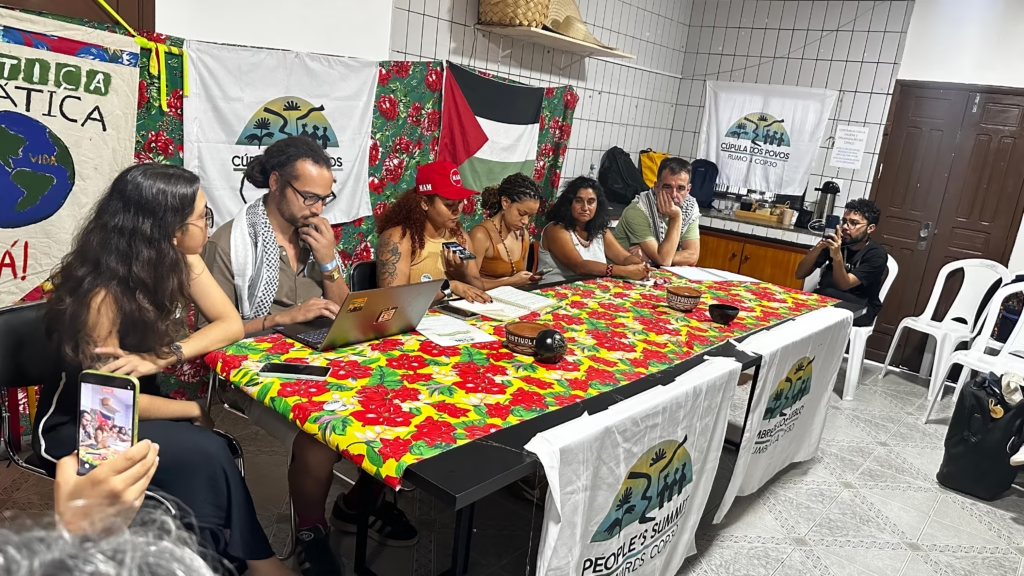
Press conference held at the Peoples’ Summit House to evaluate the Leaders’ Summit, which ended this Friday, criticizes the lack of commitment to ending fossil fuels, warns of the capture of Amazon protection mechanisms by the market, and reaffirms the struggle agenda based on six thematic axes. The articulation released a statement with its political position. In direct counterpoint to the COP30 Leaders’ Summit, the social movements and popular organizations that make up the Peoples’ Summit held a press conference this Friday (7) to mark their position and denounce the inaction of Global North countries. The event took place at the Peoples’ Summit House in Belém (PA) and brought together representatives of the Climate Action Network (CAN International), the Movement for Popular Sovereignty in Mining (MAM), the Global Campaign for Climate Justice (DCJ), and La Vía Campesina (LVC). The “empty truth” COP and the injustice of climate finance The main criticism was directed at the absence of real commitments from rich nations. Jacobo Ocharan (CAN International/Mexico) highlighted the expectation that COP30 would be the “COP of Truth,” but lamented the lack of concrete action: “So far, there is little truth and a great void of commitment from the countries historically responsible for the climate crisis.” Ocharan denounced that rich countries arrived “empty-handed, without realistic national plans (NDCs) or concrete commitments to the progressive elimination of fossil fuels.” Unjust energy transition and environmental racism Brazilian representative Isabely Miranda (MAM/Brazil) questioned the concept of “energy transition” promoted by governments, describing it as a mere “energy expansion” imposed from above. The MAM activist criticized the transition model based on mineral extraction and the disparity between hemispheres. She emphasized that solutions must come from communities, calling for real accountability from corporations responsible for destruction: “Big mining companies, industries, and agribusiness need to stop killing us and killing nature.” Reparation, not charity: the critique of climate hypocrisy Activist Tyrone Scott (DCJ/United Kingdom/Jamaica) brought the voice of small island nations, recalling the recent Hurricane Melissa in Jamaica and denouncing debt and historical exploitation. Scott condemned the hypocrisy of nations enriched through colonialism and slavery: “What the world needs is not charity, but justice.” He criticized market-based mechanisms and condemned governments that expand fossil fuel extraction: “This is not climate leadership. It is climate hypocrisy.” The message was reinforced by Jyoti Fernandes (La Vía Campesina/United Kingdom/India): “Reparations, not charity.” LVC defends public climate financing, rejecting private, conditioned, and neocolonial funding models, and affirms: “We believe in life. And that is what we fight for.” Convergence of struggles and strategic axes Beatriz Moreira (Operational Secretariat of the Peoples’ Summit/MAB) recalled that the Summit’s process began two years ago and now brings together more than 1,100 organizations, starting in Belém in solidarity with victims of violence in Pará. The Peoples’ Summit is organized around six strategic axes that guide its plenaries and mobilizations: Climate Justice and Reparation. Just, Popular, and Inclusive Transition. Food Sovereignty. Territorial and Forest Rights. Internationalism and Solidarity. Feminist and Territorial Perspectives of Peoples. Beatriz concluded by reinforcing the autonomy and organizing power of the movements: “If there is a solution to the imbalance we live in, it lies within us — the peoples who inhabit and defend the territories.” Next steps The Peoples’ Summit will have an intense program starting on the 12th, focused on plenary discussions about the six strategic axes, drafting of the Peoples’ Charter, a boat action, a climate justice march, a collective banquet, and a meeting with the COP30 presidency.
People’s Summit announces program with boat parade, plenary sessions, global march and political closing in Belém.
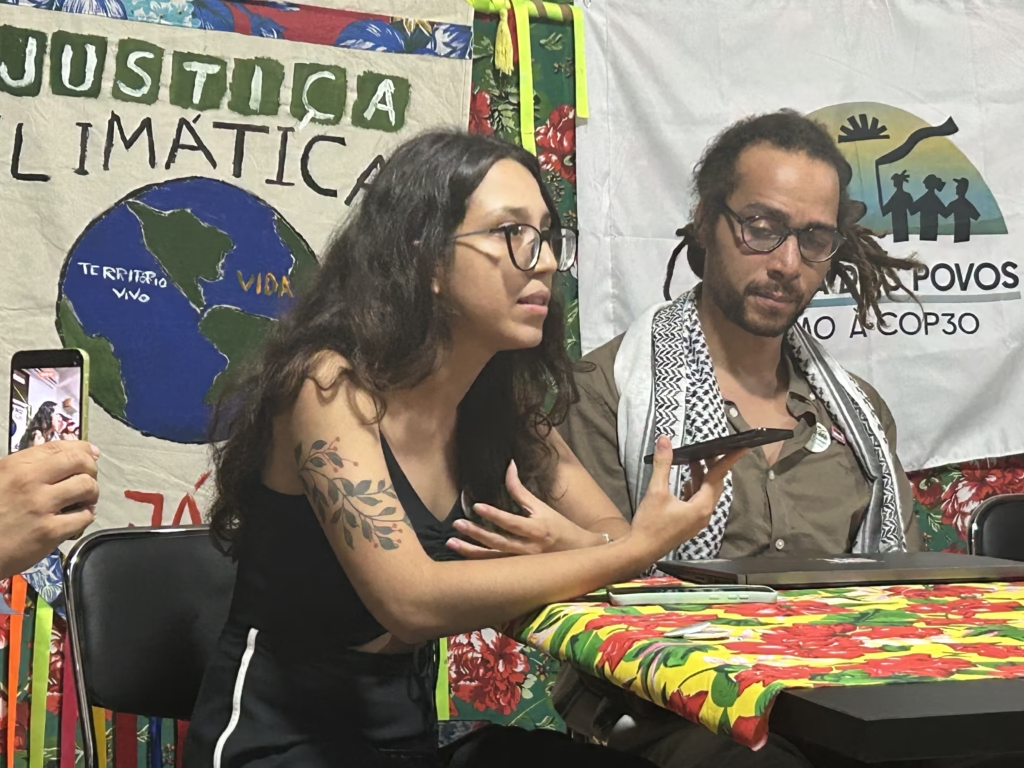
Belém is preparing to host an intense program of popular activities between November 12 and 16, during the People’s Summit. The schedule was presented at a press conference held at the People’s Summit House in Belém and detailed by Beatriz Moreira, from the Summit’s operational secretariat, who explained how the event days will be organized. The opening of the People’s Summit takes place on Wednesday, November 12, early in the morning, with a large boat demonstration. The activity, defined as a manifesto carried out by boats, begins at 9 a.m., departing from the Federal University of Pará and other ports along Belém’s waterfront. Throughout the route, messages will be shared about the response of the waters and the confluence of nature, reaffirming the Amazonian and popular character of the gathering. The boat demonstration symbolizes the central role of rivers in city life. Marked by its insular character and the presence of islands and waterways, Belém celebrates the river as a structuring element of a People’s Summit held in the Amazon. In the evening, the program continues with the official opening ceremony and cultural activities. November 13 and 14 concentrate the core of the political agenda. In the mornings, major plenaries organized around the Summit’s convergence axes take place. In the afternoons, the so-called “interlinked activities” are held, a set of parallel actions collectively built by various organizations, in direct dialogue with the axes and based on collaborative processes. In the late afternoon and early evening of November 14, the synthesis plenary will take place, dedicated to systematizing the People’s Declaration, also known as the People’s Treaty. The document brings together the political positions built throughout the Summit and must be finalized and translated to circulate across different time zones, enabling simultaneous mobilizations in various parts of the world. November 15 will be marked by the Global Day of Action. In Belém, the mobilization will take the form of a large popular march. The gathering is scheduled for 8 a.m. at the São Brás Market. From there, the route follows José Bonifácio and Duque de Caxias avenues, continues along Travessa Lomas Valentinas, and ends at Aldeia Cabana, covering approximately four kilometers. The organization reported that the route is being presented and discussed with authorities and security forces, reinforcing the importance of everyone being aware of the meeting point and time. The People’s Summit concludes on Saturday, November 16. In the morning, a ceremony is planned with a public hearing involving the COP presidency and other authorities, for the formal delivery of the People’s Declaration. According to the organizers, the act symbolizes the political outcome of the process and the demand that decision-makers receive, directly in the Amazon territory, the call built by the peoples. In the afternoon, the program concludes with the Banquet, a collective activity that marks the closing of the Summit through sharing, coexistence, and celebration of the struggle.
The “Carbon Zero” Change Fleet arrives in Belém to challenge the fossil fuel lobby at COP 30.
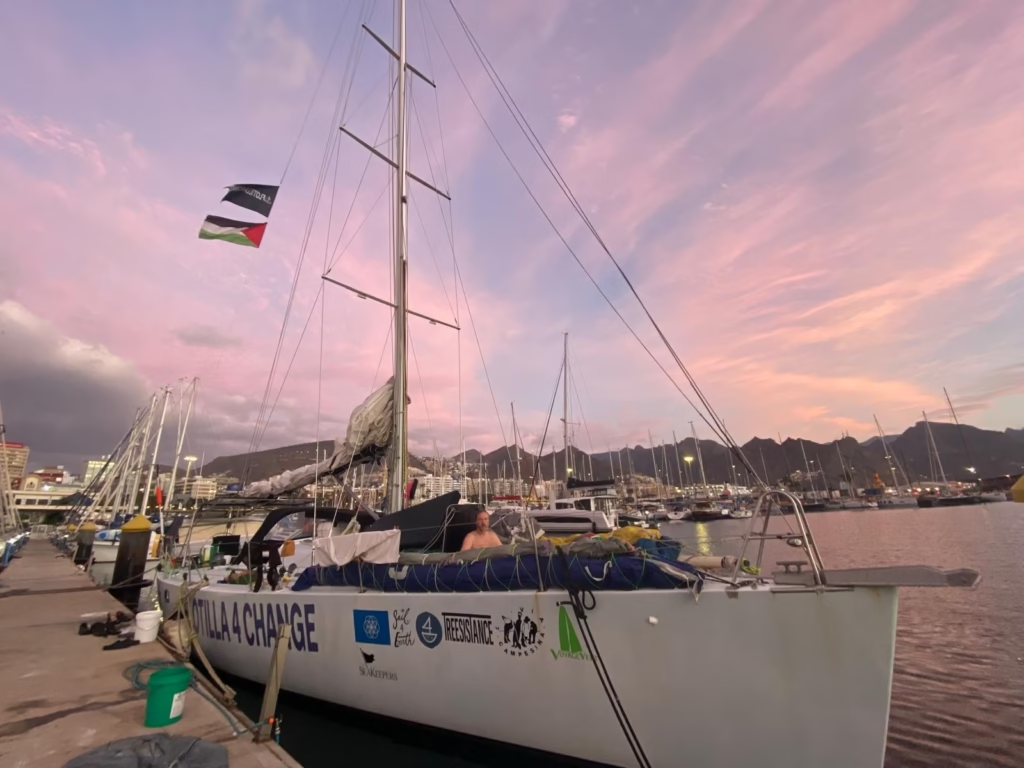
BELÉM, PA – A fleet of six sailboats, named the Flotilla for Change, is heading to Belém, bringing a delegation of around 50 activists, scientists, and delegates from different parts of the world. The transcontinental mobilization, whose flagship vessel is the Sababa (which departed from New Zealand and sailed 17,500 miles), represents an act of popular leadership and climate action in practice, contrasting sharply with the high carbon footprint of aviation that fuels the United Nations Climate Change Conference (COP30). Organized in solidarity with the Convergence Axes of the People’s Summit, the Flotilla embodies the urgency of Climate Justice and the defense of territories and “sea territories.” The journey included stops in Santa Cruz de Tenerife and Mindelo, Cape Verde, and brought crucial voices from the Global South to the Amazon, such as activist Melody Barry-Yobo from Ogoniland, Nigeria, who connects the struggle against fossil fuel extraction in the Niger Delta with the Amazonian cause. A Battle of Narratives Upon arriving in Belém, the Flotilla’s mission is clear: to challenge the narrative of the official conference, which activists say is dominated by corporate interests. “We want to confront the fossil fuel industry. It will once again be present at the Conference, carrying out massive lobbying, and that’s why it is so important that the global Climate Justice movement is also there,” says Katharin Henneberger, former member of the German parliament and crew member of Flotilla for Change. The activists’ decision to travel by sailboats serves as a floating laboratory and a public demonstration that climate leadership begins with practice, rejecting high-emission modes of transport. Citizen Science and Diversity on Board On board the sailboats, the crew operates as a citizen science laboratory, conducting research on ocean health, including plastic monitoring and the collection of data on wildlife and water quality. The composition of the crew directly reflects the Summit’s commitment to diversity. Land and sea workers, anti-racist and LGBTQIA+ activists, scientists, delegates, and youth from multiple nationalities sail together. The Flotilla requires all members to undergo mandatory Cultural Sensitivity and Anti-Racism training, reinforcing that the climate struggle is inseparable from social justice. Agenda in Belém The Flotilla will remain in Belém until the end of November and has an intense agenda within the People’s Summit: November 13–14: Participation in the People’s Summit program, with a focus on the axis “Living Territories and Sea Territories, Popular and Food Sovereignty.” November 14: Roundtable and Listening/Learning Event on board the Rainbow Warrior, docked at the Federal University of Pará (UFPA), Rua Augusto Corrêa, 01. November 15: Mass participation in the People’s Summit’s closing Popular March.
Historic Mobilization for Global Climate Justice in Belém Features an Intense Program Parallel to COP30

Organized for more than two years and collectively built by around 1,100 social movements, community organizations, territorial entities, and international human rights and climate justice networks from 62 countries, the People’s Summit at COP30 presents itself as an autonomous and popular response to the 30th United Nations Climate Change Conference (COP30). The event will take place from November 12 to 16 in Belém, Pará, and is rooted in the understanding that the climate crisis cannot be treated solely as a technical or diplomatic issue, but rather as a profoundly social one, experienced within communities and directly linked to historical inequalities affecting Indigenous peoples, traditional communities, peripheral youth, and rural and urban workers. Unlike the official Conference, structured around negotiation spaces dominated by governments and corporations, the People’s Summit establishes itself as an autonomous political territory, aimed at collectively building solutions based on the concrete experiences of those who face floods, droughts, industrial contamination, the advance of agribusiness, territorial expulsions, and environmental violations on a daily basis. For this reason, the Summit is presented not as a parallel event, but as the true popular stage of climate justice. The mobilization emerges at a moment of intense international scrutiny regarding Brazil’s role as host of COP30. Following a COP29 widely regarded by social movements as disappointing, especially due to the absence of binding climate finance targets and the broad reliance on loans that may increase economic dependence in vulnerable countries, expectations are growing that Brazil can assume leadership consistent with its socio-environmental importance. Social movements argue that Brazil can only lead the international agenda if it recognizes and directly dialogues with the peoples who protect the Amazon and other biomes. Since 2023, more than 500 organizations have signed the People’s Summit political letter, which has been delivered to President Luiz Inácio Lula da Silva, the Ministry of Foreign Affairs, and operational bodies linked to COP30. The document highlights that “decision-making countries have failed to act or have presented absolutely ineffective solutions,” while “investments that fuel climate change have increased,” and territorial rights remain under threat. The People’s Summit draws inspiration from the mobilization held during Rio+20 in 2012, when more than 20,000 people built a popular space for political formulation that challenged the official UN agenda and established a historic reference of global resistance. This time, however, the scale is even larger, with expectations of gathering 30,000 people in a meeting guided by six central axes that structure the political and territorial convergences of the event. What Does the People’s Summit at COP30 Address? The axes range from the defense of food sovereignty and territories to a just energy transition, confronting corporate power, democratizing access to common goods, and fighting environmental racism. They also include a commitment to promoting climate solutions rooted in traditional ways of life, reaffirming that the answers to the crisis lie in the territories, not in financial markets or corporate laboratories. Sara Pereira, from FASE Amazon Program, summarizes this centrality: “It is not possible to think about COP30 without grounding the climate agenda in climate justice. There will be no just transition without guaranteed rights for traditional peoples.” For her, territories already produce the concrete solutions the world seeks: “These territories manage forests and waters in a balanced way.” Ayala Ferreira, from the Landless Workers’ Movement (MST), stresses the need to denounce false solutions while pointing to concrete paths emerging from peoples and territories. “We have emphasized that solutions come from the territories, from those who engage daily with land, forests, and waters through their ways of life. That is why, beyond holding credentials to access official COP30 spaces, we have built the People’s Summit as a plural space of listening and proposals, pointing to real, necessary, and urgent solutions to the climate crisis, such as popular agrarian reform and large-scale initiatives for reforestation, spring restoration, and healthy food production.” Marcio Astrini, from Climate Observatory, reinforces the Summit’s historic role in disputing the global narrative: “The participation of social movements is crucial to shaping the climate agenda and ensuring that resources are invested correctly, reducing social inequalities rather than increasing them.” Yuri Paulino, from the Movement of People Affected by Dams (MAB), explains that the People’s Summit is focused on direct civil society participation, and therefore its program was designed to strengthen the protagonism of those who face the impacts of the climate crisis daily, rather than those who negotiate solutions solely at the institutional level. Children and Adolescents Mobilize During COP30 For the first time since the first People’s Summit in 1992, children and adolescents from civil society organizations will be gathered on the Guamá campus of the Federal University of Pará (UFPA). They will have a space of protagonism within the program to express their views on the issues debated at COP30, through circles, dialogues, music, dance, and other activities using methodologies adapted from early childhood through adolescence. Salomão Hage, professor at UFPA and general coordinator of the Children’s Summit, explains that the decision to create a specific movement with and for children arose from a consensus that it is impossible to discuss social justice, climate change, racism, and environmental justice without ensuring the voice and participation of those whose futures will be most affected by current decisions. “The children’s movement must be involved in the autonomous debate taking place during the People’s Summit. Children and adolescents must participate freely and without intermediaries.” Program of the People’s Summit at COP30 Activities begin on Wednesday, November 12, with a popular opening that symbolically marks the start of the mobilizations. This first moment focuses on welcoming delegations, the arrival of movements, and the creation of a collective environment of coexistence, listening, and celebration. Cultural interventions, traditional rituals, and opening acts will present the Summit’s proposal and reaffirm its autonomy in relation to the official COP30 space. The morning will be marked by a Boat Demonstration on the Guamá River, when boats from various riverside communities arrive in Belém and join national and international delegations, with the participation
People’s Summit and movements deliver letter to the Federal Prosecutor’s Office against the use of GLO, risk of COP30 militarization, and threat to democratic participation

The Peoples’ Summit, together with social movements and civil society organizations, delivered a letter to the Federal Public Prosecutor’s Office (MPF) expressing “deep concern” over the use of the Guarantee of Law and Order (GLO) during the 30th United Nations Climate Change Conference (COP30), which will be hosted in Belém. The concern centers on the militarization of the event and potential risks to free and democratic popular participation. The letter was delivered to Federal Prosecutor for Citizens’ Rights Nicolao Dino during the MPF’s Pre-COP event held on Monday (October 20) in Belém. The document is titled “On the Undesired Militarization of COP30 and the Necessary Guarantee of Participation by Civil Society and Social Movements.” The delivery was made by representatives of the Sociedade Paraense de Defesa dos Direitos Humanos (SDDH), the Associação Brasileira de Juristas pela Democracia – Núcleo Pará (ABJD/PA), the Centro de Estudos e Defesa do Negro do Pará (CEDENPA), the Movimento dos Atingidos por Barragens (MAB), and Terra de Direitos. The document expresses concern about the possible decree of a GLO operation during COP30, an exceptional measure that authorizes the use of the Armed Forces in cases of serious disturbance of public order. The mechanism, formalized by Complementary Law No. 97/1999, has its origins in practices from Brazil’s military regime, when the Armed Forces were used for internal order control. According to the organizations, invoking GLO would represent an undue militarization of a civil and environmental event, threatening fundamental rights to protest, assembly, and free expression, as well as democratic participation by civil society. The document also seeks to safeguard the security of human rights defenders and ensure safe conditions for popular mobilizations during the conference. The letter emphasizes that the use of GLO in civilian events is legally inappropriate, unnecessary, and disproportionate, in line with the Supreme Federal Court’s interpretation in ADI 6457, which limits its use to exceptional situations and only after ordinary public security mechanisms have been exhausted. The text underscores that there is no concrete threat to public order that would justify deploying the Armed Forces at COP30 and that the authorities’ concerns appear to focus on social protests rather than public safety. “Protests are legitimate instruments for strengthening democracy and the climate struggle, not threats to order,” the document states. The organizations further warn that Brazil must ensure COP30 takes place in an environment of respect, inclusion, and freedom, and that militarizing such an event would run counter to constitutional and international human rights principles. History of repression and the duty of non-repetition The organizations recall Brazil’s history of criminalizing social movements and violently repressing protests, particularly in the Amazon region—such as in the Eldorado dos Carajás massacre, the construction of the Belo Monte dam, and repressions against quilombola communities, students, and environmental defenders. The letter also references the Inter-American Court of Human Rights’ ruling in the Antônio Tavares Pereira case, which condemned Brazil for disproportionate use of force and established, among other measures, the duty of non-repetition of repressive practices and human rights violations. “Militarization does not protect order—it only multiplies violence and reinforces institutional racism, disproportionately targeting Black, Indigenous, and traditional community leaders,” the signatory organizations state. Guarantee of participation The document reaffirms that hosting COP30 in the Amazon aims to give visibility to peoples and communities directly affected by the climate crisis, not to isolate local populations from global decisions about the planet’s future. It rejects “any military cordon that limits interaction among the diverse actors who will gather in Belém.”
Trade unionism is the driving force of a just transition, an agenda at risk of corporate capture, warns Sebastián Ordóñez at the Trade Union Pre-COP in Brasília
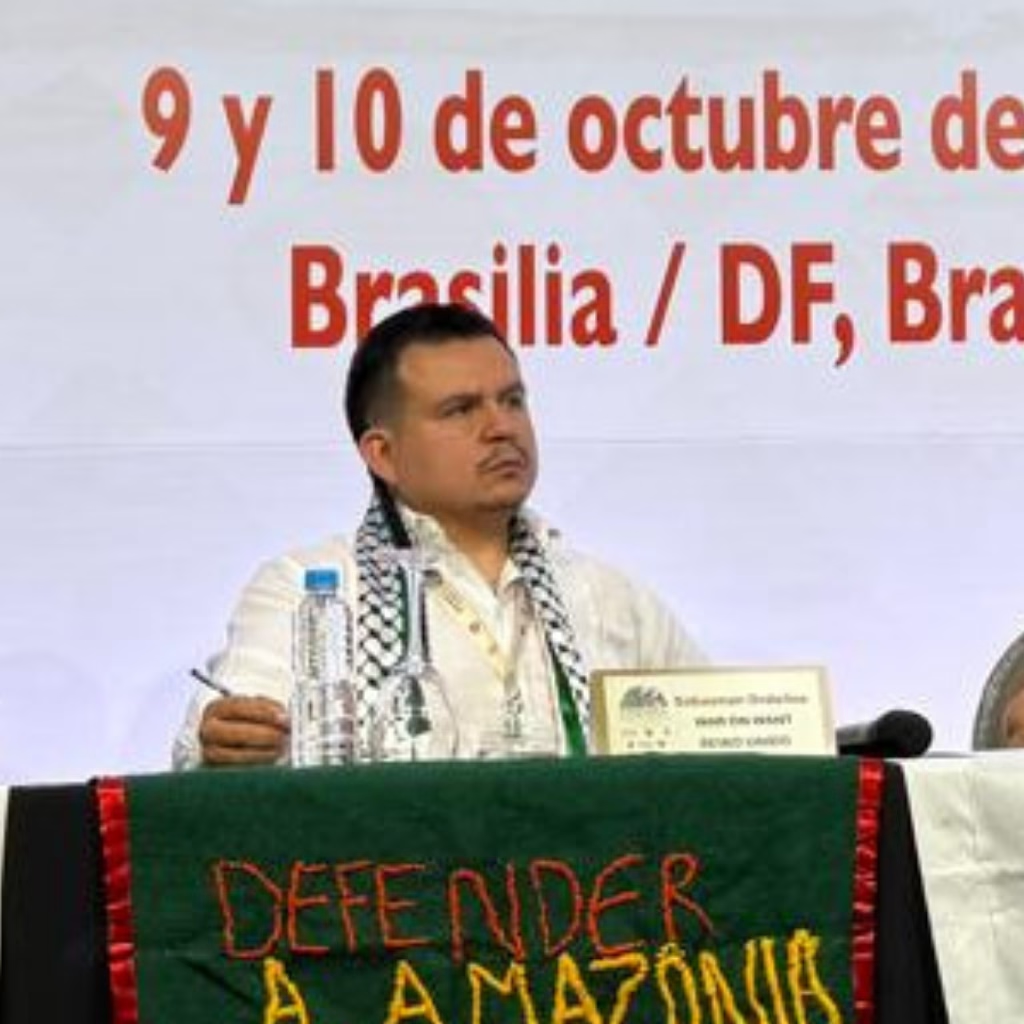
During the Trade Union Pre-COP, held in Brasília on October 9 and 10, Sebastián Ordóñez Muñoz, representative of the British organization War on Want and member of the Political Commission of the Peoples’ Summit toward COP30, issued a strong warning: the just transition agenda was originally raised by the labor movement but now risks being emptied of meaning and co-opted by corporate interests. Ordóñez emphasized that just transition was born as a banner of the international labor movement, rooted in the defense of rights, social justice, and the structural transformation of the economy. However, he noted, “we are at a moment when this banner risks being turned into a market tool—without rights or justice—so it is more urgent than ever to defend its transformative roots.” Speaking also on behalf of War on Want, an organization with trade union roots in the United Kingdom—founded nearly 75 years ago by the British labor movement and now working in alliance with Global South movements for economic justice, internationalist solidarity, and systemic transformation—Ordóñez added: “We are in the Global North, but committed to the struggles of the peoples of the South, because it is there that the weight of inequality and the extractivist model is most strongly felt and must be transformed.” He situated the debate on just transition within a systemic and interconnected crisis that combines climate collapse, rising inequality, loss of rights, and democratic erosion. “We live in a moment when all crises are interwoven: the climate crisis, inequality, the loss of rights, the erosion of democracy. These are expressions of the same predatory capitalist system, based on extraction and structural inequality—what some describe as an economy of unequal exchange between the North and the South,” he said. Commenting on the previous day’s discussions, Ordóñez cited concrete examples that reveal the global and unequal nature of the crisis. In the Arab world, he observed, trade unions face authoritarian contexts and oil-dependent economies, while migrant workers suffer new forms of exploitation—even in so-called “green” industries. He also drew attention to the growing militarization and rising defense spending that fuel conflicts and divert essential resources away from climate action. And he stressed that climate collapse already directly impacts the working class, exposed to extreme heat, water scarcity, and increasingly unsafe working conditions. “These examples remind us that just transition is, above all, a labor struggle. And in the face of the far right, which manipulates science and fear, our challenge is to politicize the debate—to connect the struggle for work and dignity with the struggle for climate and justice,” he said. Ordóñez argued that trade unionism should not only bring its own agenda to climate negotiations, but act as a driving force for a broader agenda of transformation—uniting people’s struggles and confronting the systems that perpetuate inequality and environmental destruction. He praised the initiative of the International Trade Union Confederation (ITUC), the Trade Union Confederation of the Americas (TUCA), and Brazil’s Central Única dos Trabalhadores (CUT) in organizing the Trade Union Pre-COP, describing the space as an exercise in “minga,” an Andean concept referring to collective, solidarity-based, and transformative work. The Peoples’ Summit, to be held from November 12 to 16 in Belém, was described by him as a strategic space to build alliances between trade unions, social movements, and global networks, and to consolidate a common agenda for a Just, Popular, and Inclusive Transition, the theme of Axis 3 of the Summit process. “Trade unionism can once again be the force that unites our struggles and reminds us that transition is not a sacrifice, but a collective achievement,” he concluded. Photo: Naira Leal
Representatives of the Peoples’ Summit participate in the Trade Union Pre-COP in Brasília with focus on the debate on just transition
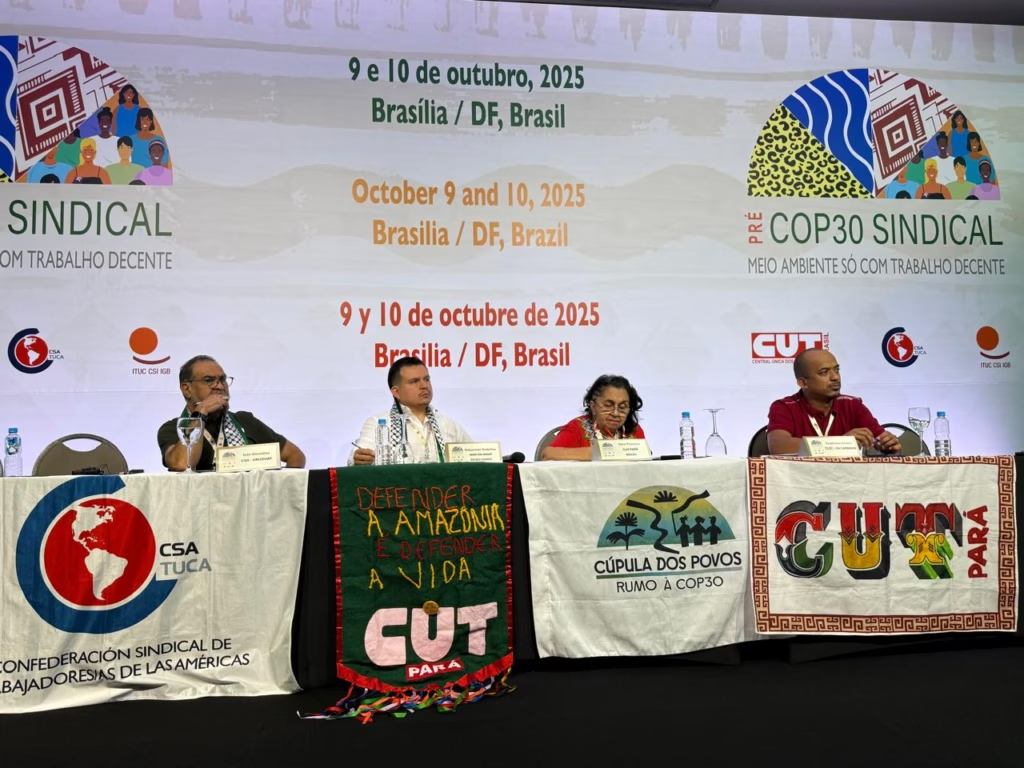
The International Trade Union Confederation (ITUC), the Trade Union Confederation of the Americas (TUCA), and the Central Única de Trabalhadores (CUT) held the Trade Union Pre-COP on october 9 and 10 in Brasília. The meeting brought together trade union leaders from several countries and included the participation of representatives from the Political Commission of the Peoples’ Summit, who shared the discussions developed throughout the Summit’s process, particularly on just transition, one of its thematic axes. During the event, in a panel moderated by Sebastián Muñoz, the president of CUT Pará, Vera Paoloni (CUT), the national coordinator of the Small Farmers’ Movement (MPA/Via Campesina) Anderson Amaro, and the political coordinator of the Trade Union Confederation of the Americas, Iván González (CSA), presented the process of building the Peoples’ Summit, highlighting the principles guiding its collective construction, the spirit of unity in diversity, and the main political orientations for dialogue with the government. The schedule of the Summit, which will take place from November 12 to 16 in Belém, and the importance of creating spaces for action both within and outside climate negotiations were also presented. A trade union delegation composed mainly of representatives from Latin America, but also from Africa, Asia, and Europe, discussed the connection between the Summit’s agenda and the international objectives of trade unions, particularly the strategy around just transition and other topics to be debated at COP30. The dialogue also addressed the need to strengthen coordination between international trade union actions and the mobilization of the Peoples’ Summit. The Summit invited trade unions to contribute to the enrichment of its thematic axes, bringing workers’ voices to the discussions and joining the mass mobilization on November 15. Unions were also invited to collaborate in the dialogue that will present the final declaration to the President of the COP, Ambassador Correa del Lago, who attended the Trade Union Pre-COP along with representatives of the Brazilian government. Finally, the Summit’s representatives reaffirmed their commitment to unity in confronting the far-right agenda, defending a Latin America free of military bases, and promoting peace, sustainable alternatives, unity, and the strengthening of democracy across the region. Photo: Naira Leal
NORTEAR Artistic Residency opens two calls in partnership with the People’s Summit towards COP30
The Faculty of Visual Arts and the Cinema and Audiovisual Program at the Federal University of Pará (FAV/UFPA) have opened applications for the 4th edition of the NORTEAR Artistic Residency, held in partnership with the People’s Summit towards COP30. This edition features two calls: one aimed at artists and filmmakers, and another for members of organizations and movements of the Summit who wish to participate as protagonists in the documentaries. The final works may be showcased in art exhibitions, festivals, academic events, and circulate on digital platforms. Applications for artists are open until October 22, to join the online presentation meeting through the link https://forms.gle/FwxS9EiqVqaqis4v9. Members of the Summit’s organizations and movements can already apply to share their testimonies, stories, struggles, and projects at https://forms.gle/cjjyQANp7NRvvaNS6 The NORTEAR Residency is a program that combines artistic creation, audiovisual production, and ethnographic research in the Amazon. This edition focuses on the production of audiovisual works with environmental and cultural themes, in shared creative processes with Indigenous peoples, quilombola communities, traditional populations, family farmers, urban workers, and environmentalists present at the People’s Summit towards COP30 in Belém. According to FAV director, Professor Luiz Adriano Daminello, the initiative reinforces the university’s role in promoting artistic practices connected to the territory and Amazonian reality.“The NORTEAR Residency is an opportunity for artists to engage with traditional knowledge and experiment with collective creation processes. It is also an invitation to think of art as a tool for listening and translating social and environmental struggles in the Amazon,” he says. He also highlights the importance of the partnership with the People’s Summit.“This dialogue with the Summit places the Residency within the context of an international meeting where the peoples of the Amazon will be the protagonists. It is a unique moment of exchange and affirmation of art’s role in the face of the climate emergency,” he affirms. During the in-person filming, taking place November 12–16 during COP30, filmmakers will engage directly with participants of the People’s Summit, listening to their stories and struggles, projects, challenges, and achievements. Visits will also be made to traditional communities developing environmental and community projects in Belém and nearby islands. Artists’ proposals must foresee a collaborative process and exchange of experiences with those present in the images. Any audiovisual language is allowed, such as fiction, documentary, video art, or experimental. Topics may address various aspects related to climate change and its effects on societies. The audiovisual works will have shared copyright between filmmakers and participants, reinforcing the project’s collaborative nature. The process will be divided into two stages:· Online stage (October 27 – November 7): virtual meetings for creation, planning, and pre-production, with guidance from audiovisual professionals and dialogue with Summit participants.· In-person stage (November 12–16): filming in Belém and nearby islands, during the People’s Summit – COP30. If you are an artist, apply by October 22: https://forms.gle/FwxS9EiqVqaqis4v9If you are a member of the People’s Summit, apply here: https://forms.gle/cjjyQANp7NRvvaNS6 For more information, contact suportenortear2025@gmail.com
“The People’s Summit will be one of the great moments of COP30,” says Márcio Macêdo during a visit to the People’s Summit House
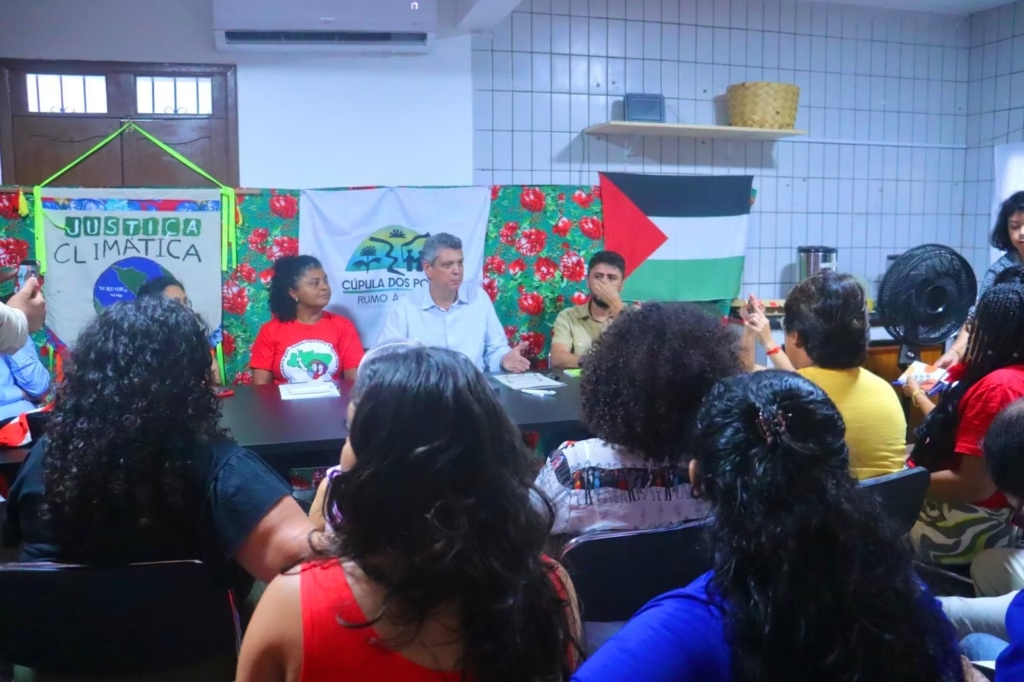
Belém (PA) – The Minister of the General Secretariat of the Presidency of the Republic, Márcio Macêdo, stated this Thursday, the 2nd, that the People’s Summit will be one of the most important milestones of COP30. He emphasized that there can be no sustainable public policy without popular participation. The statement was made during his visit to the People’s Summit House in Belém, where the minister met with social movements, civil society organizations, and networks that are building the People’s Summit towards COP30. The minister said that the government and grassroots movements share the same goals, even though each uses different tools to achieve them. This is because they recognize that social participation is essential for democracy and the effectiveness of public policy. “The People’s Summit will be one of the great moments of COP30. We are holding COP in the world’s largest democracy of peoples, and there are no sustainable public policies without social participation. Certainly, we will build COP30 together, with many hands, and it will be the COP with the greatest social participation in history,” said the minister. By affirming the importance of the Summit and announcing greater government support to guarantee infrastructure and act as an intermediary with agencies, governments, and the UN, Márcio Macêdo stressed that the Summit will be a decisive moment to strengthen direct democracy, to present the proposals of the people and organized social movements, so that countries and national states can incorporate them into their public policies. In defending and fostering dialogue with the government, the People’s Summit recognizes that such openness is possible because movements understand they are engaging with the democratic field represented by the Lula government. And although it brings together a diversity of movements and agendas, the articulation is categorical in affirming there is no space for dialogue with the far right, nor with non-progressive ideas. “At the Summit, we affirm that indeed we have convergences, such as the defense of democracy, the Lula government’s stance against wars, for an end to the genocide in Palestine, for national sovereignty, and for the climate and environmental agenda,” noted Júlia Martins, leader of the Movement for Popular Sovereignty over Mining (MAM). The meeting aimed to strengthen dialogue to ensure that the historic demands of social movements regarding tackling the climate crisis are effectively incorporated into Brazil’s climate public agenda and defended by the country in international negotiation arenas, where Brazil has assumed a relevant leadership role. Real solutions – The organizations present emphasized the need to incorporate the experiences and perspectives of traditional peoples and rural and urban peripheries into actions, plans, and targets for addressing the climate crisis. The movements argue that real solutions are those born in the territories, that strengthen popular sovereignty, climate justice, and the defense of life. False solutions, on the other hand, which promote the financialization of nature through corporate packages, only deepen inequalities and fail to address the structural causes of the problem. In this context, the leaders reaffirmed the Summit’s role as an autonomous space of civil society and presented to the minister the urgent need for greater support to guarantee the full functioning of the Summit in Belém, from November 12 to 16, when around 10,000 people are expected to participate in an intense program that includes plenaries, a march, a river flotilla (“barqueata”), a collective feast (“banquetaço”), a children’s summit, cultural activities, and a popular economy fair. The space is considered strategic to ensure that the voices of the Amazon, Brazil, and the world have real opportunities to participate in the preparation and realization of COP30, preventing corporations from being the only ones heard. During the meeting with the minister, Júlia Martins also stressed the need for the government to coordinate measures to ensure the safety of participants, guaranteeing that the COP remains a plural space committed to social and climate justice.
Peoples’ Summit Delegation strengthens international alliances at the Nyéléni Forum
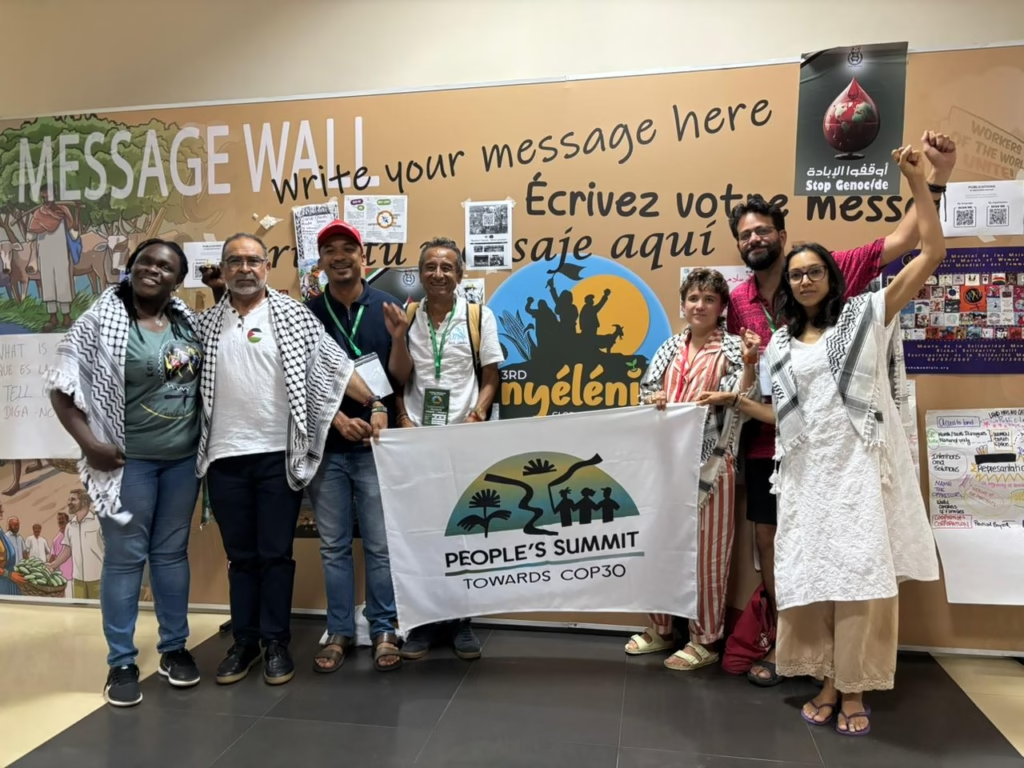
The Peoples’ Summit towards COP30 marked its presence at the Global Nyéléni Forum, held in Kandy, Sri Lanka, consolidating a political agreement for the Forum’s agenda to be presented in Belém this November. The participation of the delegation represented a decisive step in international coordination to strengthen the struggles of peoples and social movements in this historic milestone that will be the Peoples’ Summit, from November 12 to 16, 2025. The delegation took part in meetings with the Forum’s Global Steering Committee and in other discussion spaces. The group included Ivan Gonzales (Trade Union Confederation of the Americas – CSA), Anderson Amaro (Small Farmers’ Movement – MPA / Via Campesina), Líder Góngora (World Forum of Fisher Peoples – WFFP), Bruno Prada (National Articulation for Agroecology – ANA), Kirtana Chandrasekaran (Friends of the Earth International), Sophie Ogutu, and Sarah Moreira (World March of Women). For Bruno Prada, from the National Articulation for Agroecology, the Nyéléni Forum was a strategic space for the convergence of popular struggles. “The Nyéléni Forum represented an important space for building actions of convergence among social movements around the themes of food sovereignty, agroecology, climate justice, just transition, and feminism, to transform the capitalist, patriarchal, colonialist, racist, and LGBT-phobic system in which we live. Our collective process of building convergence shows us that only together can we construct a more just, equal, and free society, with respect for nature,” he stated. Speaking directly from Sri Lanka, Líder Góngora Farías, representative of the Peoples of the Mangrove and the Sea at WFFP, reinforced the centrality of unity among peoples in defending human rights and confronting the climate crisis. “From every corner of the world we raise our voices in Belém do Pará: peoples and social movements united for climate justice, the defense of human rights, and global peace. From November 10 to 16, 2025, let us join our voices at the Peoples’ Summit to stop global warming and show that unity is our strength,” he called. Ivan Gonzales, political coordinator of the Trade Union Confederation of the Americas (CSA), highlighted the role of the Nyéléni Forum as a strategic space for the global agenda. “The Nyéléni Forum is an important space to promote what we are building as the Peoples’ Summit towards the COP. It enables us to build dialogues, enrich the Summit’s themes, and articulate its construction, while also linking with the broader international debate. In particular, it reaffirms the need to change the logic of exploitation and wealth accumulation based on fossil fuels, intensive agriculture, agribusiness, and irrational industrial fishing, which directly impact life in both rural and urban areas,” he emphasized. The delegation’s participation in the Forum is part of a strategy to strengthen ongoing political processes of national and international alliances. The dialogues held in these spaces, with their diversity of representations and countries, feed political syntheses and mobilization towards November 15 – the Global Day of Action for Climate Justice, which will include demonstrations worldwide and culminate in the great march in Belém. In this way, the presence of the Peoples’ Summit at the Nyéléni Forum reinforces the importance of international alliances in building a collective process of resistance and global mobilization, paving the way for November, when peoples, communities, and organizations from all over the world will gather in Belém to share proposals and strengthen common struggles.