
Management of 10 tons of waste earns Zero Waste Award for the Peoples’ Summit and reinforces that real climate solutions are rooted in territorial experience
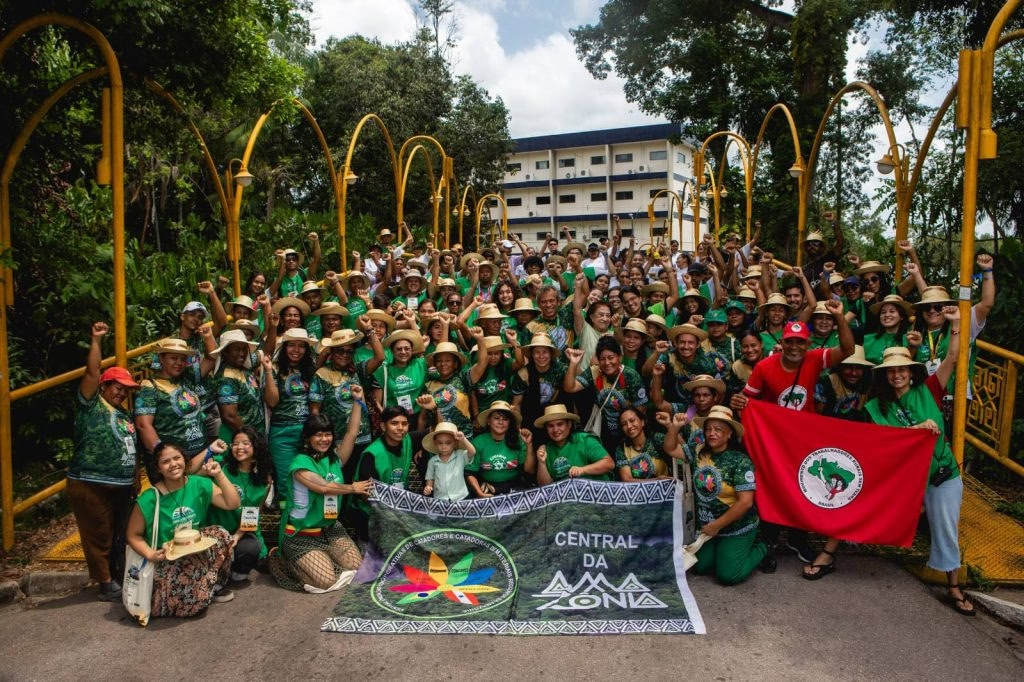
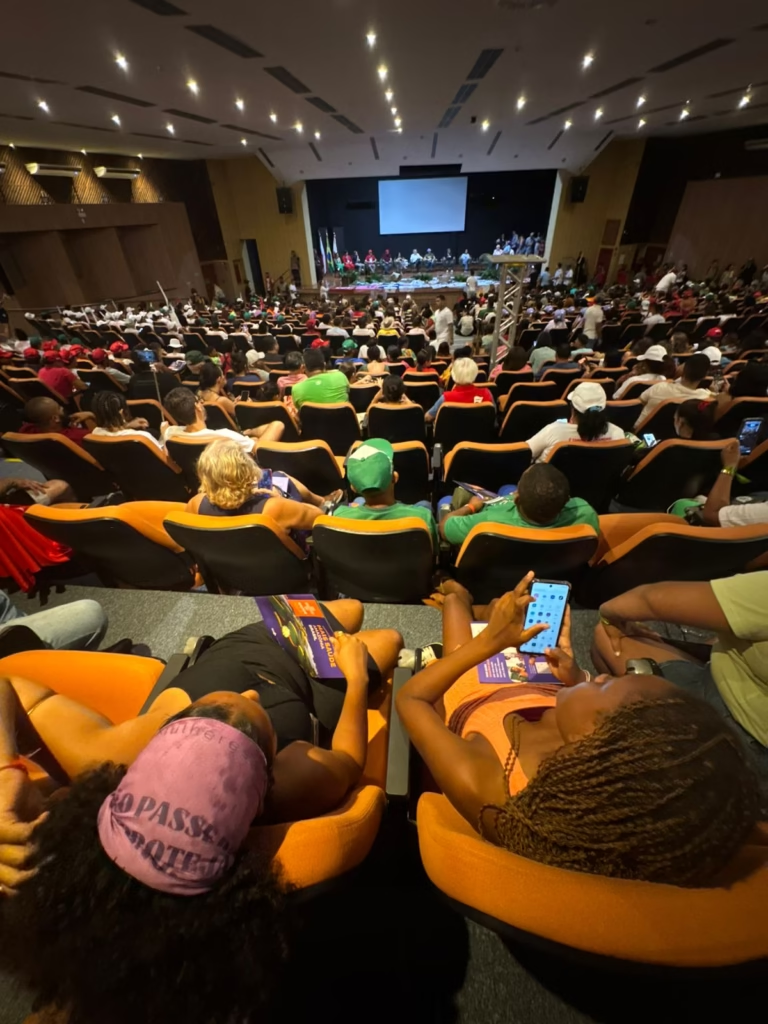
CLIMATE POWER The work of waste pickers’ cooperatives, movements and community organizations generated bio-inputs for agroecological production, linking climate justice to food sovereignty. The Peoples’ Summit transformed the treatment of more than 10 tons of waste generated from November 12 to 16 into a political demonstration that the answers to the climate crisis emerge from the territories themselves. The initiative ensured full waste management, valued the labor of waste pickers, and earned the event the Zero Waste Award, national recognition that just environmental management is only possible with popular participation and infrastructure built alongside the cooperatives. Throughout the five days of programming at the Federal University of Pará (UFPA), the operation was structured around key pillars — popular recycling, agroecology, and Zero Waste practices — and organized in three axes: Cleaning, Sorting and Destination, and Environmental Education. “In the cleaning axis, we had the strength of women from the solidarity economy and the UFPA team, who ensured the daily care of the spaces. The political dimension here is direct — when cleaning is carried out by popular collectives, it generates income, autonomy, and dignity,” explained Kallen Oliveira, coordinator of the Waste Working Group and member of the Landless Workers’ Movement (MST). “In the sorting and destination axis, we worked with Central da Amazônia and five waste pickers’ cooperatives. The experience showed, once again, that cooperatives master social technologies that work — careful manual separation, organized material flow, maximum recovery of recyclables. All of this comes from knowledge accumulated over decades and must be recognized as popular science,” she added. “And in the environmental education axis, the youth — children of cooperative members, scholarship students, and volunteers — shared information with the public, collected data for academic research, and showed, above all, that behavioral change is born from direct dialogue and everyday presence,” she concluded. The model articulated cooperatives, youth, waste pickers, and universities in an operation that combined technical capacity, popular mobilization, and a political choice to show that there can be no climate justice without justice for those who care for life and for nature’s commons. The operation was led by the Waste Working Group, which brought together the MST, the Tapanã Women’s Movement, the State Food and Nutrition Security Council, and Central da Amazônia — composed of the cooperatives Concaves, Filhos do Sol, Catasalvaterra, Cocamar, and Cocadout. Support from the Ministry of Labor and Income and UFPA, through FADESP, ensured the necessary resources to build infrastructure and mobilize teams. To make the strategy viable, the Carolina Maria de Jesus Waste Center was set up inside UFPA. The space served as a shared warehouse where all materials were sorted, separated, and organized for final destination. More than 170 people worked directly in waste management and environmental education throughout the Summit. Kallen Oliveira notes that the experience directly challenges the standard model of large events. “While official COP30 spaces rely on market-driven solutions, we showed that organized communities have the capacity to treat waste with responsibility and dignity,” she said. The waste center also became a permanent educational hub, where children of waste pickers, university students, cooperative members, and volunteers carried out educational activities, guided visitors, and conducted interviews across the event. Scholarship students and the youth team were trained by UFPA faculty and cooperative educators, generating qualitative research data on participants’ environmental perceptions. Among the youth educators were Isabela Baia and Emilly Bastos Baia, who highlighted the urgent need for stronger public orientation on proper waste disposal. “We are working with environmental education. Most people come to the COP but don’t understand the process. We need to educate them so we won’t keep facing the same disposal problems,” said Isabela. “Many people don’t have access to information and end up throwing everything together. When that happens, it makes the work of cooperatives much harder,” Emilly added. Débora Baia, from the Concaves cooperative, explained that the work gained even more visibility through the Reciclômetro Concaves, a social technology that publicly displays the daily amount of waste generated. “For the Summit, we started using the Reciclômetro. Paper, plastic, glass, organic waste — everything is weighed and updated daily. It’s also environmental education, because people begin to understand how much waste the event produces. It generates income, jobs, and, most importantly, directs materials toward recycling while protecting the environment,” she said. For Kallen, the experience reveals something profound: “The solution to the climate crisis will not come from profit — it will come from organized people who know the land and care for it.” SOCIAL TECHNOLOGY, COMPOSTING AND POPULAR ECONOMY All waste streams were processed within UFPA. Selective waste collectors were installed across the campus, sending materials directly to the sorting warehouse. Recyclables were distributed among the cooperatives, ensuring income generation. Organic waste went through accelerated composting technology operated by Concaves. The approach reinforced the central role of waste pickers in the environmental chain. Proper waste treatment prevented materials from being sent to landfills and helped reduce greenhouse gas emissions. Composting returned nutrients as bio-inputs for agroecological production, directly linking climate justice to food sovereignty. The experience demonstrated that effective environmental policy requires popular participation, public infrastructure, and direct investment in those who already safeguard the territories — especially in the Amazon. “Having a recycling center inside the event was essential because it helped people understand what counts as organic, reject, or recyclable. This is the material generated in a space discussing climate change. There is no climate justice without waste pickers. Recognition hasn’t fully come yet, but we’ve been doing this long before any COP,” emphasized Vânia Nunes, president of the CataSalvaterra Marajó cooperative. BY THE NUMBERS 70,000 people circulated through the event 170 workers involved in all processes 5 cooperatives working in partnership More than 10 tons of recyclable and organic waste managed 1 Carolina Maria de Jesus Waste Center operating sorting, treatment, and environmental education PHOTO: BRENO ORTEGA – MST
International Feminist Tribunal condemns the extractivist model driving the climate crisis and the violation of women and territories. Case will be taken to the Inter-American Court.
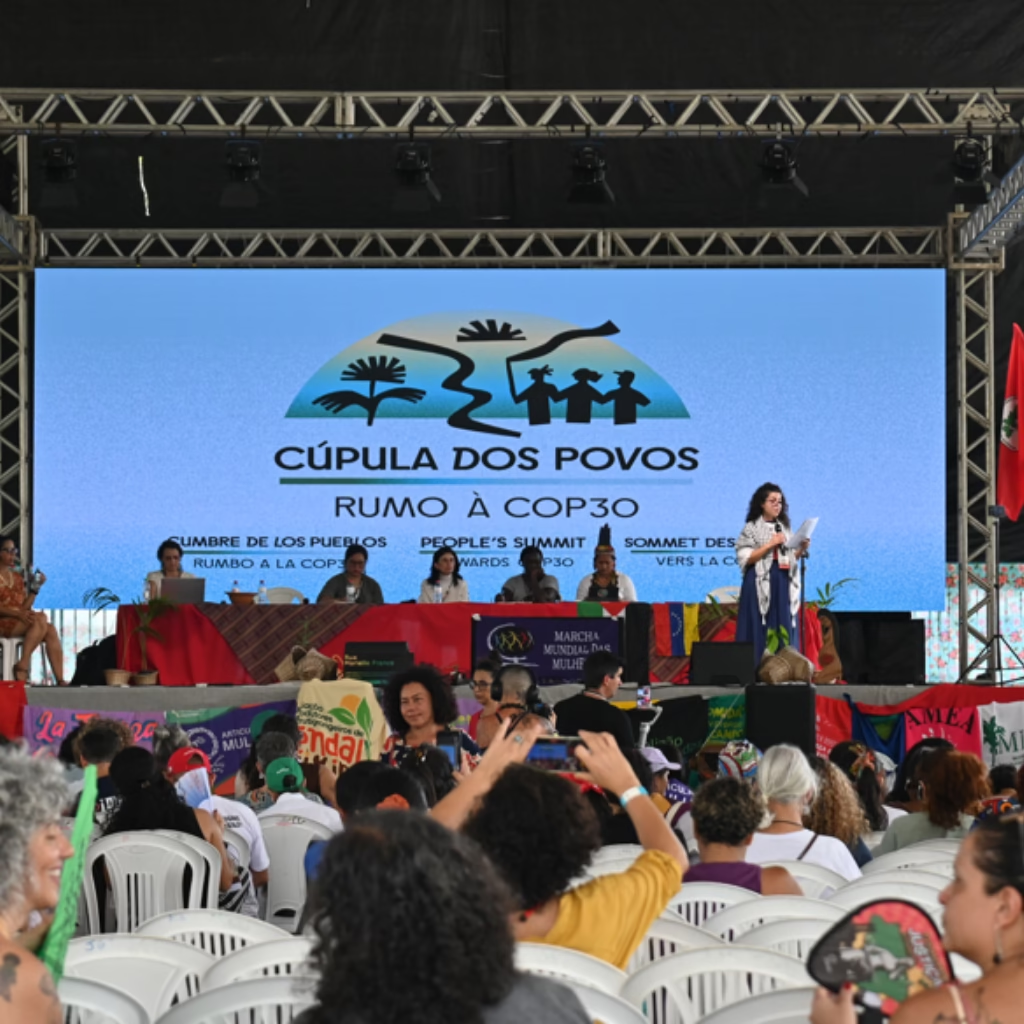
In a historic decision, the International Feminist Tribunal convened during the People’s Summit toward COP 30 analyzed nine cases from the Global South revealing how political, economic, social, security and climate crises impact the lives and rights of women and sexual and gender dissidents. The extractivist, racist and patriarchal capitalist model was condemned, and States and corporations will now be taken before the Inter-American Court of Human Rights for crimes against humanity and violations of the rights of nature. The Tribunal was organized by the International Women’s Initiative on Bodies and Territories, the Brazilian Women’s Articulation (AMB), the Women and Climate Change Defense Group (Peru) and the Global Forest Coalition (GFC), as an action developed within the thematic axis “Popular Feminism and the Resistance of Women in Territories”, which mobilized movements, organizations and networks throughout 2024 and 2025. The hearing, held on November 13 in the Plenary Tent of the Federal University of Pará, examined nine complaints presented by women and dissidents from Palestine, Haiti, Western Sahara, Peru, Brazil, Venezuela, Chile and the Brazilian state of Pará. Throughout the session, each testimony revealed the breadth of violence that crosses the bodies, lives and territories of women and dissident peoples amid overlapping political, economic, social, security and climate crises. The cases converged toward a common diagnosis: the extractivist, racist and patriarchal capitalist model continues to deepen inequalities and produce new forms of colonization expressed both in territorial dispossession and in the violation of bodies. The Tribunal concluded that each case presented exposes different expressions of the same system of oppression. “The cases presented by women from the Global South revealed the intersection of gendered, geopolitical, economic, social, environmental, racial, transphobic and climate violence on their bodies and territories, its impacts and their resistance to an oppressive order against which they wage an articulated struggle for peaceful coexistence, free of discrimination, with justice, in balance with nature and celebrating diversity,” reads a passage of the verdict. The Tribunal was presided over by Celia Xakriabá, Indigenous leader and Brazilian federal deputy. The panel of judges was composed of Sophie Dowlar, from the World March of Women in Kenya, Uli Arta Siagian, activist from Indonesia, Nazely Vardanyan, from Armenian Forests, and Marisol Garcia, Kichwa Indigenous leader from the Peruvian Amazon. The geopolitical diversity of the magistrates reinforced the international and grassroots character of the judgment. The situations presented were treated as evidence of a global machinery that combines environmental racism, gender-based violence, militarization, political repression, economic exploitation and environmental destruction. According to the Tribunal, these violations form a continuum that crosses borders and intensifies with the climate crisis, aggravated by the omission and denialism of States with significant political and economic power. Testimonies reveal the web of violence impacting the Global South The testimonies exposed the intersection of gender-based violence, territorial invasion, armed conflict, climate crisis, racism, transphobia and environmental destruction. From Pará to Palestine, women and dissidents endure violations, resist them, echo countless cries of pain and hope and continue organizing collectively. Assalah Abu Khdeir, from Palestine, denounced the genocide imposed by the State of Israel against her people, where women and children are the most affected by hunger, lack of medical care and military violence. She demanded the right to live with peace and autonomy. From Haiti, Juslene Tyresias, of La Via Campesina, described the escalation of physical, psychological and sexual violence driven by political instability and the activity of armed gangs. Climate change deepens the crisis and forces the displacement of women and girls. Saharawi activist Chaba Siny demanded the right to self-determination for the people of Western Sahara and denounced Moroccan repression. She stated that there can be no climate justice where there is military occupation and political repression of women. Olivia Bisa Tirko, Indigenous leader of the Chapra Nation in Peru, accused the State of colluding with corporations responsible for ecocide and violence against environmental defenders. She questioned why three decades of COPs have failed to contain the climate crisis. From Brazil, Beku Gogti, a Xikrin woman and member of the Movement for Popular Sovereignty in Mining, described the impacts of river contamination caused by Vale, which affects pregnant women and children in her community. Cledeneuza Bizerra, a babassu coconut breaker from Pará, denounced the destruction of traditional ways of life and the advance of agribusiness over common-use lands. She reaffirmed that rural women feed the world and that money cannot be eaten. Venezuelan activist Alejandra Laprea exposed the devastating effects of the economic blockade imposed by the United States, which worsens the lives of women caregivers and increases their vulnerability to violence. The case of Mapuche leader Julia Chunil, disappeared in 2024 while defending her territory from agribusiness companies, was presented by María José Lubertino, who demanded accountability from the Chilean state for allowing violations of such magnitude to occur. From the Amazon region of Pará, Melisandra, from Casa Cura, exposed the structural violence targeting trans women. She denounced hatred, transphobia, religious racism and the negligence of the Brazilian state, which leads the world in murders of trans people. The weight of these testimonies, presented before a packed audience, demonstrated that neocolonialism today often appears as climate-related investment projects that, in practice, dispossess peoples and communities to guarantee profits for corporations. The judges emphasized that the omission of States is part of the problem and deepens rights violations. Verdict goes beyond recommendations and demands reparations Upon announcing the decision, the judges stressed that the perpetrators of these crimes are collective actors—States, transnational corporations and economic elites—and that the victims are also collective, directly affecting women, dissidents, Indigenous peoples, Black communities, human rights defenders and territorial organizations. For this reason, the Tribunal opted for a verdict that, rather than issuing recommendations, establishes guidelines for continuous international action. These include demands for financial justice for the violations suffered, calls for economic reparations for illegal occupations, rape, murder, environmental destruction and cultural and spiritual losses, and the demand for recognition of plurinational States that place women and sexual and gender
Global climate justice networks denounce empty roadmap and accuse Global North of narrative manipulation at COP 30
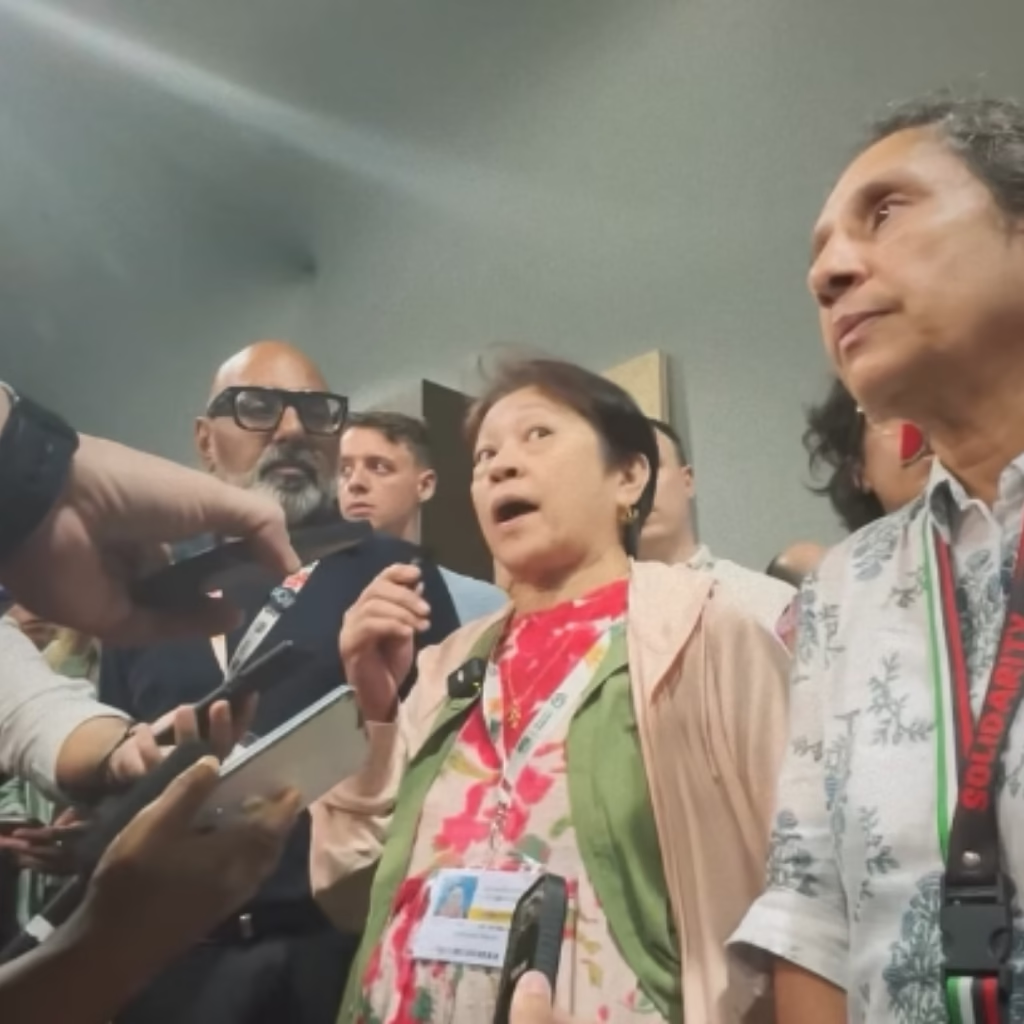
On the final day of COP 30, the international networks Demand Climate Justice (DCJ) and Climate Action Network International, which represent hundreds of organizations around the world, held a joint press briefing to publicly denounce the roadmap presented in the negotiations. The networks argue that the document brings no real commitments on climate finance and has been used as a tool to block the most urgent demands of the peoples of the Global South. Lidy Nacpil, from the Asian Peoples’ Movement on Debt and Development and a member of DCJ, delivered the statement. The organizations explained that they have taken part in mobilizations that pushed for strong language on a rapid, equitable and just transition away from fossil fuels, including during the Dubai COP. According to Lidy, no transition is possible without climate finance, and this condition is even more critical for countries of the South, which face historic inequalities worsened by the climate crisis. The criticism of the so-called roadmap grew stronger in the face of what the networks describe as an attempt by the Global North to manufacture consent and spread false narratives. For them, the document is empty because it contains no concrete commitments, offers no clear mechanisms to ensure a just transition and instead blocks progress at every stage of the negotiations. They also argue that the roadmap is being used to stall other essential issues such as reparations, historical responsibility and means of implementation. In the same position, Nancy Kacungira emphasized that the roadmap completely ignores the realities faced by the most affected communities. “This document does not speak with us or for us. It serves the interests of those who profit from destruction and tries to turn our legitimate demands into political noise. We will not accept this,” she said. Lidy also disputed the narrative that tries to portray developing countries as lacking ambition. For the networks, this argument does not reflect reality and serves to shift responsibility away from those who emit the most and profit the most from the climate crisis. They expect COP 30 to be a COP of truth, as announced by the Presidency, and for that to mean recognizing who is truly blocking progress. The message delivered by the organizations was direct. Without clear climate finance and concrete guarantees for a just transition, the proposed roadmap has no meaning for the peoples of the Global South, who are already living through the harshest impacts of the climate crisis.
Fire Hits COP30 Area; People’s Summit and Delegations Safe After Rapid Evacuation
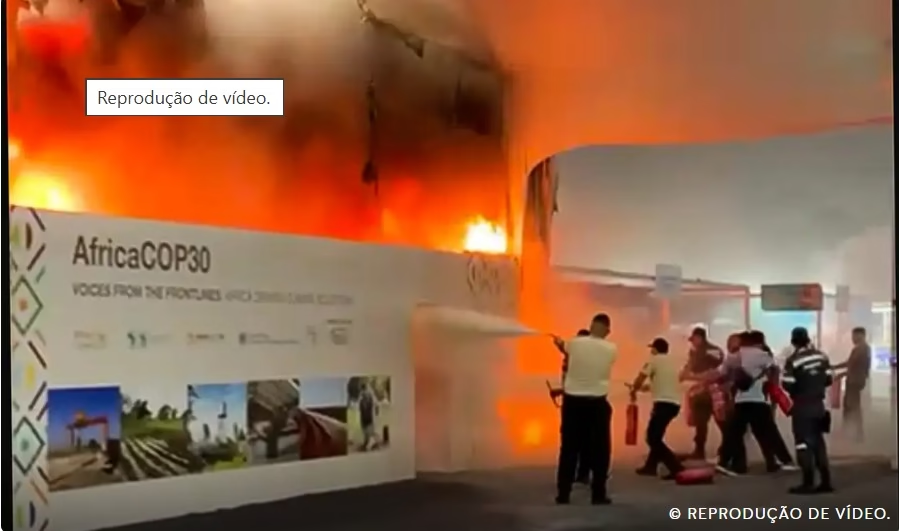
Belém (PA), November 20, 2025 – A small fire broke out this Thursday afternoon (20) in an area of the Blue Zone at the 30th United Nations Climate Change Conference (COP30) in Belém. The incident led to the immediate evacuation of participants and teams preparing for the afternoon’s agendas. Incident Details The fire started around 2 pm (Local Time) in a part of the complex housing the official negotiations. The COP fire brigade acted immediately, and the Pará Military Fire Department was called in. The organizers of COP30 reported that the fire was promptly controlled, preventing it from spreading to other structures. There are no reports of injuries, only material damage in the affected area. Impact on schedules and evacuation At the time of the incident, the People’s Summit was scheduled to participate in an activity. Everything was suspended, and all COP participants, including the People’s Summit delegations, authorities, and international negotiators, were evacuated from the Blue Zone building following security protocols. Photo: Agência Brasil
INSIDE THE COP Peoples’ Summit leadership states that climate finance is not charity, but historical responsibility and reparations.
During a press conference inside the Blue Zone at COP30, Indian activist Rachitaa Ramesh, a member of the international Demand Climate Justice (DCJ) campaign and of the Political Committee of the Peoples’ Summit, underscored the urgency driving climate negotiations at this decisive moment on the road to COP30 in Belém. According to her, resources for adaptation, loss and damage, and the transition away from fossil fuels must be public, grant-based, and never tied to mechanisms that push vulnerable countries and communities into new debt for a crisis they did not create. “Our communities must not be pushed into even greater debt for disasters they did not cause,” she argued, warning that the current global political landscape is marked by setbacks and a growing effort by major economic powers to shift risks and responsibilities onto poorer countries. Rachitaa noted that while wealthy nations’ public discourse suggests climate commitment, their governments continue to prioritize corporate interests, strengthening financial mechanisms that provide little or no real support to frontline communities living through climate impacts. The consequences are devastating: adaptation programs remain underfunded, preventive measures fail, and the most affected communities remain permanently exposed, forced to rebuild their lives repeatedly after extreme climate events. The activist also highlighted the differentiated impacts of the climate crisis on women, Indigenous peoples, workers, and racialized communities. Ignoring these inequalities, she said, produces inefficient and unjust policies. “When we talk about transition, we need to talk about lives. And some lives continue to be treated as disposable,” she stated. Rachitaa emphasizes that the energy transition cannot replicate historical inequalities and must place communities at the center of decision-making — not only as beneficiaries but as leaders and protagonists. Another critical point she raised is the insistence of Global North countries on promoting “solutions” that deepen the problem. She cited, for example, proposals based on carbon offsets, uncertain credit mechanisms, and financial models presented as innovative but that shift risks onto countries in the Global South. To her, these initiatives divert attention from real measures such as cutting emissions at the source, ending the fossil fuel era, and fairly financing the global transition. “We see the rich world making promises with one hand and taking them back with the other,” she said. Based on this diagnosis, Rachitaa reinforced that adequate climate finance will only be possible if historical major emitters assume their responsibility. Among those she mentioned are the United States, the United Kingdom, Canada, the European Union, Australia, and Japan. “The transition must be fast, must start with those who caused the crisis, and must be financed by them,” she stressed. According to her, this includes three fundamental pillars: adaptation, still dangerously underfunded; loss and damage, essential for communities to rebuild homes, lives, and economies; and sufficient resources for a just transition capable of moving the world away from fossil fuels without sacrificing social and environmental rights. Summit demonstrates the strength of global mobilization Amid this global scenario, the Peoples’ Summit held in Belém gains strong relevance, according to Rachitaa, for demonstrating that true political strength comes from grassroots movements, territories, and organized communities. The mobilization brought together around 24,000 people in a week-long program and a global march for climate justice that put 70,000 people in the streets. The gathering, she said, showed that there is a clear project for climate justice built collectively, rooted in the experiences of those who have faced the deepest socio-environmental impacts for decades. This mobilization, she argues, is what pressures governments, exposes contradictions in international negotiations, and prevents false solutions from advancing unchecked. “The Peoples’ Summit showed that we are not alone and that there is power when we move together,” she concluded.
The letter that holds up the sky: Popular leaders present solutions from the People’s Summit and demand effective participation in COP30.
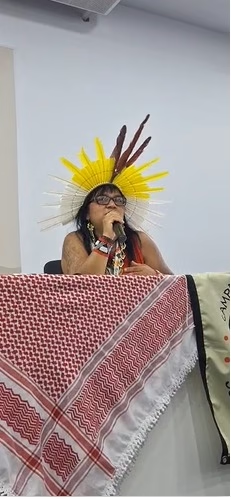
_Belém (PA), November 18, 2025_ – In a parallel event echoing the success of the People’s Summit, the voices of frontline communities from Brazil and around the world came together to discuss the Final Declaration of the popular meeting. The panel served to reinforce the message: the solution to the climate crisis is already in the territories, and the role of the COP30 delegates is finally to listen and act. The People’s Summit, which brought together more than 24,000 participants and culminated in the historic Global March of 70,000 people in Belém, positioned itself as the true stage for Climate Justice. The letter Auricélia Arapiun, from the Articulation of Indigenous Peoples of Brazil (APIB), was forceful in giving the political meaning of the document delivered to the negotiators: “This letter from the summit is the letter that holds up so the sky doesn’t fall.” The Indigenous leader denounced the lack of ambition of governments and the ongoing violence against the guardians of the forest. Citing the celebration of the demarcation of 20 Indigenous Lands in Brazil, she stressed that it is necessary to advance even further in the face of the great conflicts experienced by Indigenous peoples. “It is not enough just to demarcate. It is also necessary to protect. It is necessary to protect those who protect.” She recalled that the killing of Indigenous leaders is a genocide that is escalating in Brazil, with more than 200 deaths recorded in one year, and demands that international treaties such as ILO Convention 169 be effectively considered by governments. Nilce Pontes, from the National Coordination of Articulation of Rural Quilombola Black Communities (CONAQ), argued that the outcome of the People’s Summit demonstrated the capacity for mobilization and confrontation of climate injustice. Nilce reinforced the exclusion of Indigenous peoples from negotiation processes and the need for the defense of the environment to include the individual. “Without territory, it is impossible to discuss climate change, adaptation, and resilience,” she declared. Popular pressure as a factor for change The event also served to chart the way forward. Jesus Vazquez, from La Via Campesina, emphasized the need for an analysis that highlights the vulnerability of the most affected people – the working class and those on the margins – and that points the finger at those truly responsible for the crisis: “international corporations” and “imperialist governments.” Moderator Pablo Neri (MST) celebrated the success of the Summit – including the Global March, the Boat Parade, and the Banquet, which served more than 300,000 agroecological meals – and the collective satisfaction with the work done. The final message, echoed by Auricélia Arapiun, is one of unity and clarity: “We have only changed address, but we are in the same village. Therefore, our problems are the same. And the answer lies within us.” The Summit Declaration is seen as the clear “solution” for humanity, now depending on the political will of governments to accept it and ensure the effective participation of the people in the decisions.
COP30 enters its final stretch under global pressure for climate justice and structural changes. Members of the political commission exert pressure during the official opening.
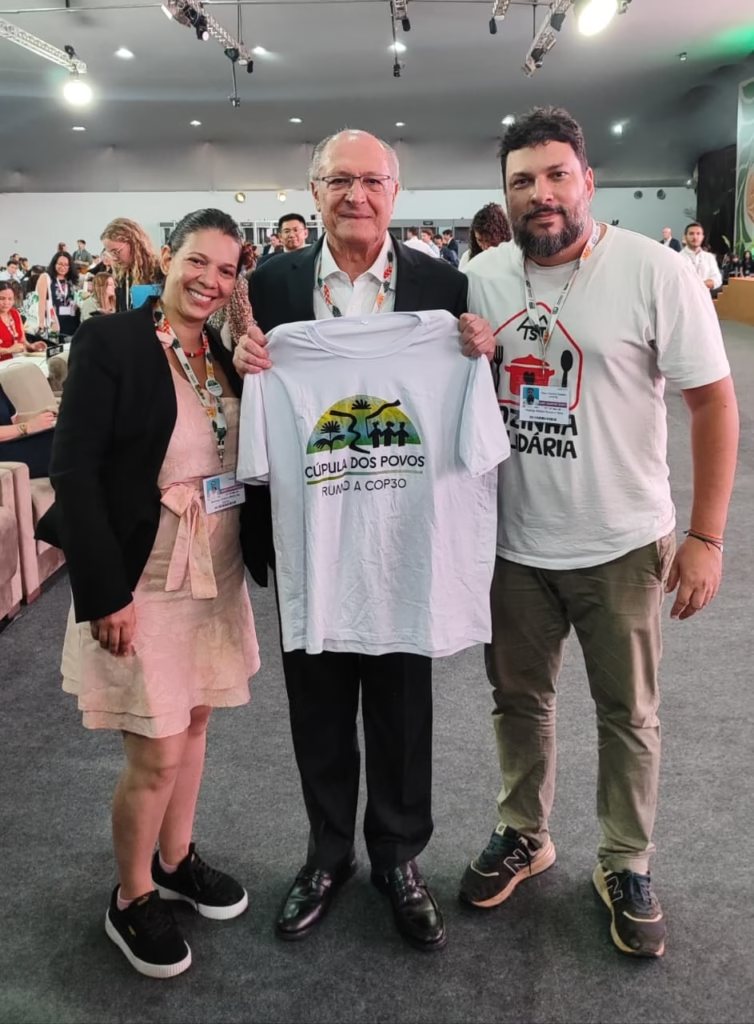
Belém (PA), November 17, 2025 – Negotiations at the 30th United Nations Climate Change Conference (COP30) reached their decisive point in Belém, with the opening of the High-Level Segment and the arrival of ministers. Representatives of the People’s Summit are now acting within the official space to enforce the declaration approved by the movements and organizations. At the opening, Maureen Santos and Rud Rafael, from Fase and MTST, respectively, presented the Summit’s shirt to the Vice President of Brazil, Geraldo Alckmin, as a way to further highlight the struggle. While outside the COP, in the autonomous space of the People’s Summit, there was strong pressure from the streets, inside the Conference, the moment is marked by urgent appeals for countries to make concrete progress and by the historical pressure from social movements demanding that the results prioritize popular justice and address the systemic causes of the crisis. Call for Immediate Action and an End to Obstructions The High-Level segment began with a clear call for accountability. The UN Executive Secretary for Climate Change, Simon Stiell, emphasized the negotiators’ deep awareness of what is at stake. He was emphatic in warning that “there is no time to lose with tactical delays or obstructions,” requesting that the most complex issues be resolved without postponement. The President of the UN General Assembly, Annalena Baerbock, reinforced that the money needed for climate action exists, but needs to be redirected. She highlighted that, in the last year, developing nations disbursed approximately US$1.4 trillion in external debt servicing, an amount that could be vitally applied to mitigation, resilience, and clean energy. This reinforces the call for debt cancellation for developing countries. Transition from Negotiation to Implementation Brazil, as host country and president of COP30, advocated that the event initiate a new global phase: the transition from a negotiation regime to an implementation regime, and with it, the commitment to fulfilling the established goals. The president of COP30, Ambassador André Corrêa do Lago, informed that the negotiation agenda will be extended, including evening sessions, to finalize two packages of essential decisions. PEOPLE’S SUMMIT: Democratic pressure for justice Outside the walls of the official conference, the People’s Summit — considered the largest ever held, with more than 25,000 participants and a march that brought together more than 70,000 people — formalized its demands. A popular declaration, the result of four days of debates, was delivered to Brazilian leaders, including the Minister of the Environment, Marina Silva, and the president of COP30, André Corrêa do Lago. Maureen Santos stated that the event demonstrated an example of democracy and multilateralism, giving visibility to the groups most impacted by the crisis, who are also the ones bringing the alternatives. The main popular demands include debt-free financing, concern about how climate finance is being discussed, warning of the risk of generating new “ecological debts” for the Global South; an expanded just transition with the need to broaden the debate on just transition, beyond just renewable energies, incorporating crucial themes such as food sovereignty, territorial rights and working conditions. PAA is healthy food During the parallel event, groups such as the Homeless Workers’ Movement (MTST), with the support of the Popular Peasant Movement (MCP), the National Agroecology Network (ANA) and the Landless Rural Workers’ Movement (MST), set up a logistical operation that ensured that the food for the registered delegations was, in itself, a political statement in favor of family farming, traditional peoples and a just agroecological transition. Together, they organized a “solidarity kitchen” that provided more than 300,000 free meals, focusing on agroecological products and Amazonian cuisine, reinforcing the message of hope and resilience. They also secured the largest consolidated plan ever implemented under the Food Acquisition Policy (PAA).
It was in the press: Outside of Official Negotiations, Gender Justice Gains Momentum on the Streets of Belém.
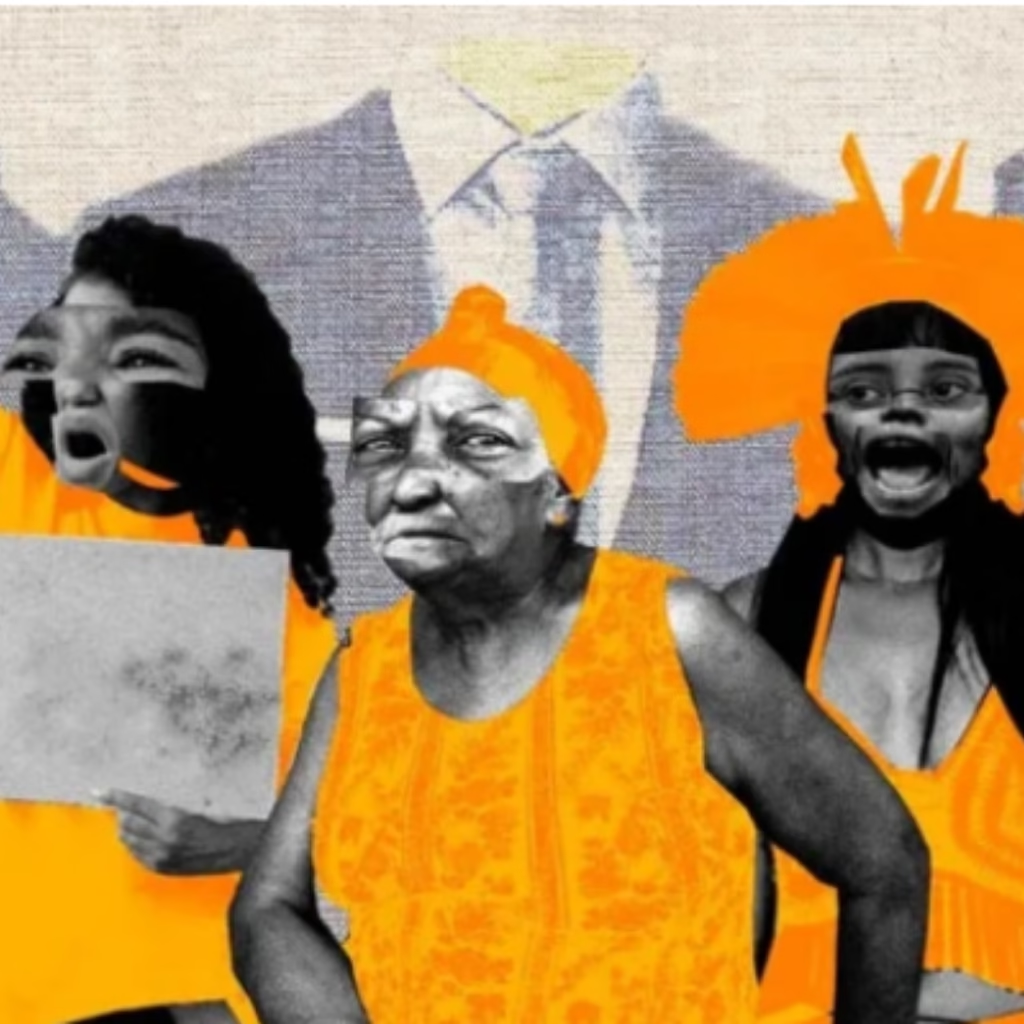
The People’s Summit delivers a 15-point charter to the COP30 president and reaffirms that climate justice depends on feminist justice By: Flávia Santos Edited by: Jane Fernandes and Mariana Rosetti Translated by Diego Lopes/Verso Tradutores “We want a world with feminist justice,” calls the People’s Charter, a document produced by the People’s Summit, which brought together more than 23,000 accredited individuals between November 12 and 16 at the Federal University of Pará (UFPA). The document, which contains 15 points summarizing the demands of popular movements worldwide to address the climate crisis, was delivered to Ambassador André Corrêa do Lago, president of COP30. This text is the result of a mobilization that began in 2024, bringing together social movements, Indigenous Peoples, quilombola communities, artisanal fishermen, and civil society organizations to press for effective political participation in climate discussions. While gender justice remains on the margins of official climate conference negotiations, as AzMina showed in this text, the story is different on the streets of Belém. The final document was constructed during the conference, through six axes of convergence that guided the debates and assemblies throughout the week. One of them was specifically dedicated to “popular feminism and women’s resistance in the territories,” where it was discussed how the climate crisis impacts women’s lives differently and how they have been protagonists in the solutions built. “Our bodies and territories are targets of attacks, but they are also spaces of care and strength. We are the ones who sustain life in the communities, who take care for the land, the water, the home, and the elders. To speak of climate justice is also to speak of gender, race, and territorial justice,” declared Ediene Kirixi, a leader of the Munduruku People, at one of the events of the People’s Summit. The other five themes addressed living territories and food sovereignty; historical reparations and the fight against environmental racism; a just and inclusive transition; democracy and the internationalism of peoples; and just cities and urban peripheries. Women in the letter The People’s Charter was delivered to the COP ambassador on Sunday (17). In the introduction, the text addresses the reality of women and states that “peripheral communities are the most affected by extreme weather events and environmental racism” and face “a lack of justice and reparation actions, especially for women, young people, impoverished and non-white people.” Environmental racism is the term used to describe how Black, Indigenous, and impoverished populations are disproportionately exposed to environmental risks—living closer to landfills, landslide areas, floodplains, and contaminated zones. Data shows that these communities are the ones that most often lose their homes, livelihoods, and, frequently, their lives when a climate disaster occurs. In this context, women bear the additional burden of ensuring the survival of their families amidst the chaos. According to the 2022 Demographic Census, the population residing in favelas and urban communities in Brazil is 51.7% female. Among the 15 demands, the ninth is entirely dedicated to care work, which is predominantly performed by women. “The work of reproducing life must be made visible, valued, understood for what it is—work—and shared within society as a whole and with the State.“ Furthermore, the letter emphasizes that women should not be held individually responsible for caregiving. Not coincidentally, among those who report performing paid domestic and/or care work, 93.9% are women and only 6.1% are men, according to the Institute for Applied Economic Research (IPEA). The block concludes by saying: “We want a world with feminist justice, autonomy and participation of women.” Throughout the document, the word “women” appears five times. In addition to the points mentioned, it appears in the list of groups that participated in the construction of the Summit, in the denunciation of the Palestinian genocide that primarily affects children, women, and the elderly, and again in the section on female autonomy and participation. Issues that intersect with gender issues The letter touches upon issues that intersect with gender discussions, even when it doesn’t explicitly name them. “There is no life without nature. There is no life without ethics and care work. That is why feminism is a central part of our political project ,” the document states. Food sovereignty, for example, is one of the main points of the charter and is directly related to women’s lives. The concept is based on the premise that it is not enough to have sufficient food, but it is necessary to have control over how that food is produced, distributed, and consumed. It is the peasant, Indigenous, and quilombola women who safeguard the heirloom seeds, maintain the traditional knowledge of planting and harvesting, and ensure the communities’ food supply. When the letter calls for “popular agrarian reform and the promotion of agroecology to guarantee food sovereignty,” it is directly addressing the work of these women. A just transition is another term that appears prominently in the document. The proposal is not simply to replace fossil fuels with renewable sources while maintaining the same logic of exploitation. A just energy transition requires that workers and affected communities be the protagonists of the process and have their rights guaranteed. Mobilization in the streets The gender agenda was also present on the streets of Belém, the host city of COP30. Last Saturday (15), the Global March for Climate Justice brought together thousands of people. The demonstration brought together Indigenous Peoples, quilombolas, artisanal fishermen, students, trade unionists and activists from more than 60 countries. Kirtana Chandrasekaran, executive director of Friends of The Earth International said she went to the march in solidarity with the thousands of people participating. “We know we are fighting against the same system. The capitalist, patriarchal, colonialist, and imperialist system that is causing the crisis we see today,” she commented. On Sunday (16), the Summit held the “Banket-rally” in República Square, with free distribution of food to the population. The event, organized in partnership with food security movements, served meals prepared with food that would be discarded by fairs and supermarkets, but which was still
People’s Summit brings frontline voices to the COP30 Blue Zone. People’s Summit brings frontline voices to the COP30 Blue Zone.
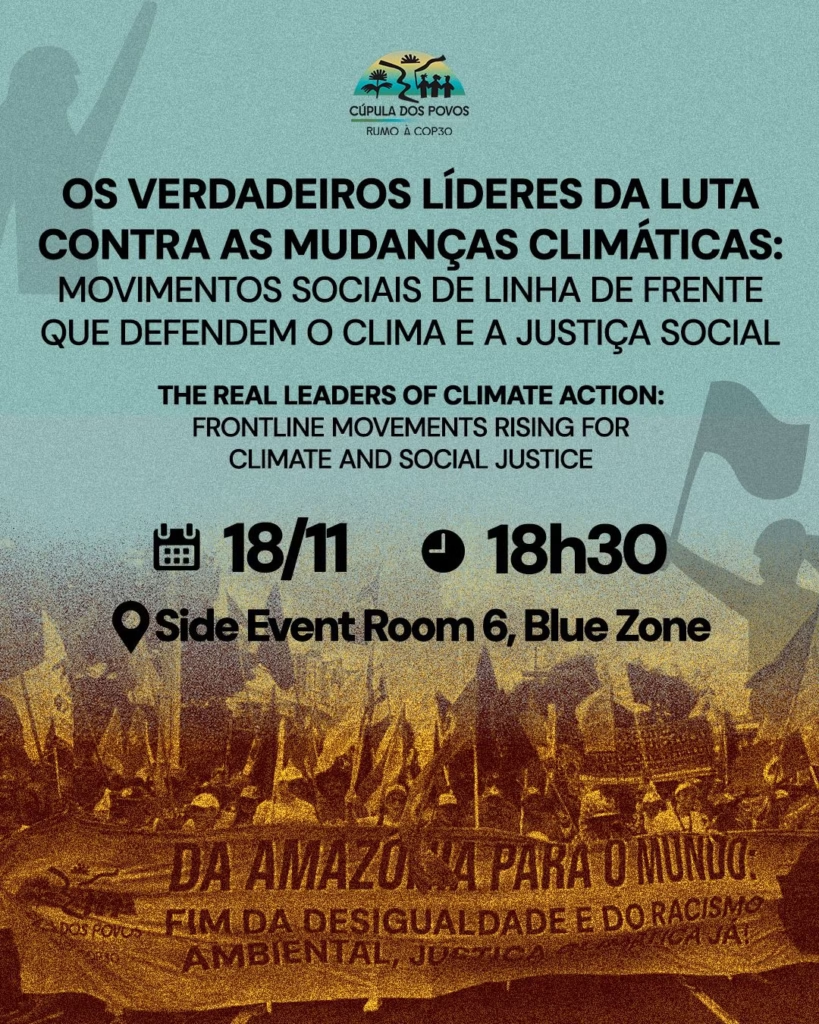
Date: 18/11/25Time: 6:30 pm to 8:00 pmLocation: Side Event Room 6 (Hangar), Blue Zone. PARALLEL EVENT | THE REAL LEADERS OF THE FIGHT AGAINST CLIMATE CHANGE: Frontline Social Movements Defending Climate and Social Justice. The People’s Summit toward COP30, which brought together more than 24,000 participants and mobilized 70,000 people in the streets of Belém during the Climate Justice March, will hold an official parallel event in the COP30 Blue Zone, bringing the voices of territories and social movements that, in practice, are building the struggle for life, climate, and social justice. After a historic mobilization involving hundreds of Indigenous, Quilombola, riverside, coastal, trade union, feminist, youth, children’s, and popular organizations from around the world, this gathering inside COP30 will be a space to collectively reinforce the political outcomes of the Summit, deepen the meaning of the People’s Summit Declaration, and project the central struggles on the road toward COP30. PANEL PROGRAMModerator: Pablo Neri – Landless Workers’ Movement (MST) Spokespeople — People’s Summit Declaration:Nilce Pontes – National Coordination for the Articulation of Black Rural Quilombola Communities (CONAQ)Roquin Siongo (Grassroots Global Justice / Micronesia Climate Alliance – Pacific)Sophie Dowlar (World March of Women) Spokespeople — What lies ahead:Auricélia Arapiun – Articulation of Indigenous Peoples of Brazil (APIB)Jesús Vázquez (La Vía Campesina)
People’s Summit delivers a powerful letter to the COP30 President and calls on the world to act for life, international solidarity, and Climate Justice.
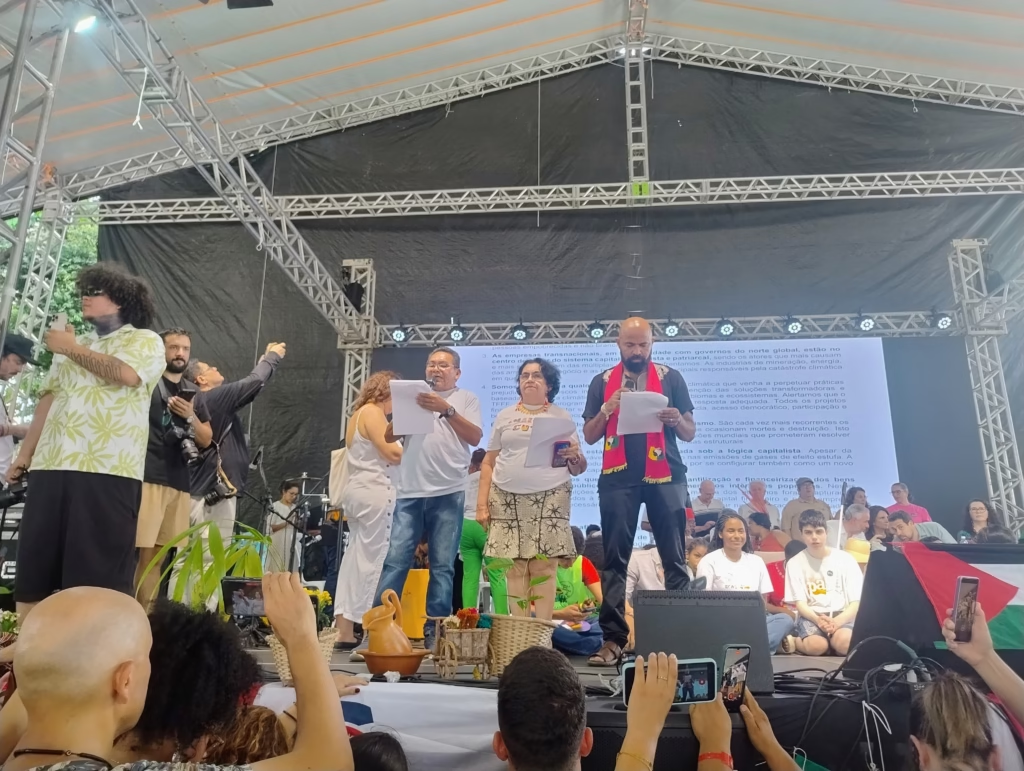
Belém (PA), November 16, 2025 — The People’s Summit Toward COP30 concluded its program today, the 16th, in Belém (PA), by delivering to the President of COP30, Ambassador André Corrêa do Lago, a letter of strong political substance, collectively built by movements, organizations, and networks articulated over months of preparatory meetings and five intense days of debates and mobilizations in the streets and rivers of the Amazonian city. The document expresses the unity of Indigenous peoples, traditional communities, Quilombola communities, fishers, extractivists, babaçu coconut breakers, peasants, urban workers, youth, women’s movements, the LGBTQIAPN+ population, trade unions, residents of peripheral neighborhoods, and activists from all biomes. According to the text, this collective process affirms the commitment to building a just and democratic world, grounded in buen vivir and the strength of diversity. The letter denounces that the climate crisis is being deepened by the advance of the far right, fascism, and wars, and states that countries of the Global North, transnational corporations, and economic elites are primarily responsible for the multiple environmental and social crises. It strongly condemns the genocide of the Palestinian people and expresses active solidarity with peoples resisting imperial projects, militarization, and violations of their territories. The text also reaffirms a vision that places care work at the center of life, recognizing feminism as an essential part of the response to the crises. The ancestral wisdom of Indigenous peoples, the creativity of territories, and the spiritual strength that guides struggles appear as foundations for real, rooted solutions. The COP30 President, André Corrêa do Lago, received the letter at a moment when he concludes his own cycle of messages to Brazilian and international society, emphasizing the need for the COP to be not only a space for words, but for concrete action in the face of the climate emergency. He committed to forwarding the document through the official spaces of the Climate Conference. Among the voices echoing in this process is that of Chief Raoni Metuktire, who, during the People’s Summit and COP30 programming, once again warned that life on Earth depends on protecting the Amazon and that the destruction of the forest compromises the future of all humanity. “Once again, I ask everyone that we may continue this mission of defending life on Earth, on the planet. I want us to maintain this continuity of struggle, so that we can fight those who want harm, those who want to destroy our land,” said Raoni. The Final Letter reinforces the commitment to popular internationalism, solidarity among territories, and the construction of an International Movement of People Affected by dams, socio-environmental crimes, and the impacts of the climate crisis. For the movements, only the global organization of peoples will be able to confront the structures that fuel inequalities, violence, and environmental collapse. The message is clear. When organization is strong, the struggle is strong. It is time to move forward with greater unity and awareness to confront the common enemy and defend life. Proposals presented by the People’s Summit include confronting all false market-based solutions and affirming that air, forests, waters, lands, minerals, and energy are commons, not commodities; guaranteeing participation and leadership of peoples in building climate solutions, with full recognition of ancestral knowledge; demarcating and protecting Indigenous lands and traditional territories and ensuring zero-deforestation policies, ecological restoration, and recovery of degraded areas; implementing popular agrarian reform and strengthening agroecology as a path to food sovereignty and the fight against hunger; confronting environmental racism and building just cities with housing, sanitation, land regularization, dignified public transport, and access to water and green spaces; ensuring popular participation in the formulation of urban climate policies and stopping the commodification of life in cities; defending an end to wars and militarization and redirecting resources currently allocated to the arms sector toward reparations for regions affected by the climate crisis; demanding full reparations for losses and damages caused by mining, fossil fuels, dams, and environmental disasters, with corporate accountability; valuing care work and recognizing its centrality to sustaining human and non-human life, ensuring autonomy and feminist justice; building a just, popular, and sovereign energy transition, with protection of territories and overcoming energy poverty; defending an end to fossil fuel extraction and creating mechanisms to prevent its expansion, especially in the Amazon and sensitive ecosystems; taxing large corporations and great fortunes and ensuring public financing for a just transition, holding accountable the sectors that profit most from the crisis; rejecting climate finance models that reinforce inequalities and defending transparent and democratic structures that recognize the socio-environmental debt of the Global North; strengthening protection for human rights and environmental defenders and confronting the criminalization of social movements; and creating legally binding international instruments to hold transnational corporations accountable for human rights and environmental violations and fully implementing peasants’ rights as a pillar of climate governance. Read the full letter HERE.