
It was in the press: Traditional Peoples from Brazil and Abroad Demand Protagonism in COP30 and the Fight Against Climate Change
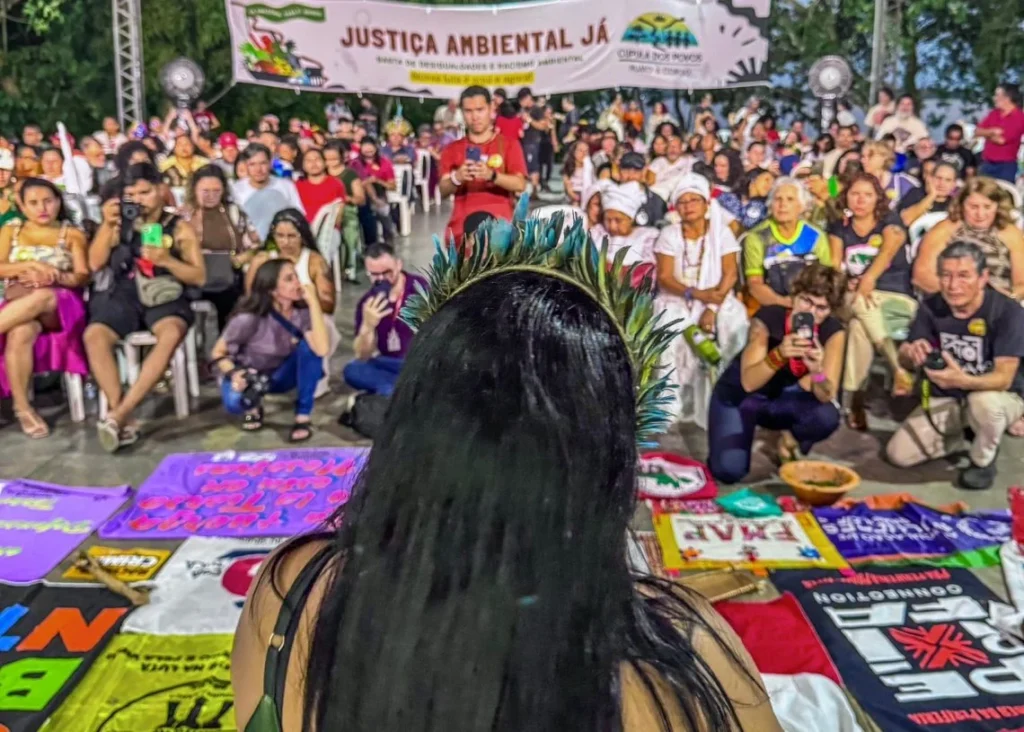
MEETING IN BELÉMTraditional Peoples from Brazil and Abroad Demand Protagonism in COP30 and the Fight Against Climate Change Over 70 Organizations Gather in Belém to Reaffirm the Protagonism of Amazonian PeoplesMay 31, 2025, 3:03 PMUpdated June 24, 2025, 2:11 PMBelém (Pará)Mariana Castro Over 70 organizations gather in Belém to reaffirm the protagonism of Amazonian peoples – Photo: Caetano Scannavino On Friday (May 30), representatives of more than 70 popular movements, organizations, and traditional peoples from 13 countries gathered in a political action held in Belém, where it was officially announced that the Federal University of Pará (UFPA) will serve as the central venue for the People’s Summit discussions during COP30. The event emphasizes the demand that Amazonian peoples be the true protagonists of the climate struggle, through listening, dialogue, and the proposal of public policies that consider traditional knowledge and lived experiences. Under the theme “From the Amazon to the World: Climate Justice Now!”, peoples from Latin America, Africa, Asia, and Europe proclaim: there is no solution to the climate crisis that does not originate with and involve Indigenous and traditional peoples. Representing Indigenous peoples of Brazil, Auricélia Arapiun, an Indigenous leader from Baixo Tapajós (PA) and member of the Coordination of Indigenous Organizations of the Brazilian Amazon (COIAB), participated in the event. “The answer is us, who have long been saying that we have the solution. If they had the solution, we would not be heading toward the end of the world, as we are today. On the contrary, at every COP the situation only worsens because we are not inside, we are not heard, and we will not be,” emphasized Auricélia. During her speech, Auricélia strongly highlighted regressive actions by the National Congress, such as the approval of Bill 2159/2021, popularly known as the “Devastation Bill,” which establishes a new framework for environmental licensing in Brazil to the detriment of traditional peoples’ rights. “What kind of COP30 do we want for Brazil if the National Congress is attacking our territories, attacking the environment, if the Devastation Bill is advancing, destroying our lands? Have they approved the regressive bill on Indigenous land demarcation? It is unacceptable that we are heading in this direction while Brazil and the Pará government position themselves as leaders in tackling the climate crisis,” Auricélia denounced. The launch of the People’s Summit territory marks the UFPA public space to reaffirm ancestral, community, and popular practices as concrete and viable paths to address the climate crisis with social justice. “This Summit plays a fundamental role in popularizing and involving the people, placing them at the center of debates, engaging them in the climate discussion, and proposing—through their concrete and real practices—the transformation of this world that belongs to everyone. And we are saying that popular participation is necessary, so that COP, the Summit, and the Brazilian government demonstrate, in fact, a commitment to change,” explained Pablo Neri, from the national leadership of the Landless Workers’ Movement (MST). People’s Summit Goes Beyond COP30 The event is part of a four-day agenda that consolidates collective strategies for the main event in November, when the Summit expects to gather around 15,000 people in Belém for an extensive program, including the participation of over 700 organizations and social networks. However, organizations emphasize that COP30 does not conclude the collective construction of the People’s Summit, which goes beyond pre-determined calendars and aims to be a space ensuring ongoing and internationalist dialogue and struggle in defense of the Amazon, its peoples, and territories. As part of the internationalist delegation, Sophie Ogutu, from Nairobi, Kenya, and member of the International Committee of the World March of Women, emphasized the importance of this space dedicated to the peoples. “Solutions for the world will never come with a pen stroke. We are here, and we have the solutions. I am very grateful to be here at the University of Pará, in this space that was given to us. And look, back in Kenya, everyone says that of all the COPs, they would most like to be at this one in Brazil, because here we have a voice, here you make space for everyone,” assured Sophie. Firmly, Denisse Chavez highlights women’s protagonism in the struggle for climate justice. Photo: Thaigon Arapiun From Peru, activist and feminist Denisse Chavez, from the group Mujeres y Cambio Climático (GIMCC), reiterates that the struggle for climate justice is inseparable from the fight for justice in all its forms. “We continue this struggle and will persist to leave a better world for our daughters and granddaughters. And we will only achieve this by demanding climate justice, gender justice, and environmental justice for all men, women, and diverse communities,” she emphasized. People’s Summit Since 1992, the People’s Summit has been a cry for resistance and justice through an autonomous space where communities most affected by the climate crisis—such as Indigenous peoples, quilombolas, traditional communities, and urban periphery residents—join forces to amplify their voices and demands. In November 2025, Brazil will host the 30th Conference of the Parties to the United Nations Framework Convention on Climate Change (COP30). In this context, over 700 organizations, networks, and collectives have joined to build a broad mobilization process so that COP in Brazil becomes a turning point in climate crisis discussions. Edited by: Rodrigo Durão Coelho Reproduction from Brasil de Fato
Published in the press: Belém hosts public act and international meeting of the People’s Summit toward COP30.
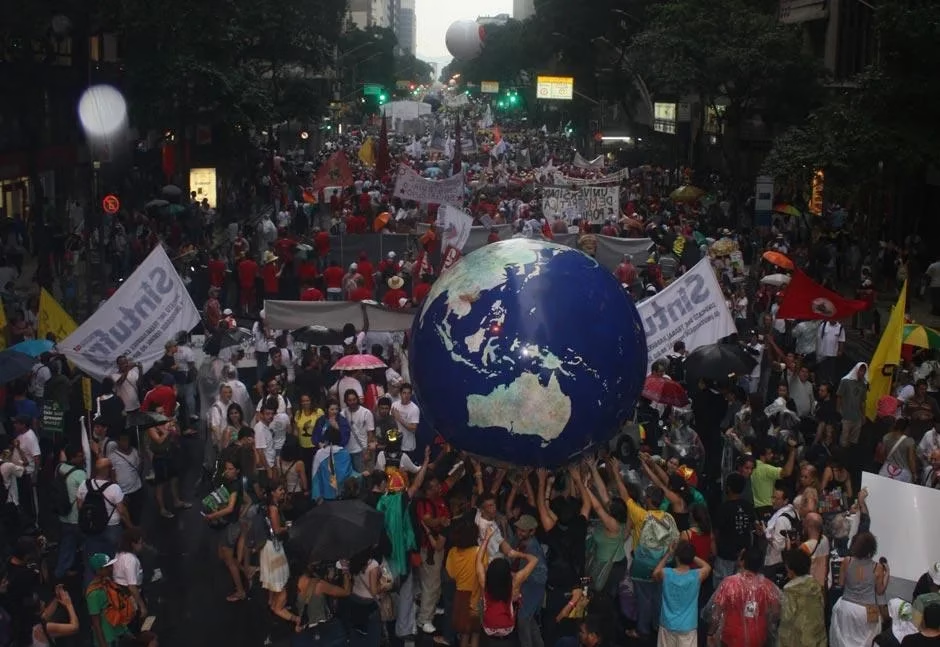
More than 60 organizations from Brazil and around the world will gather in the COP30 host city to map out strategies of global resistance and demand climate justice** By Casa NINJA Amazônia From May 30 to June 2, Belém do Pará, in the Brazilian Amazon, will become the center of a global articulation for climate justice. The city will host, for the first time, the in-person meeting of the Political Commission of the People’s Summit toward COP30, bringing together more than 60 organizations, networks and social movements from Brazil, Latin America, Africa, Asia and Europe. The agenda begins with a political act on May 30 at 4 pm at the Federal University of Pará (UFPA), under the theme “From the Amazon to the World. Climate Justice Now!” With the slogan “All rivers lead to Belém. It is time to listen to the voices of the territories. There is no future without us,” the act will be an international call to action and denunciation against environmental racism, false solutions and the climate collapse advancing over the most vulnerable territories and bodies. The mobilization takes place in a critical global context. According to the World Meteorological Organization (WMO), 2024 was the hottest year ever recorded, with a global average temperature 1.55°C above pre-industrial levels. This increase marks a worrying milestone, as it surpasses for the first time the 1.5°C limit set as a target in the Paris Agreement to avoid the worst impacts of climate change. Meanwhile, UN Conferences (COPs) continue to fail to ensure real climate finance for the most affected countries. COP29, held in Baku, approved funding far below what is needed and opened the door to loans that may further indebt the Global South. In the United States, President Donald Trump signed an executive order in January 2025 to withdraw the country from the Paris Agreement for the second time, reinforcing US isolation from global climate initiatives. In Brazil, the climate tragedy in Rio Grande do Sul, with more than 160 deaths caused by floods in 2024, highlights the absence of effective public adaptation policies. In addition, the recent progress of Bill 364/19 in the Brazilian Congress threatens Indigenous peoples, weakens environmental licensing rules and opens even more space for agribusiness and illegal mining. Across Latin America, Africa and Asia, the number of projects that, under the discourse of a “green transition,” expel traditional communities from their territories in the name of carbon offsetting and market-driven bioeconomy is increasing. Violence against environmental defenders is also rising. In 2023, 177 environmental activists were murdered worldwide, 88 of them in Latin America, according to Global Witness. Denunciations from the peripheries will expose COP30 contradictions The political act at UFPA is intended not only as a symbolic moment but as a concrete space to denounce the false solutions presented in the official COP30 forums. Leaders from different territories will show that real responses to the climate crisis are already being built in urban peripheries, traditional communities and quilombos, and that ignoring these solutions means perpetuating the problems. The Summit thus positions itself as a legitimate popular counterpoint to the institutional narrative that prioritizes large infrastructure projects and economic interests over lives in the territories. Among the cases to be denounced are those of the Vila da Barca community and the quilombola territory of Abacatal, which clearly illustrate what social and environmental movements have called environmental racism. Decisions made without consultation shift negative impacts onto Black, peripheral and vulnerable populations, while promoting a “green” image aimed at the outside world. Vila da Barca and environmental racism in the name of revitalization In Vila da Barca, one of the largest stilt-house communities in the Amazon, residents have been facing the direct impacts of the Nova Doca project, one of the urban infrastructure initiatives linked to Belém’s preparation to host COP30. Debris and sewage from wealthier neighborhoods have been dumped near the community, without dialogue or any consultation process. What is presented as revitalization has in practice meant environmental degradation, evictions and rights violations. “It is environmental racism, yes, because they only dump what is worthless in the places where we live,” says Suane Barreirinhas, a popular educator and community leader. This reality will be brought to the act as an example of the gap between the sustainability discourse promoted internationally and the concrete actions implemented in Amazonian cities. Quilombo Abacatal and the road that threatens a quilombola territory The case of the Abacatal quilombo, located in Ananindeua, will also be denounced. The community will be directly impacted by the construction of Avenida Liberdade, a 14 km highway planned to “improve urban mobility” in the Belém metropolitan region. The road will cut through areas of the quilombola territory, affecting water sources, agricultural production spaces and sites of historical and spiritual value to the community. Even after the preparation of a Quilombola Component Study, which found that 100 percent of residents oppose the project, the Pará state government moved forward without complying with ILO Convention 169, which requires free, prior and informed consultation. The violation of rights will be a central point raised by quilombola leaders at the Summit. Territories will present real solutions The experiences and denunciations shared during the act will reinforce the Summit’s purpose of exposing market-based solutions presented as sustainable and affirming ancestral, community-based and popular practices as concrete and viable paths to confront the climate crisis with social justice. Solutions are already being built in the territories in the form of agroecology, community reforestation, people-led water management, solidarity economy, and Indigenous and quilombola knowledge. Making these voices protagonists is what will give legitimacy to the transformations the Amazon and the world need. From the Amazon to the world, the peoples hold the solutions The People’s Summit proposes a territory-rooted agenda that connects climate justice struggles with historic demands such as agrarian reform, agroecology, food sovereignty, a just energy transition, and the fight against racism and climate colonialism. More than 700 organizations and social networks have joined the process since 2023,
Mobilization of Peoples for Land and Climate: REPAM Coordination Participates in Chamber Seminar on COP30 Directions
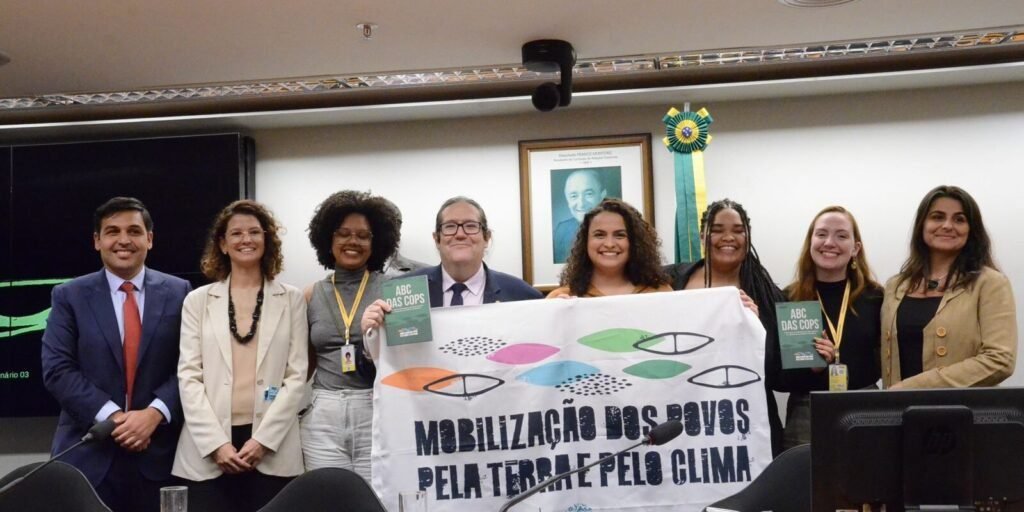
Mobilization of Peoples for Land and Climate: REPAM Coordination Participates in Chamber Seminar on COP30 Directions The Environmentalist Mixed Parliamentary Front, through its Climate Working Group, held a seminar on Tuesday, May 6, at the Chamber of Deputies to present lessons from the last Climate Conference and discuss pathways for the upcoming COP30, scheduled for November in Belém (PA). The event brought together representatives from the federal government, parliamentarians, and various civil society organizations to emphasize the importance of broader and more effective participation in the conference’s preparatory processes. Participants included diplomat Pedro do Nascimento Filho from the Ministry of Foreign Affairs; Monique Ferreira, Chief of Staff for the COP30 Presidency at the Ministry of Environment; representatives from the National Youth Climate Coalition (Conjuclima), the Alana Institute, Plataforma Cipó, the Black Voices for Climate Network, as well as parliamentarians such as Tarcísio Motta (PSOL-RJ). During the seminar, Mayara Lima, communicator for the project Mobilization of Peoples for Land and Climate, coordinated by REPAM toward COP30, highlighted the need to decentralize the climate debate and ensure that the conference agenda reaches the grassroots level. She presented the ABC of COP guide, created to facilitate access to information and strengthen the actions of territories and traditional populations. “You cannot influence what you do not understand. If information remains restricted to diplomats and small groups, how will communities build pathways for real participation?” she asked. Mayara Lima also emphasized the ongoing efforts by civil society to ensure meaningful participation in climate discussions, even outside official COP30 spaces. She cited initiatives such as the People’s Summit, the COP of the Lowlands (COP das Baixadas), and the People’s COP (COP do Povo), which will take place in parallel with the official conference in Belém. “We know civil society will not be fully inside COP30, so these autonomous spaces are essential for expanding influence and strategically organizing the voices of the territories,” she stated. Thalia Silva, coordinator of Conjuclima, also demanded greater space for youth in international negotiations. “COP29 showed that we, as youth, are not asking for a seat at the table. Now, we demand to be part of the decisions and negotiations,” she said. The seminar was organized by the Participatory Legislation and Environment Committees of the Chamber, with support from the Environmentalist Parliamentary Front, following a request from deputies Ivan Valente (PSOL-SP) and Talíria Petrone (PSOL-RJ).
FASE joins social movements in building the People’s Summit Toward COP30 The meeting in Rio de Janeiro mobilized organizations and civil society to outline strategies at national and international levels.
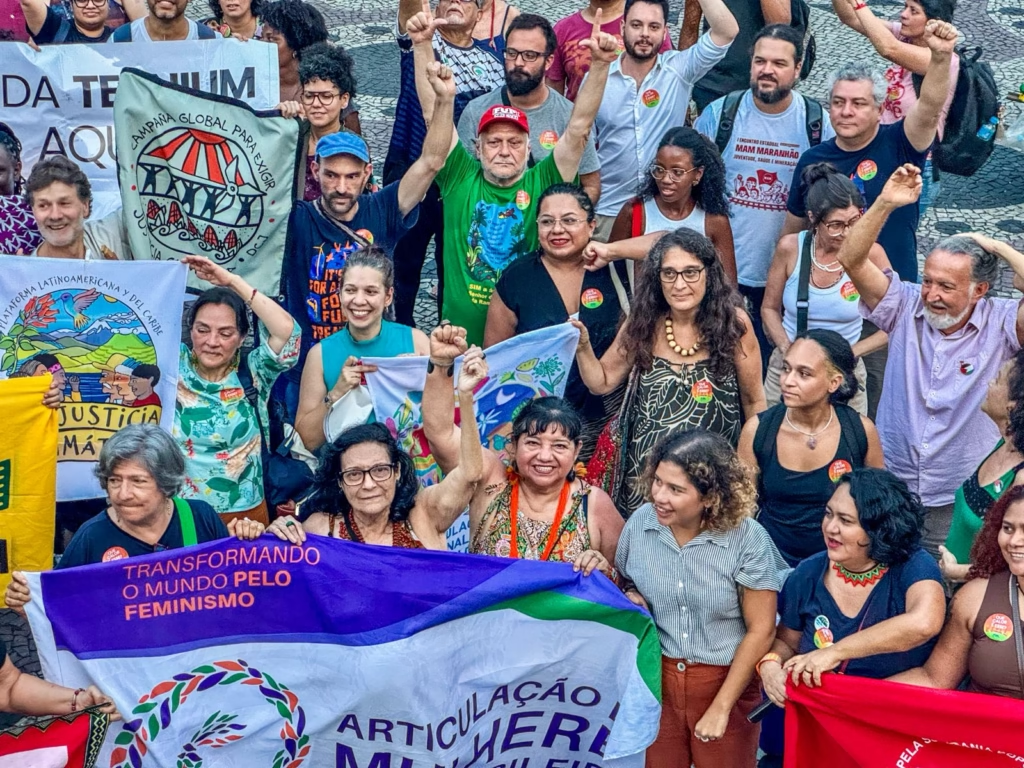
Paula Schitine07/02/2025 3:53 pm The People’s Summit Toward COP30 met throughout the week in Rio de Janeiro to expand national and international mobilization strategies. The main objective was to define the direction of the Summit’s international advocacy toward the 30th United Nations Conference on Climate Change, which will take place in Belém, Pará, in November this year. The city of Rio de Janeiro holds fundamental importance, as it previously hosted Rio 92 and Rio+20, conferences and key spaces for global environmental, climate, and social debates. On Tuesday (4), the Mobilization of Peoples for Land and Climate was organized during the Political-Cultural Act held at Cinelândia, in downtown Rio de Janeiro. On the 3rd and 4th, the meeting of the operational group of the People’s Summit also took place, with the participation of representatives of movements from Africa, Asia, the Americas, and Europe, who discussed strategies for influencing climate negotiations on the road to COP30. Around 500 representatives of social movements from different parts of the world were present. Representing FASE were Executive Director Letícia Tura, Coordinator of the Policy and Alternatives Unit (NuPA) Maureen Santos, and Coordinator of FASE Amazonia Sara Pereira. “At this meeting, the key understanding was that there is no way to promote climate justice without promoting social justice. So this is not only an environmental or climate discussion, it is above all about the reality of peoples,” said Sara Pereira. “It is important that the population understands this and places itself in this struggle for a transition not only of the energy matrix, but of the economic matrix, a model built from the initiatives of peoples from urban peripheries, quilombos, the countryside, the waters, and the forest, not only in Brazil, not only in the Amazon, but across all continents and throughout global civil society,” summarized the Coordinator of FASE Amazonia. The People’s Summit Toward COP30 is a process of convergence among organizations and movements of women, trade unions, Indigenous peoples, family farmers and peasants, quilombola communities, traditional peoples and communities, peoples of African-based traditions, Black communities, youth, interfaith groups, environmentalists, workers, independent media activists, cultural workers, students, residents of favelas and urban peripheries, LGBTQIAPN+ communities, persons with disabilities, human rights defenders, advocates for children, adolescents and intergenerational justice, from cities, the countryside, forests, and waters, toward the realization of the People’s Summit as an autonomous space in relation to COP30. The space has been organized since August 2023 and brings together social and popular movements, coalitions, collectives, networks, and civil society organizations from Brazil. Its objective is to strengthen popular organizing and converge unity agendas across socio-environmental, anti-patriarchal, anti-capitalist, anti-colonial, anti-racist, and rights-based struggles, respecting their diversity and specificities, united by a future of well-being and buen vivir. FASE is one of the organizations building the People’s Summit through the networks in which it operates, such as the National Agroecology Articulation (ANA), the Carta de Belém Group, and the Pan-Amazonian Social Forum. It is also present in the Amazon, where it has worked for 30 years alongside Indigenous peoples, traditional communities, riverside populations, and peoples of the countryside, forests, waters, and cities. FASE communicatorOriginally published on the FASE portal HERE
Political-Cultural Action at Cinelândia Highlights Climate Justice and Violence Against Climate Defenders
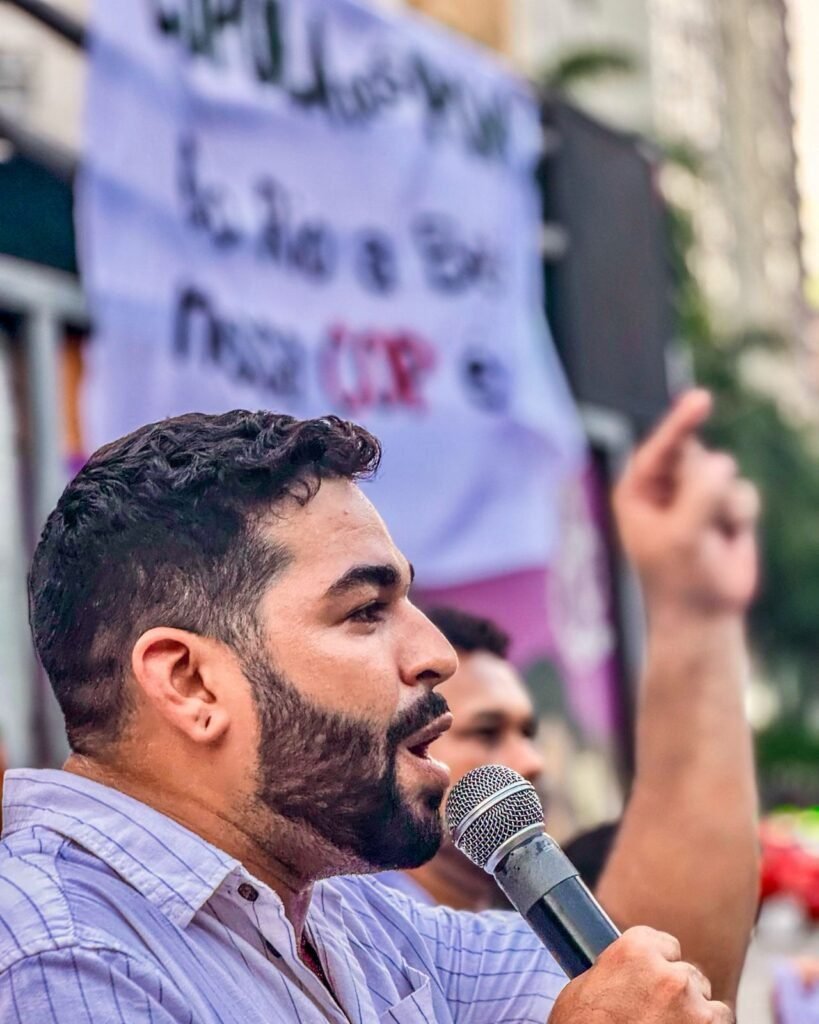
In 2023, 196 people were killed for defending environmental and territorial causes. On February 4, the Cúpula dos Povos Rumo à COP 30 occupied the Cinelândia area, in the heart of Rio de Janeiro, with a Political-Cultural Action for Climate Justice under the theme “The COP Has Already Begun! All Rivers Lead to Belém.” Representatives from social movements, artists, and national, international, and local organizations amplified the message of the Cúpula, the struggles of territories, and the work of climate defenders. With flags and a sound truck, participants took turns speaking about the importance of collectives and the general public becoming increasingly involved in building the global climate agenda. COP 30, taking place in Brazil for the first time, is seen as a major opportunity both to incorporate popular demands into the Conference’s agenda and to pressure governments worldwide to commit to historic social issues. Osver Polo Carrasco, representative of the Climate Action Network (CAN Latin America), emphasized the urgency of collective mobilization: “Climate action is our responsibility. We have to change this, fight, and promote this transformation for the well-being of future generations.” According to him, the lack of progress in climate negotiations demands a strong civil society response: “There is no Plan B—it’s the only one we have to save.” During the event, Eduardo Giesen, coordinator for Latin America and the Caribbean of the Global Campaign for Climate Justice, also highlighted the importance of collective mobilization to face the environmental crisis: “We are here to demand climate justice and build alliances that strengthen our struggle.” He stressed that civil society pressure is essential to ensure real and effective commitments to protecting the planet. Mural Honors Climate Defenders for Their Legacy of Struggle The artistic intervention “Who Defends the Climate Defends Life” transformed part of a construction fence in front of the Rio de Janeiro City Council into a mural honoring climate activists who were murdered. All of them fought for human rights, and most were actively engaged in environmental causes, such as Chico Mendes and Dorothy Stang. The mural displayed 30 faces of socio-environmental activists who dedicated their lives to the cause and were subsequently killed. Currently, there is no consolidated count of environmental activist murders in 2024. However, the latest Global Witness report, published in September 2024, revealed that 196 people were killed in 2023 for defending environmental and territorial causes. Colombia recorded the highest number of cases, with 79 murders, followed by Brazil with 25 victims. Latin America remains the most dangerous region for environmental defenders, accounting for 85% of recorded crimes in that period. Since 2012, Global Witness has documented over 2,100 murders worldwide related to environmental defense. “It is important to remember that the struggle for human rights and the fight for climate justice are closely linked, because in the territories and areas where inequality and denial of rights are greatest, climate imbalance also has the most severe impacts,” notes Melisandra Trentin from Justiça Global. “This was a simple tribute so that we can see that the struggles are connected. Today, the fight for the climate is an anti-systemic struggle, a fight for life in its diverse forms, territorial, and in its way of life. Here we have Chico Mendes, but also our comrade Marielle Franco, who fell resisting with her body, fighting for human rights,” added Cristina.
Peoples’ Summit Towards COP 30 to Take Place from November 12 to 16. Schedule Set in Meeting with International Participants Will Boost 2025 Mobilization Agenda
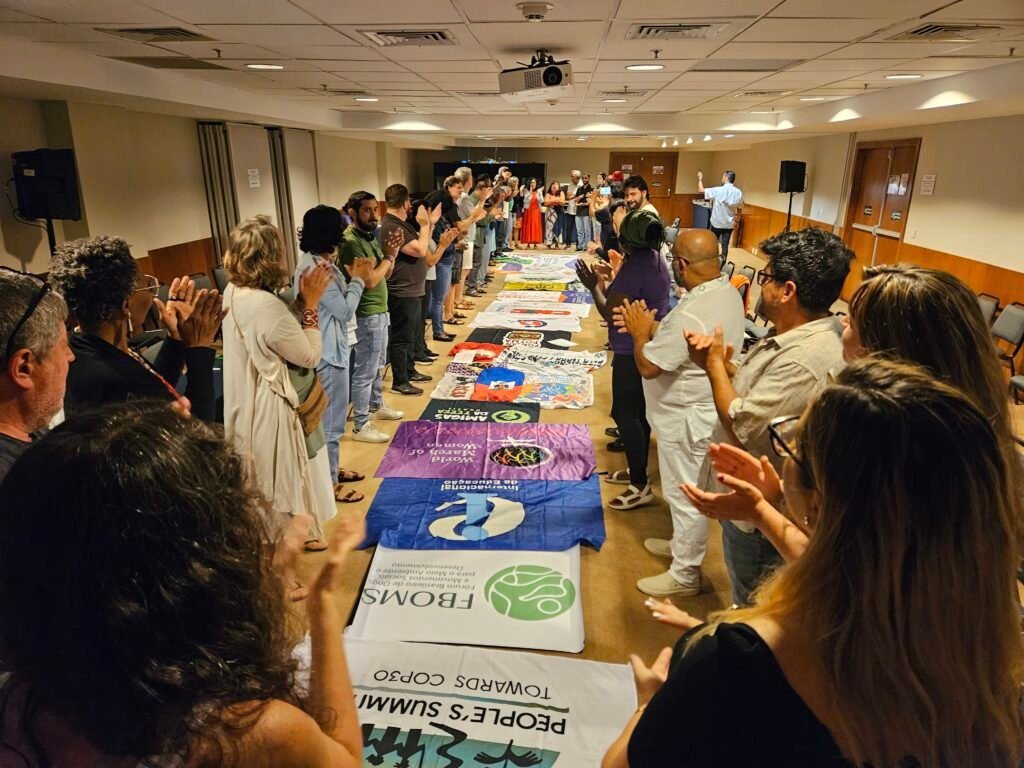
The Peoples’ Summit Towards COP 30 is preparing to hold its activities from November 12 to 16 in Belém (PA), an Amazonian city in northern Brazil, running parallel to the 30th United Nations Climate Change Conference. November 15 will be dedicated to a global mobilization action. The event is expected to bring together around 15,000 people in an autonomous space to discuss measures to address the climate crisis from the perspective of traditional peoples, social movements, and organizations with a long-standing history of working in harmony with Brazil’s diverse biomes. As part of the mobilization agenda, the first week of February was dedicated to a series of meetings and gatherings in Rio de Janeiro, with social and environmental leaders from 16 countries, including France, the Philippines, Kenya, South Africa, Togo, and Ecuador. These meetings defined the direction for international advocacy, a common calendar of discussions over the coming months, and the joint programming of the Summit. “We were able to make significant progress both in our organization and in discussing our priority agendas—regarding rural areas, forests, and also cities and peripheries, which are the most affected by climate change. It is from these territories that we want to build solutions for our country and for our planet,” explains Julia Nascimento, coordinator of the Homeless Workers’ Movement (MTST). Through the Peoples’ Summit, Brazil resumes its tradition of hosting major international gatherings and heads of state as part of civil society-led mobilization processes, such as the Global Forum during Eco 92, the Peoples’ Summit during Rio+20 in 2012, the Social Forums, and the Peoples’ Summit in response to the G20 in 2023. Around 546 Brazilian and international organizations have already signed the Peoples’ Summit Manifesto. The goal is to further strengthen the struggle through intensified coordination and discussions in the coming months, supporting the agendas of social movements and organizations engaged in climate issues, as well as longstanding advocacy campaigns. For Thuane Nascimento, known as Thux, from Perifa Connection and the Black Coalition for Rights, this coordination will be crucial for empowering civil society from Brazil. “The Summit will be a very important space to mobilize social struggles in Brazil—not only the climate movements but the entire struggle for all Brazilian people,” she notes. “The Summit is important for all Brazilian people. First, it helps to popularize a space that is so distant and elitist in our daily lives—the COP—which should not be that way, because all the topics discussed at the Conferences of the Parties on Climate Change directly affect our daily lives, whether through extreme heat or floods,” she adds. Eduardo Giesen, coordinator for Latin America and the Caribbean at Demand Climate Justice (DCJ) from Chile, highlights that the discussions should foster unity in pursuing effective actions. “Often, we remain only in resistance against fascism, climate change, and false solutions. We need to be able to provide tools, demonstrate unity, and build convergence for achievable change,” he asserts. Dialogue with the Federal Government During the Rio meetings, one of the key points discussed was dialogue with the federal government, which is responsible for presiding over and organizing the Conference. “It is very important that we signal to the federal government, the COP 30 commission, and the UNFCCC the dialogue we want as civil society—not only from Brazil but globally. An effective participation,” explains Alana Manchineri from the Coordination of Indigenous Organizations of the Brazilian Amazon (COIAB). Francisco Kelvim, from the national coordination of the Movement of People Affected by Dams (MAB), adds that this dialogue occurs from a perspective of respect but independence. “The Summit is an autonomous space that emerges from insurgency and a demand to be heard and considered in decision-making—not only on climate issues. The main way to push for this is through mobilization, and this will be our strategy,” he says.
It was in the press: Possible Future | Climate justice rally takes place this Tuesday (4) in downtown Rio de Janeiro.
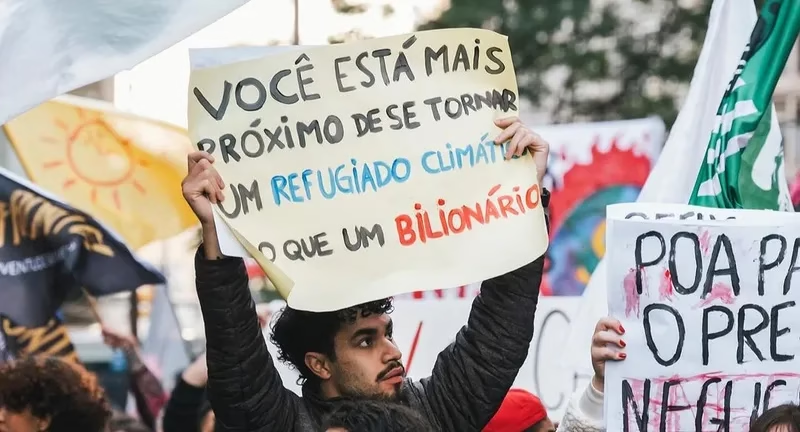
The mobilization is organized by the People’s Summit toward COP30, which will take place from November 12 to 16 in Belém, Pará. This Tuesday (4), social movements, artists, and representatives of international organizations will hold a symbolic act to highlight struggles for climate justice at Cinelândia, in downtown Rio de Janeiro, starting at 5 pm. The activity is organized by the People’s Summit toward the United Nations Climate Change Conference (COP30), which will be held in November in the city of Belém, Pará. “Our act is meant to amplify our demands regarding the advance of climate change. We are feeling these climate shifts firsthand. Developmentalist projects continue to advance through the predatory exploitation of our natural assets, and this exploitation has brought disastrous consequences for us, especially for peoples of the Global South. The drought in the Amazon and the floods in southern Brazil are real examples of the acceleration of climate change,” explains Izabely Miranda, from the national leadership of the Movement for Popular Sovereignty in Mining (MAM), one of the organizations responsible for the Summit, in a statement to Brasil de Fato. The People’s Summit mobilization reconnects with Brazil’s history of hosting major international gatherings alongside organizing processes led by civil society, such as Rio 92 and Rio+20. In addition to the rally, the People’s Summit is holding a series of meetings throughout this week with representatives from countries in Africa, Asia, the Americas, and Europe. According to the organizers, the meeting’s main objective is to map out a collective mobilization strategy to strengthen global advocacy in climate negotiations, build a roadmap and calendar over the next 10 months of joint actions to increase influence on the Conference’s goals and outcomes, and engage local populations, Indigenous peoples, original and traditional communities, and those affected by extreme climate events in this process. “It is urgent that large multinational corporations, responsible for various socio-environmental crimes, be held accountable. If they do not stop, we will reach the point of no return. It is essential to prioritize the climate agenda,” Miranda stresses. Service information Climate Justice Rally Where: Cinelândia, downtown Rio de Janeiro Date: Tuesday, February 4 Time: 5 pm Edited by Jaqueline Deister Reproduced from the Brasil de Fato website. Check out the original HERE.
As reported in the press: In the year of COP-30, movements strengthen the construction of the People’s Summit.
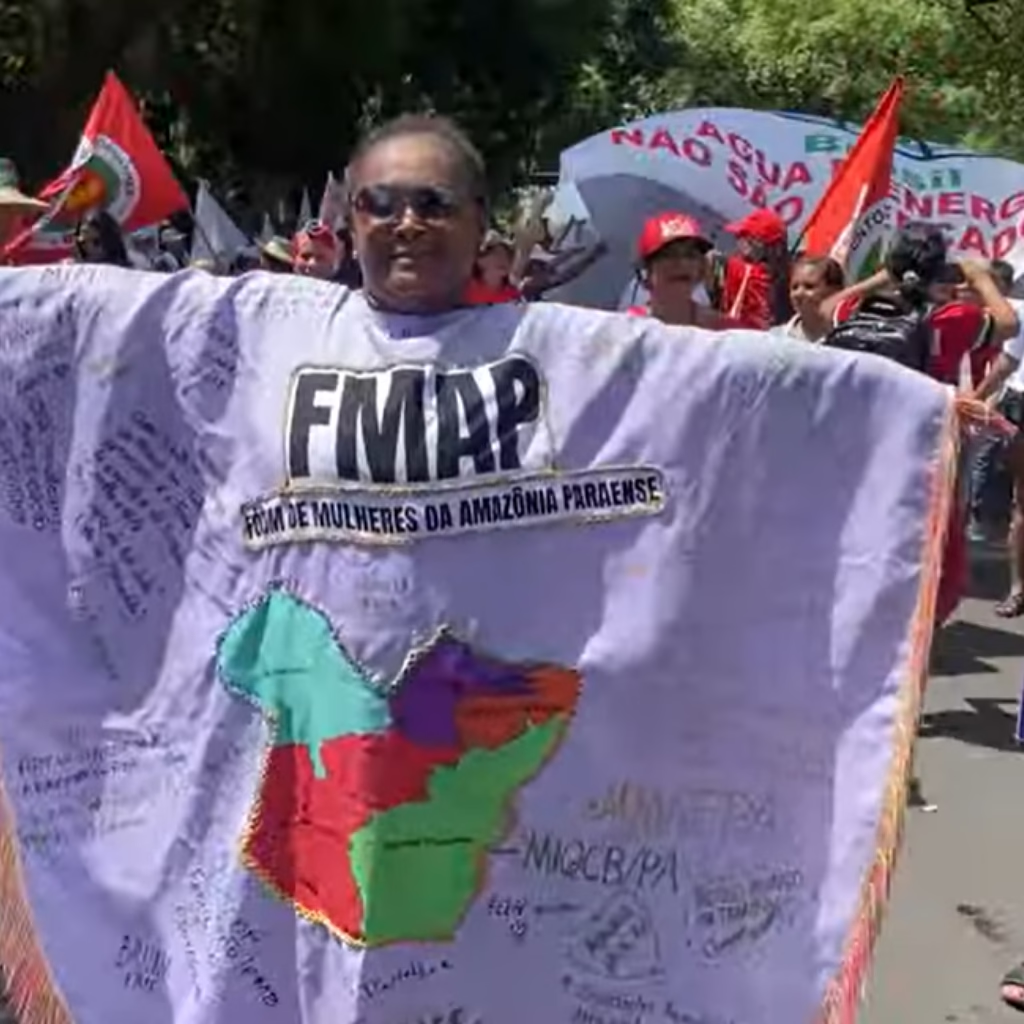
Brasil de Fato Report by Mariana Castro We have reached the year of the 30th United Nations Conference on Climate Change, which should bring together the main world leaders in Brazil. Worldwide, more than 400 popular movements and civil society organizations are also building the People’s Summit. This parallel event to COP-30 should denounce failures in the fight against the climate crisis and present agendas for popular demands. Click HERE
People’s Summit Towards COP 30 Strengthens International Engagement with Activities and Protest Participation in Baku
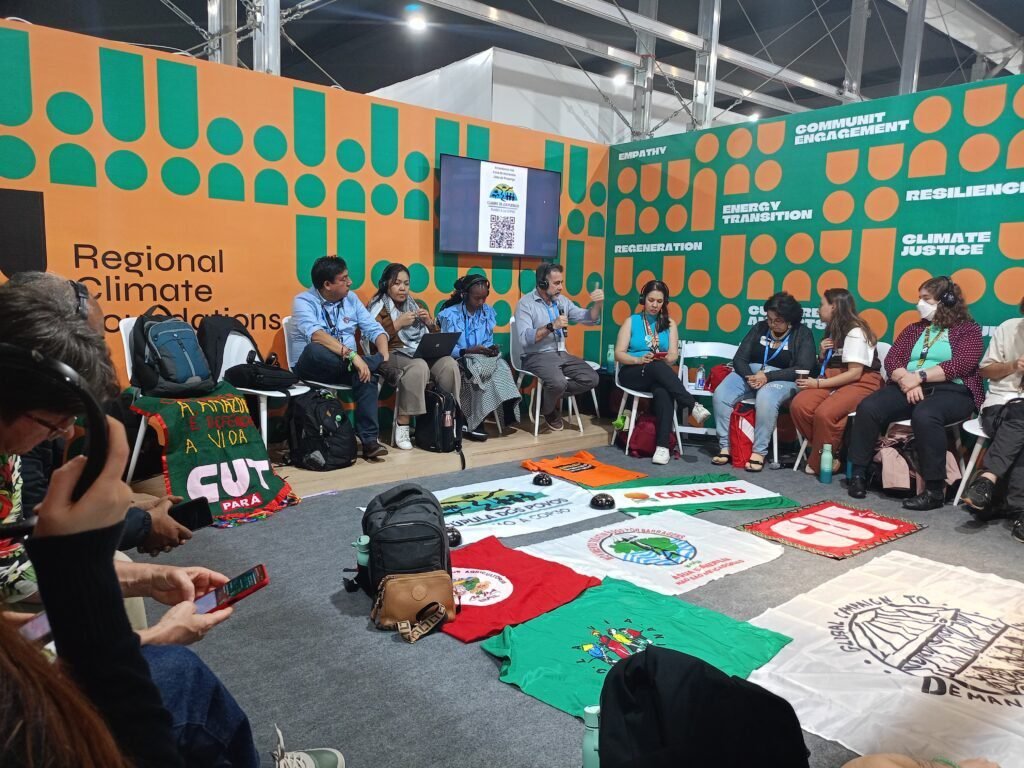
During COP 29, held from November 11 to 22, 2024, in Baku, Azerbaijan, the Cúpula dos Povos Rumo à COP 30 took significant steps to amplify the voices of resilient communities and strengthen the construction of the autonomous process that will culminate in the Summit in Belém in 2025. The Summit carried out two strategic activities focused on discussing the creation of an autonomous space, open to organizations, social movements, and networks that recognize that solutions to the climate crisis must emerge from the experiences and knowledge of communities that protect and live with the biomes. In addition, participation in spaces and protests was marked by impactful interventions, such as that of Thuane Nascimento, from Perifa Connection and the Black Coalition for Rights. Thuane highlighted the importance of having a space to discuss the demands of Afro-descendant peoples in climate conferences. “We still don’t have a space to discuss a Constituent Assembly for Afro-descendant peoples. It would be incredible if Brazil took the lead on this cause and, as COP presidency, put it on the table: we want Afro-descendant people, Black people, as we say in our country, to also have a space to discuss their demands in the United Nations Climate Change Conference spaces, the COPs,” she said. The Cúpula dos Povos has been promoting this debate and will continue mobilizing to ensure that racial issues are present on the global climate agenda before, during, and after COP 30. The presence in Baku was essential to strengthen ties with international movements, reinforce the internationalism of struggles, and consolidate popular participation in decision-making processes regarding the climate crisis. With over 400 organizations signing the Summit’s Political Charter and 325 participants in the last Virtual Plenary held on November 8, the commitment to building an autonomous, popular, and representative process remains strong. The Cúpula dos Povos reaffirms that the Amazon is ours and the future is now.
Climate Justice and Forests: Civil Society Vows to Unite Around a Common Climate Justice Agenda for Belem People’s Summit during COP30
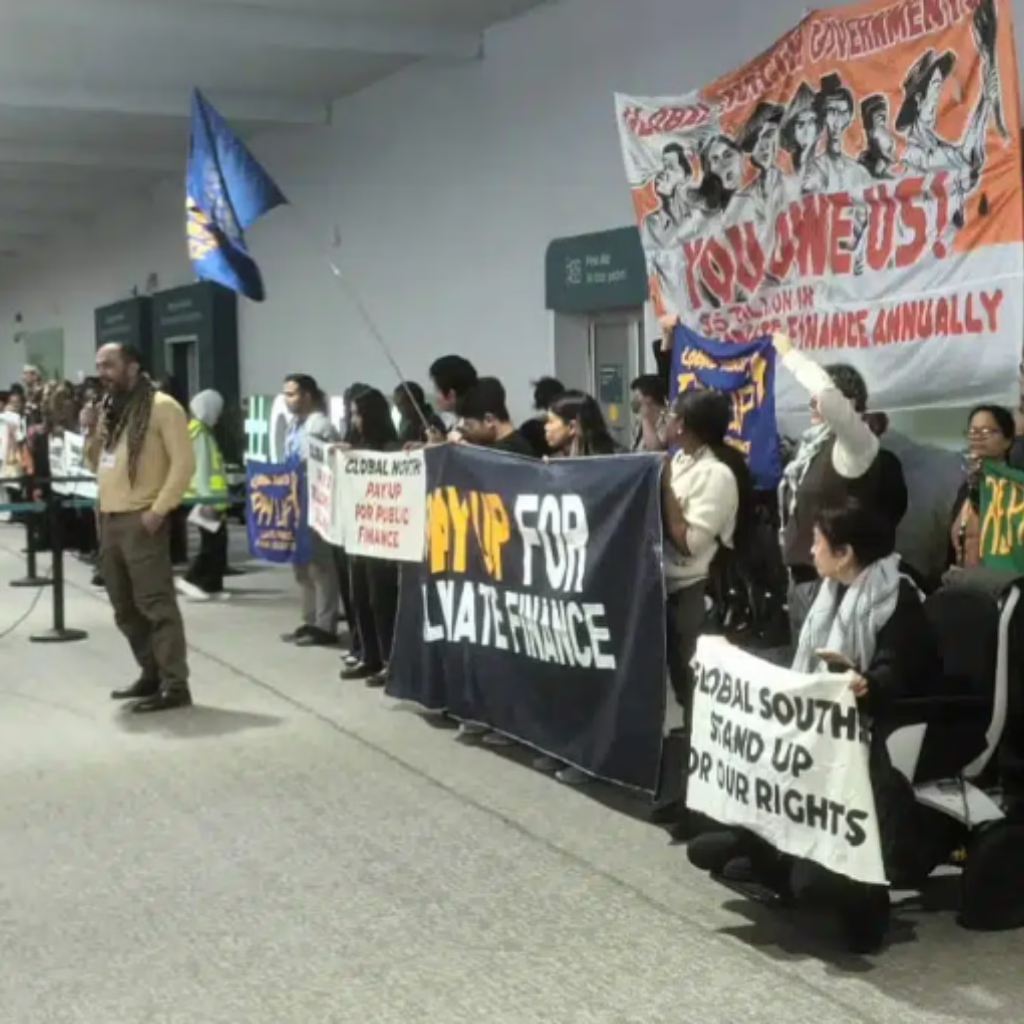
Rejecting the “carbon violence” done to communities through forest offsets and financing that leads to “climate debt,” communities plan to champion real solutions on climate at COP30. Baku, 21 November 2024–In a press conference on Wednesday, nearing the end of the 29th UN Climate Summit (COP29) in Baku, Azerbaijan, Global Forest Coalition representatives offered a stark assessment of the lack of progress on tackling the drivers of climate change, suggesting that hope for the future lies in the social movements and communities that are offering real solutions to the problem, rather than market-based false solutions pushed by governments and corporate actors in the talks. “It’s 32 years since the Rio Declaration, and we’re at the 29th COP. We’re also on the verge of a tipping point,” said Souparna Lahiri, senior climate and biodiversity advisor at GFC. “But are we responding appropriately? Are we not still delaying, distracting, and in denial that the climate crisis is worsening? The UNFCCC is failing… our governments are failing the people.” Lahiri continued: Our demands and concerns are increasingly being ignored in this space. Communities, in addition to bearing the brunt of the climate crisis, are facing increasing oppression on the ground. Any reference to Indigenous Peoples, small farmers, women, or youth is deleted in the negotiating rooms. Any reference to real actions is blocked in the negotiating rooms. Outside the negotiating rooms, civil society groups and leaders are coming together to “carve out our own spaces,” the GFC spokespersons suggested. One example is the Baku Forest Declaration released on 19 November and signed by over 30 organizations around Central Asia and the world. GFC’s regional coordinator for Central Asia, said the Baku Forest Declaration “urges a paradigm shift in climate negotiations to prioritize forest protection, Indigenous rights, and climate justice.” “We call on negotiators and governments to recognize that the time to act is now; if we fail to protect our forests, we fail the planet and future generations,” he said. He suggested that civil society groups would issue another joint declaration on rights-based forest protection, specifically in the Amazon region, during next year’s Climate Conference in Belem, Brazil. Linda Gonzalez from Censat Agua Viva in Colombia and a member of GFC agreed that the most exciting and effective work on addressing the climate crisis is coming from the grassroots. The COPs haven’t brought about big policy changes, but have led to connections among social movements, which are key for advancing environmental, social, economic, and gender justice. We need conditions for real participation, and countries and negotiators must listen actively to them. The solution cannot come from those who caused the climate and environmental crises, nor from carbon markets or biodiversity markets, which benefit financial institutions and companies. It demands the recognition of a historical and ecological debt that requires urgent reparation. The Global Forest Coalition, a network of over 130 groups worldwide, has consistently pointed out the failures of programs like REDD+, which has become a favored false solution to climate change among corporate actors at the UN talks, much like geoengineering or bioenergy from monoculture tree plantations. False solutions, GFC says, often consider—and commercialize—elements of nature in isolation. Nnimmo Bassey of Nigeria, the director of Health of Mother Earth Foundation, spoke of the “carbon violence” done to communities when forests and other elements of ecosystems are taken advantage of as mere “carbon sinks.” Bassey stressed the need to “ensure that the voices of victims of carbon violence across the world are heard. Carbon violence is being perpetuated at every oil well across the global south especially; it is being perpetuated in carbon credit-designated forests. All this is bringing violence to communities who depend on forests. And we can’t go to the Amazon and begin to amplify the same problems. To move forward with meaningful action on climate change, Maureen Santos of FASE Brazil emphasized the need to reexamine perhaps deliberately vague concepts such as ‘climate finance,’ ‘climate action,’ and ‘environmental integrity’ and be more specific about what type of finance and what type of action is needed. “We want climate justice finance, we don’t want climate debt,” Santos said. She slammed the double accounting of forest and biodiversity offsets and fortress-style conservation efforts, emphasizing that “Forests have people inside [them], it’s not only far-away biodiversity.” Santos highlighted preparations for the People’s Summit alongside COP30 in Belem, saying “the idea is to create a common agenda for next year so that we can stay in this process, not only in Latin America and Amazonia but all over the world” with simultaneous mobilizations to “channel our proposals to these spaces that need to make the change. Reproduction from the Global Forest Coalition website