
THE COST OF LIVING: People’s Summit demands an end to “green neocolonialism” and conditions the fight against the climate crisis on the struggle for land and protection for defenders.
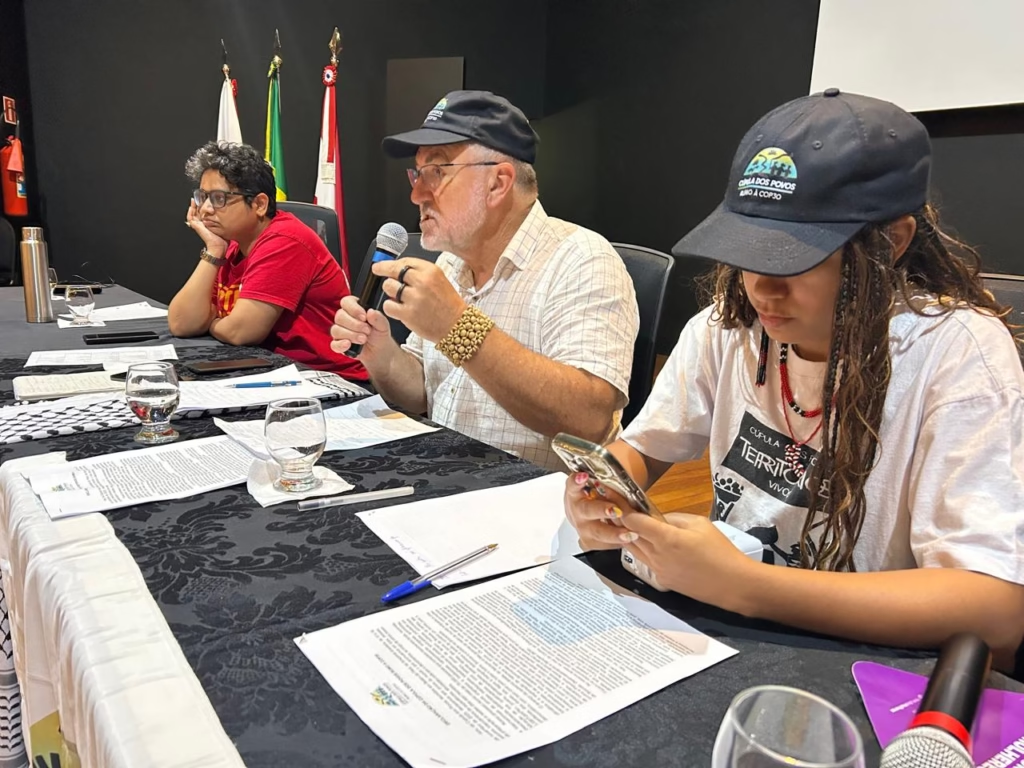
Belém (PA), November 16, 2025 — After five days of intense mobilization, the People’s Summit concluded its activities with a strong press conference, held immediately after the delivery of the final Political Letter to the President of COP30, Ambassador André Corrêa do Lago. The event brought together members of the Summit’s Political Commission, including Darcy Frigo of the Brazilian Committee of Human Rights Defenders, Rachitaa Gulp of the Demand Climate Justice Campaign (DCJ), and Thuane Nascimento of Perifa Connection, who consolidated the position that the climate struggle is inseparably an anti-capitalist and anti-racist struggle. The People’s Summit denounced that the “climate emergency is rooted in colonialism, extractivism, racism, and patriarchy,” condemning an economic system designed to sacrifice our lives for someone else’s profit. End to green neocolonialism and criticism of polluters The global articulation expressed rejection of “false market solutions” and what they described as “Green Neocolonialism,” warning that overcoming the climate crisis is impossible without confronting the central issue of the “structure of access to and use of land and territory.” Movements directly pressured wealthy countries, publicly criticizing the United Kingdom, Canada, the United States, and European nations for continuing to pollute and jeopardize the global future. Urgent demands for COP30 The Summit brought the truth directly into the preparation of this negotiation process, stating that COP30 is at a critical moment to approve the implementation of loss and damage funds, conclude negotiations on ending fossil fuels, and create an effective just transition mechanism that ensures climate action does not result in a “hollow document that protects the interests of the powerful.” In contrast to market-based solutions, the Summit highlighted the multiplicity of proposals and real solutions already being implemented by peoples in their communities and that can be scaled up to global levels. Defenders’ security: struggle and persecution The issue of violence against activists and traditional peoples took on emotional prominence during the press conference. Eduardo Lima, a journalist and human rights defender, the son of peasants with a history of family losses in the struggle for land, questioned the government about security policies. He cited the harsh reality in regions such as the Kayapó Territory and Maranhão, where defenders and Indigenous people are murdered. Darcy Frigo, of the Brazilian Committee of Human Rights Defenders, reinforced the demand for protection for movements that are “penalized and persecuted,” insisting that the fight against the climate crisis must include the essential security of those who protect the Amazon. The final message of the People’s Summit was clear: just climate action is inseparable from the struggle for equity, human rights, and territorial sovereignty, and real change will not come from negotiations alone, but from unified popular power.
People’s Summit closes with record numbers and delivers Political Charter to COP30. There were 25,000 accredited participants and leaders from more than 65 countries, reaffirming the strength of ancestry and international solidarity.
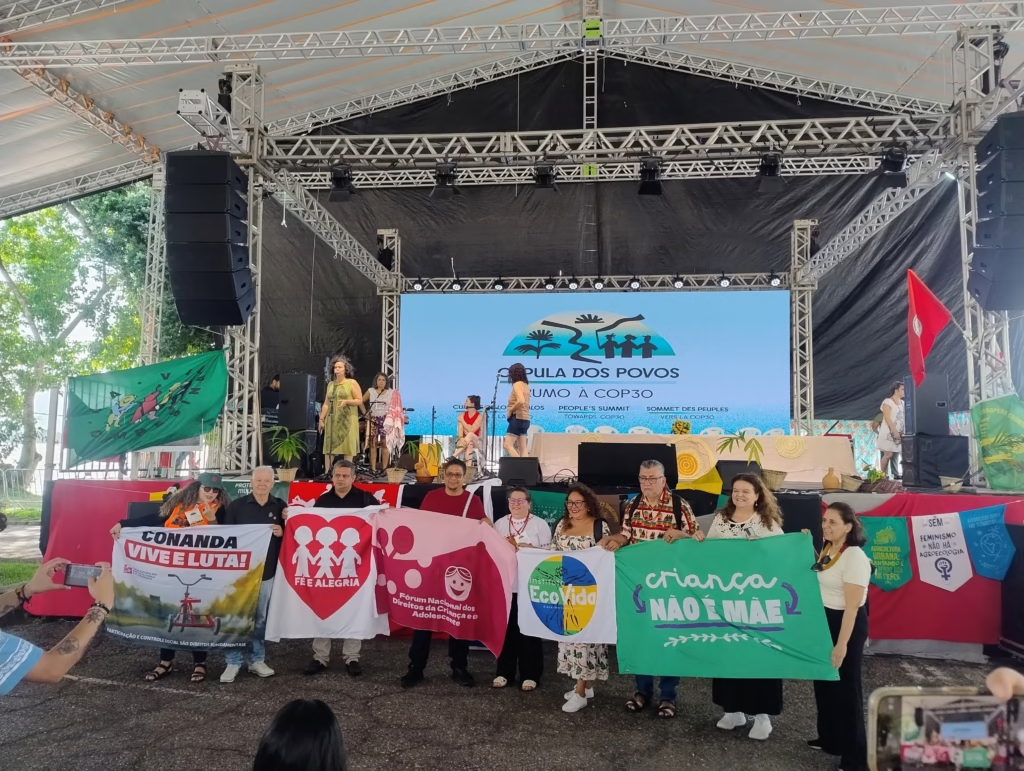
Belém, Pará, November 16, 2025 – The People’s Summit, which mobilized civil society, social movements, and traditional peoples from November 12 to 16 in Belém, concluded its activities with an unprecedented balance of organization and political achievements. In direct contrast to the private-negotiation character of the 30th United Nations Climate Change Conference (COP30), the popular gathering celebrated global unity and the cumulative outcome of two years of political organizing, reinforcing that responses to the climate crisis emerge from territories, not markets. The closing was marked by a Public Hearing held on Thursday morning at the Federal University of Pará (UFPA), where the Summit’s political agenda was formally presented to the President of COP30, André Corrêa do Lago, consolidating a milestone of dialogue between the popular space and the official summit. Participation and adherence figures also underscored the historic scale of the mobilization. According to the balance presented by the political coordination, more than 1,100 organizations signed the Political Charter; leaders and representatives from over 60 countries were present; and more than 25,000 people were accredited, with an estimated daily circulation of around 20,000 people on the UFPA campus. The strength of the gathering was also reflected in its broad public visibility, with coverage by more than 300 national and international media outlets. Solidarity economy and the record-breaking kitchen The People’s Summit also left a concrete legacy in solidarity economy and the fight against hunger, highlighted by the Solidarity Kitchen. Built collectively under the coordination of the Homeless Workers’ Movement (MTST), the Landless Rural Workers’ Movement (MST), the Artisanal Fishers’ Movement (MPA), the Popular Peasant Movement (MCP), the Federation of Organizations for Social and Educational Assistance (FASE), the National Agroecology Articulation (ANA), and other organizations, the initiative served between 9,000 and 12,000 meals per day. This solidarity logistics operation became the largest solidarity kitchen ever organized in Brazil and the largest public procurement under the Food Acquisition Program (PAA) for an event in more than 20 years of the program’s history, demonstrating the potential of agroecology and food sovereignty. The Popular Fair also showcased vibrant experiences in solidarity economy, agroecology, Afro-Brazilian terreiro communities, feminist economy, and traditional ways of life. The strength of ancestry and political unity The closing act was rich in symbolism, with leaders emphasizing that ancestry and tradition are sources of strength for the struggle. Facilitators, referencing the wisdom of leaders such as Chief Raoni, stressed that “faith and joy fight against death and sadness,” underscoring that peoples resist because they celebrate life. Dialogue with the Federal Government The public hearing marked the formal recognition of the peoples’ voices within the COP context. The closing panel included key federal government authorities, signaling recognition of the popular agenda: Sônia Guajajara, Minister of Indigenous Peoples; Marina Silva, Minister of the Environment and Climate Change; and Guilherme Boulos, Minister of the Secretariat-General of the Presidency. They were joined by André Corrêa do Lago, President of COP30; Ana Toni, CEO of COP30; and Eutália Barbosa, Executive Secretary of the Ministry of Women, alongside historic representatives of social movements and members of the People’s Summit Political Commission such as Joseph Antoine (Friends of the Earth International), Denise Chaves (Andean-Amazonian Women’s Initiative), Sérgio da Silva Santos (Coordination of Indigenous Organizations of the Brazilian Amazon – COIAB), Melanie Lazon Eketiúdo Combo (La Via Campesina), Vera Paoloni (Unified Workers’ Central – CUT), and Antônio Crioulo (National Coordination for the Articulation of Rural Black Quilombola Communities – CONAQ). The closing reaffirmed the commitment to carry collectively built demands into COP30, reiterating that the response to the climate crisis is born in territories, popular organizations, and the peoples who protect life.
Children’s Summit concludes with historic approval of the Children’s Charter, drafted and voted on by children and adolescents.
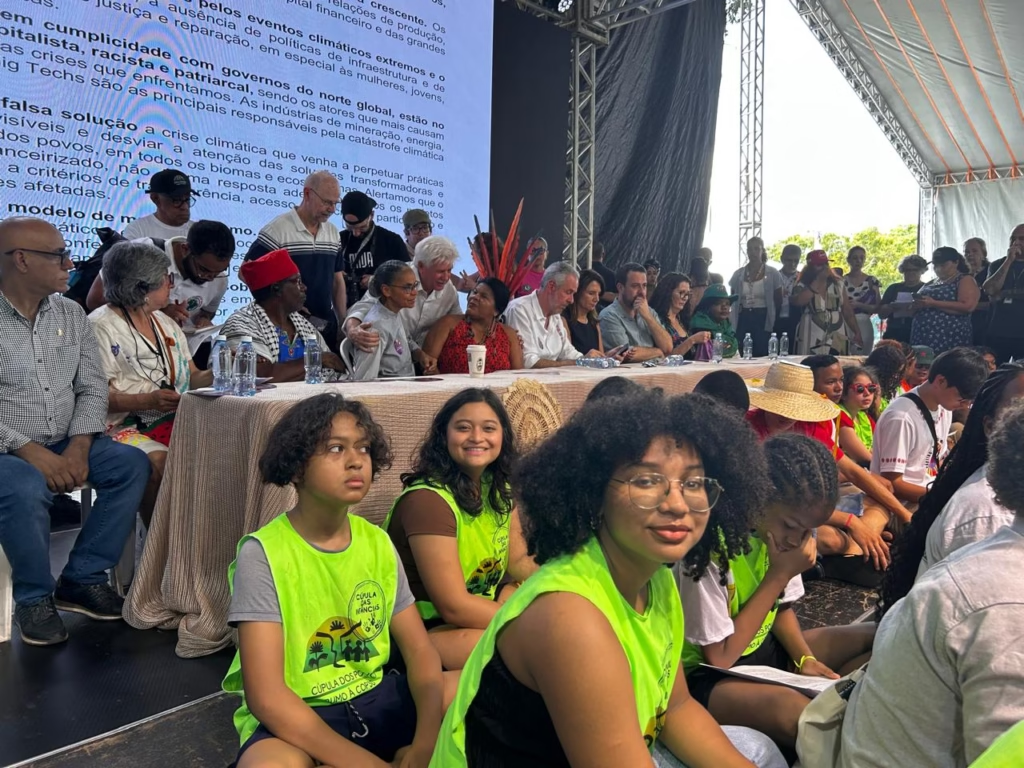
Belém, Pará, November 15, 2025 – In an unprecedented moment, the Children’s Summit concluded its activities this Saturday with the approval, in a final plenary, of the Children’s Charter, a document collectively built and led by children and adolescents. The charter expresses the perceptions, pain, expectations and demands of around 600 children and adolescents, from 0 to 17 years old, who took part in the movement held last week in Belém as part of the People’s Summit. Over five days, children and adolescents from different territories—river islands, urban peripheries, quilombola communities, Indigenous lands, riverside communities and urban centers of the Amazon and other regions of Brazil—shared experiences about how climate change directly affects their lives. The program, documented and followed by the @cupuladasinfancias profile, brought together talking circles, workshops, cultural activities and care spaces, prioritizing listening and the autonomy of children. In the charter, children and adolescents call out: “Take care of our planet now. We want to stay alive,” while reporting, in their own words, the real impacts of extreme heat, smoke from wildfires, the lack of trees in schools, polluted rivers and illness caused by the climate crisis. Participation as a central pillar The final plenary, led by adolescents, marked a symbolic and political moment: children occupying a space traditionally reserved for adults. “We don’t have power, money or important positions, but we have the future,” states one of the most striking passages of the document. Another central point is the demand that children be genuinely heard: “Adults must do their part, because we are doing ours. And they must listen to us—because many times they tell us to be quiet when we try to speak.” Throughout the week, adolescents and children had opportunities not only to express themselves and take part in the agenda parallel to COP30, but also to engage in dialogue with international bodies and with politicians, authorities and government representatives, including the Minister of Health, Alexandre Padilha, First Lady Janja Lula da Silva, and the Secretary for Continuing Education for Youth and Adults and Inclusion at the Ministry of Education, among others. About the Children’s Summit Created as an official part of the People’s Summit, the initiative positions children and adolescents as protagonists in the climate debate. In addition to bringing together more than 600 participants, the space involved educators, civil society organizations, cultural collectives and community leaders who work daily to guarantee rights and promote climate justice from the perspective of children. To ensure listening and recognition of everyone’s participation, including early childhood (ages 0 to 6), specialists adapted the methodology, used games and playful activities, and brought babies to interact in nature-based spaces. The Children’s Charter will now be forwarded to civil society representatives, governments, international delegations and bodies involved in COP30, reinforcing the urgency of climate responses that take into account those who already feel, today, the effects of global warming.
The rallying cry of the Children’s Summit echoes in the final plenary of the People’s Summit for free territories and protected children.
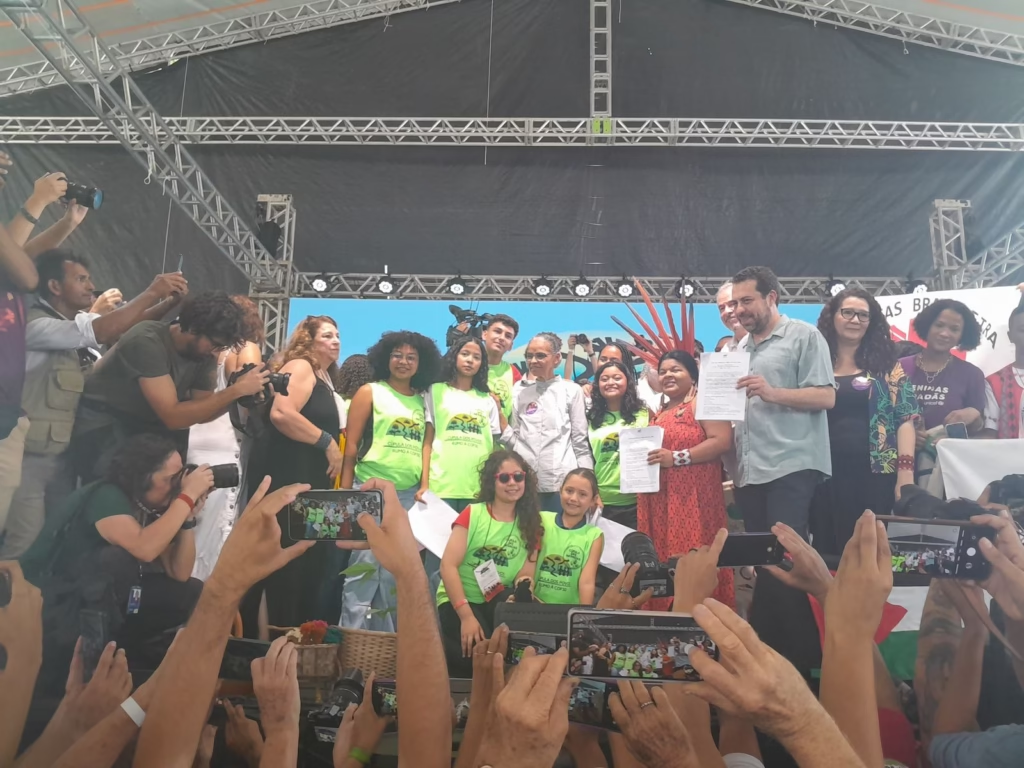
“Free territories; protected children”: the rallying cry of Amazonian children took over the entire final plenary of the People’s Summit this Sunday, the 16th, in Belém. The demonstration opened the children’s participation in the program, which also included the reading and delivery of the Children’s Charter to some of the main authorities of COP30: Ambassador André Corrêa do Lago, COP President; Ana Toni, CEO of the Conference; Marina Silva, Minister of the Environment and Climate Change; Sônia Guajajara, Minister of Indigenous Peoples; Guilherme Boulos, Minister of the General Secretariat of the Presidency; among other authorities. Before the formal delivery of the document, the commission of children and adolescents read the charter to the authorities and to the entire plenary, moving everyone and drawing applause from all present. Minister Marina Silva was among those visibly moved. “As these children were speaking, the image came to me of someone who started working very early, at five years old. I was very thin. At ten we began cutting rubber. All of this makes me reflect that only in a democracy can the rubber tapper and Indigenous peoples reach where we have reached,” she said, calling on all of society to mobilize for the climate. “The fight against climate change needs the mobilization of all of society. Your enthusiasm and engagement are fundamental for us to continue this struggle.” The adolescents who took the stage alongside the main COP30 authorities represented 600 children who, after a week of intense activities and debates, approved the Children’s Charter yesterday. The document expresses the perceptions, pain, expectations, and demands of around 600 children and adolescents aged 0 to 17 who took part in the movement. Over five days, children and adolescents from different territories— islands, urban peripheries, quilombos, Indigenous lands, riverside communities, and urban centers of the Amazon and other regions of Brazil—shared experiences of how climate change directly affects their lives. In the charter, children and adolescents ask, “Take care of our planet now. We want to stay alive,” while reporting, in their own words, the real impact of extreme heat, smoke from fires, the lack of trees in schools, polluted rivers, and illness caused by the climate crisis. Present at this Sunday’s plenary were adolescents and children from the Adolescent Participation Committees of the State and National Councils for the Rights of Children and Adolescents, as well as riverside children from Cáritas projects in Abaetetuba and from the Tela Firme Collective, an urban resistance group in Belém, among others. More than 120 organizations working on children’s rights participated directly and indirectly in the Summit.
CLOSING OF THE PEOPLE’S SUMMIT
Today’s morning program, from 9:30 am to 12:30 pm INVITATION TO JOURNALISTS LOCATION: PLENARY TENT 1 (on the riverbank, next to the riverbank), at UFPA. Today’s Program (16) 10 am – Delivery of the Children’s Summit Letter 10 am – Reading of the Declaration at the Audience with the COP30 presidency *with the confirmed presence of André Correia do Lago and Ana Toni, president and executive director of COP, Marina Silva, Minister of the Environment and Climate Change and of the Global Ethical Balance, and Kayapó chief Raoni Metuktire. 11:00 AM – Closing of the People’s Summit at UFPA 2:00 PM – Feast at Praça da República 📍PRESS CONFERENCE📍 BENEDITO NUNES AUDITORIUM 11:30 AM – Press conference with a summary of the Summit.
Food is a political act!
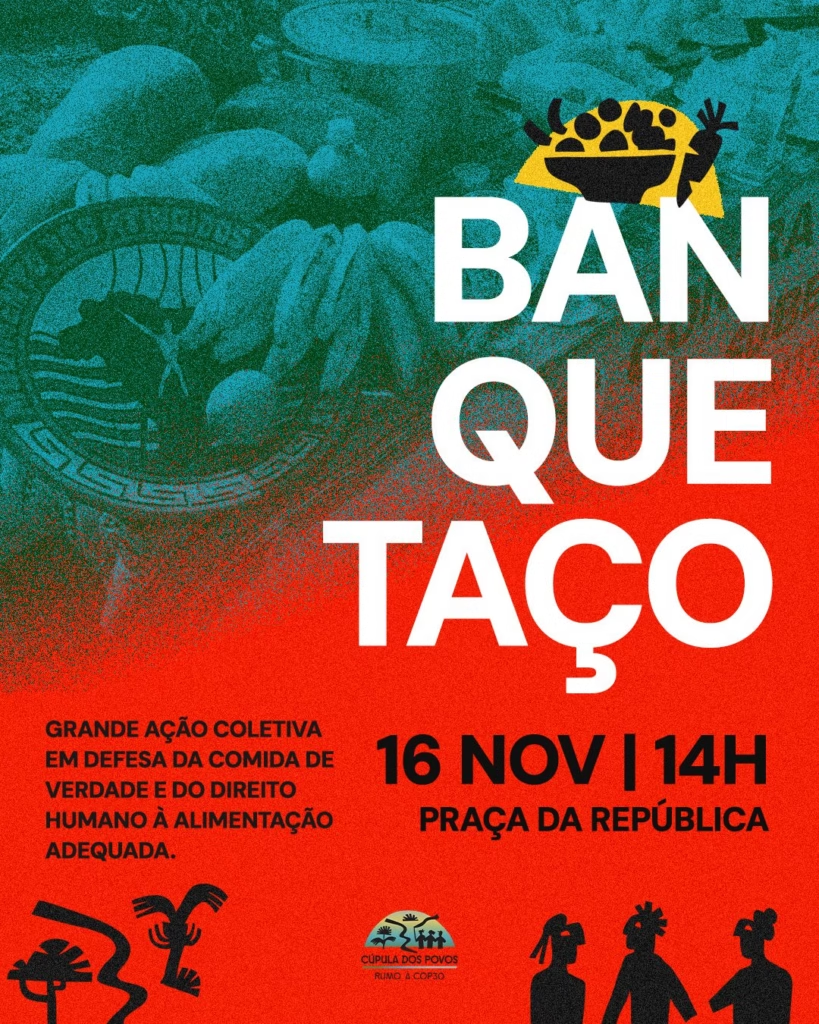
Food is a political act! 🍛✊🏽 The People’s Summit’s “Banquetaço” (Big Feast) concludes the program on November 16th, bringing together collective kitchens, agroecological foods, and popular sharing right there in Praça da República (Republic Square). A celebration of the human right to adequate food and real food, from field to table. People’s Summit, November 12th to 16th in Belém do Pará, the world meets here. 🌍 #Banquetaço #CúpulaDosPovos #ComidaDeVerdade #SoberaniaAlimentar #Belém People’s Summit, November 12-16 in Belém do Pará, the world meets here. 🌍 #Banquetaço #PeoplesSummit #RealFood #FoodSovereignty #Belém
50,000 people take over Belém: Global March for Climate Justice demands a ‘COP of Truth’ and an end to fossil fuel dependency in the Amazon.
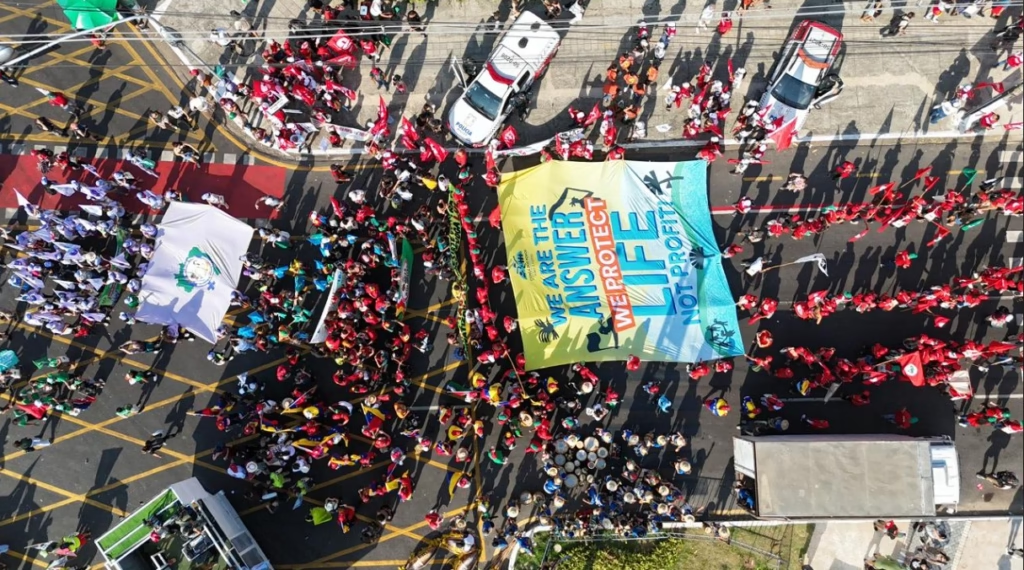
In a historic act, Ministers Marina Silva and Sônia Guajajara joined movements and leaders from 65 countries, affirming that the solution to the climate crisis comes from the “guardians of life” and the construction of a new “roadmap.” The capital of Pará state is hosting a massive demonstration of popular and political strength with the Global March for Climate Justice, on the fifth day of the 30th United Nations Climate Change Conference (COP30). The March reinforces the voice of the Global South with the participation of more than 30,000 people from around the world. The route is 4.5 km long, between the São Brás Market and the Cabana Village, organized into blocks of Social, Internationalist, and Just Transition Movements. The act translates into a powerful warning: the peoples who resist daily deforestation and the greed that commodifies land and life are the true agents responsible for guiding the climate solution. The protest is the main political counterpoint to the official leadership, uniting the agenda of the federal government and the voice of the grassroots in a single square. The voices of the Amazon: Sônia Guajajara and Marina Silva The most emblematic moment of the morning is the participation of Ministers Marina Silva (Environment and Climate Change) and Sônia Guajajara (Indigenous Peoples), who endorse the March, recognizing the street as the fundamental space for democracy and climate justice. Sônia Guajajara, Minister of Indigenous Peoples, emphasizes that the Amazon has become the center of the global debate: “We, the indigenous peoples, who have always been here, are gathered here at this moment to welcome the world. It is the Amazon’s turn to speak to the world. It is our turn to meet the Cerrado, the Atlantic Forest, the Pampa, the Pantanal, the Caatinga, which are also being destroyed. That is why this place becomes, at this moment, the blue zone of COP30, where the guardians of life meet.” The Minister reaffirms that the indigenous movement and traditional peoples are responsible for resisting the ills caused by greed. Marina Silva, Minister of the Environment and Climate Change, welcomes the event, contrasting popular participation with the history of closed summits: “In other political realities of the world, where demonstrations were only held within the UN space, now, in Brazil, a country of the Global South, with a hard-won and consolidated democracy, welcome to the squares.” The Minister repeats President Lula’s call, demanding that COP30 be the “COP of truth” and “implementation,” and that the priority be the end of fossil fuel dependence. “We have to map out the path to transition, to the end of dependence on coal, oil, and gas. It is fundamental that the world demonstrates that we will indeed adapt. […] Our commitment is zero deforestation.” Marina Silva reinforces that the struggle involves combating environmental racism, the destruction of Mother Earth, and the dependence of diverse peoples, recognizing the work of rubber tappers, riverside communities, coconut breakers, and quilombola communities. Alert and Commitment The March is organized based on the urgent need to ensure that the voices of the streets – those affected, those in the peripheries, indigenous peoples, and workers – are heard at the COP30 negotiation tables. The 4.5 km route is a symbol of global resistance demanding the fulfillment of climate goals and the construction of a Just Transition Project that moves from theory to practice in the Global South.
105,000 meals: The People’s Summit Kitchen is a manifesto of agroecological sovereignty against false climate solutions.
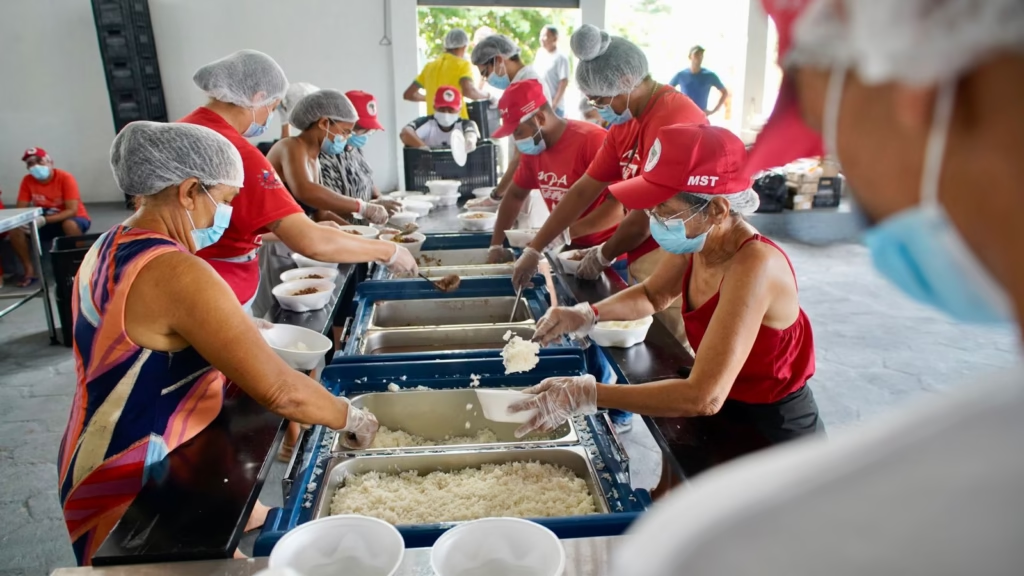
The community kitchens organized by the MTST symbolize the resistance that connects the countryside and the city, the river and the forest, in confronting the corporate model of exploitation. “In reality, the Community Kitchen is the consolidation of the entire process that begins with the struggle for land. So, we fight for the land, we conquer the land, whether it’s extractive reserves or rural settlements.” Fábio Pacheco, a member of ANA, explains that the productive process based on agroecology, using the public policies that the movements also fought for, is the path to building climate justice. “From this process, transforming actions in the territories into mass policies, as shown by the Food Acquisition Program (PAA), we strengthen the protagonism of those who build food supply from the territories and make it clear that the path to development passes through popular construction, territorial sovereignty, and agroecology. With public funding and without false solutions orchestrated by the financial market painted green.” It’s important to say that the kitchen carries the spirit of the struggle for land, for production, for market access, and for the public policies that support this entire process. When people produce food, they are working from this perspective. They understand the importance of cooking real food. “And when they deliver this to vulnerable populations at these gatherings, they are delivering a piece of the struggle there, packaged in a hot meal, and enjoying the taste of all the achievements of this struggle,” says Pacheco. The Role of Food at this Summit Ayala Ferreira, national leader of the Landless Rural Workers Movement (MST), emphasizes that quality food, originating from the territories themselves, is an essential condition for the success of the People’s Summit mobilization. The leader clarifies that, during the planning of the summit, it became evident that the agenda of climate justice must necessarily encompass food, as it “connects important problems and solutions from the territories.” Ferreira adds, highlighting the political role of the initiative: “Furthermore, nobody goes to the march, to the struggle, to the debates on an empty stomach. In this summit, food has an embedded political project. That’s the great message we want to emphasize.” The origin of the ingredients: The map of food sovereignty More than just feeding the registered delegations, the People’s Summit strategically aimed to transform food into a manifesto of resistance and struggle against agribusiness, which doesn’t fill the plates of the Brazilian people. And here everything was carefully thought out, a menu that prioritizes natural, fresh foods directly from the territories of small farmers, those who begin caring for the food from the moment they plant the seed in the ground. Settlers from the Landless Workers’ Movement (MST) are supplying the vegetables and pulp produced by agrarian reform settlements, small farmers from the Popular Peasant Movement (MCP) are supplying the rice, beans, and flour. Asproc, a cooperative of extractivists from Manaus, is supplying the sustainably managed pirarucu fish. Coconut breakers from the Interstate Movement of Babaçu Coconut Breakers (MQCB) supplied the oil produced in traditional communities that live from the extraction and sale of Babaçu products. And cooperatives of small farmers from São Luiz are supplying the chicken. In numbers At the final plenary session (November 14th), Fernando Campos Costa, from the Political Commission of the People’s Summit and coordinator of the Homeless Workers’ Movement (MTST), highlighted the great contribution of the People’s Summit’s People’s Kitchen, which, according to him, represents an unprecedented logistical and political effort. “The project is serving an impressive total of 160 tons of food over the five days of the event. That’s 21,000 meals a day.” To sustain this operation, approximately 300 people were mobilized, including volunteers and permanent staff, responsible for processing more than 4 tons of food daily. Everything is fresh, supplied exclusively by family farms and social movements (MST, MCP, MQCB), ensuring that delegations from 62 countries are fed with food that represents struggle and sovereignty. Photos: Rodrigo Duarte/@rodrigobduartee
Global March for Climate Justice to Bring Thousands to the Streets of Belém, the COP Capital, This Saturday
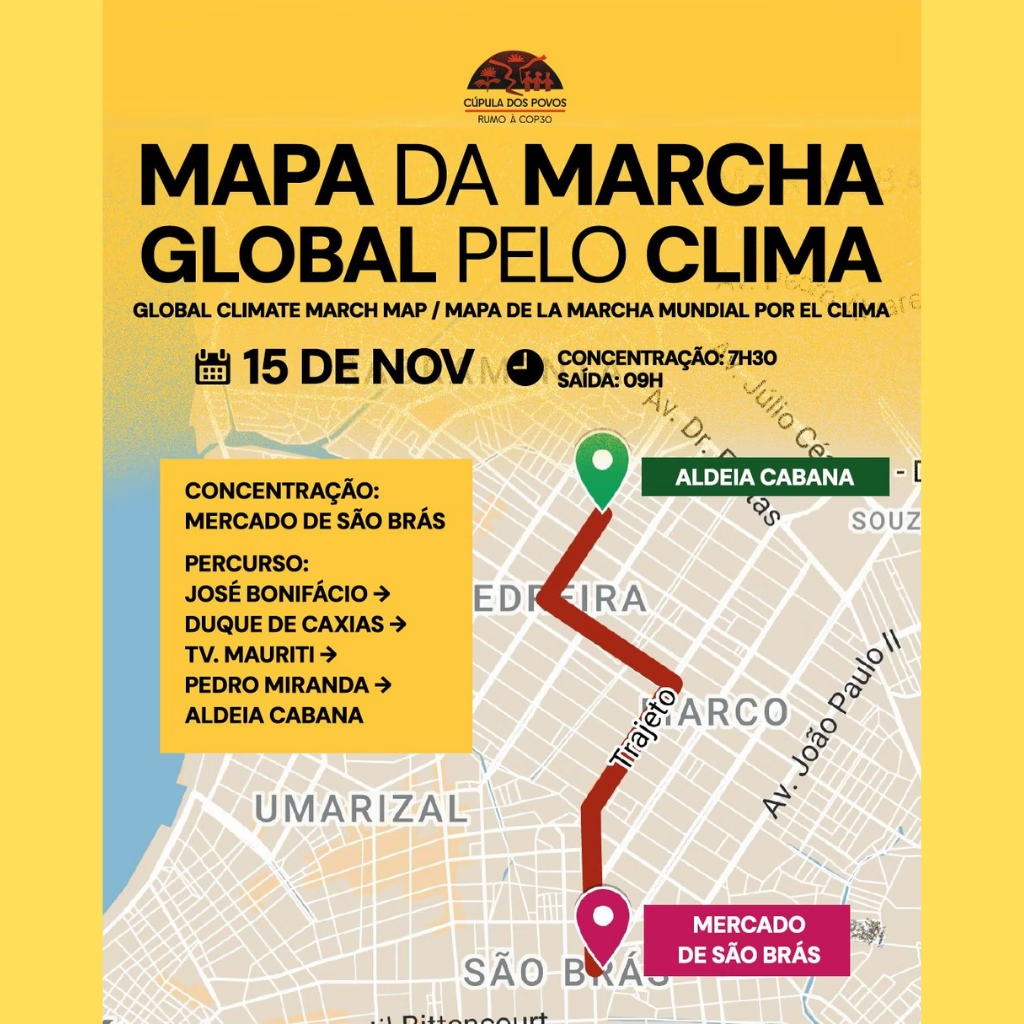
The People’s Summit is expected to bring around 30,000 people to the streets of Belém, the capital of COP30, during the Global March for Climate Justice scheduled for this Saturday, November 15. This major street demonstration will cover 4.5 kilometers, with peoples from various countries coming together to deliver messages to the world in defense of real solutions to the climate crisis. As protagonists of real solutions, Indigenous peoples, Quilombola communities, fishers, youth, workers, men, women, trans people and children, mobilized through a broad network of civil society organizations, will march with a shared goal: to demand reparations for the damage that corporations and governments have caused to society, especially to traditional and peripheral peoples, by betting on false solutions aimed at eliminating or reducing impacts. The Global March for Climate Justice reaffirms that there is no time for illusions. So-called market-based solutions such as carbon credits, forest offsets, geoengineering and the privatization of territories deepen inequalities, allow major polluters to continue polluting, and displace entire communities in the name of a “transition” that is nothing more than greenwashing. The political document of the People’s Summit denounces that, while corporations profit from the crisis, it is the peoples of the territories—those who contributed least to global warming—who bear the most violent impacts. These include floods, extreme droughts, biodiversity loss, food insecurity, and the advance of extractivist projects that violate human rights. For this reason, the Global March for Climate Justice demands that decisions about the future of the climate be made based on justice, the science of the peoples, and the defense of life, rather than on the economic interests that have historically captured UN negotiations. The march will also echo the message that there can be no climate justice without social justice, affirming that real solutions already exist and are built daily in the territories through agroecological practices, community-based management, solidarity economy initiatives, ancestral protection of biodiversity, food sovereignty, and traditional practices of caring for waters and forests. The mobilization aims to symbolically mark the meeting between the peoples of the Amazon and delegations from all continents in a global call: “Climate Justice Now – an end to false solutions and in defense of solutions coming from the territories.” Among the key demands raised in the mobilization are• Historical reparations and accountability of rich countries and corporations for the damage caused• An end to false solutions that turn nature into a financial asset• Protection of territories and sea territories, with the immediate demarcation of Indigenous and Quilombola lands• A just, popular and inclusive transition, with guaranteed rights and meaningful participation for workers and communities• Strengthening democracy and confronting environmental racism and inequalities• Centrality of sea territories and water territories, recognizing the role of riverine peoples, artisanal fishers and coastal communities in defending the Amazon and the oceans March Route – November 15 7:30 am – Gathering at São Brás Market, in the São Brás neighborhood9:00 am – Departure from São Brás Market11:00 am – Arrival at Aldeia Cabana, in the Pedreira neighborhood Route – Duque de Caxias Avenue, Mauriti Street and Pedro Miranda Avenue
Climate Justice in Focus: People’s Summit at COP30 Moves Towards Mobilization with March, Letter, and Anti-Hunger Act
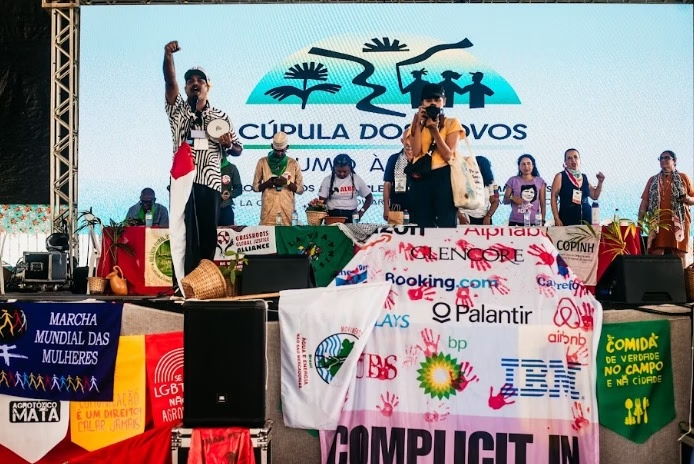
The People’s Summit towards COP 30 intensifies its agenda with events held inside and outside the Federal University of Pará focused on international solidarity with peoples and pressure for climate justice, including a just energy and ecological transition, reparation for damages caused, especially to traditional peoples and rural and urban peripheries, and fair, direct, and public climate financing. The three central points of the agenda that will mobilize leaders from 62 countries, activists from 5 continents, indigenous leaders, quilombolas, fishermen, rural and urban marginalized communities, social movements, organizations, and articulation networks are the Great People’s March for Climate Justice (Nov 15), the Banquetaço (Public Banquet/Feast), and the delivery of the People’s Letter to the President of COP 30 (Nov 16), André Corrêa do Lago. The presence of President Lula is expected. ______________ Great People’s March (November 15) The People’s Summit is expected to bring around 30,000 people to the streets of Belém, the COP30 capital, for the Global March for Climate Justice scheduled for this Saturday, November 15. This major street event will cover 4.5 kilometers with peoples from various countries carrying messages to the world in defense of real solutions to the climate crisis. Protagonists of real solutions—Indigenous peoples, quilombolas, fishermen, youth, workers, men, women, trans people, and children—mobilized in a broad network of civil society organizations will march for a common goal: to demand reparation for the damages that corporations and governments cause to society, especially to traditional and marginalized communities, by betting on false solutions for eliminating or reducing impacts. The Global March for Climate Justice reaffirms that there is no time for illusions. So-called market solutions, such as carbon credits, forest offsets, geoengineering, and the privatization of territories, deepen inequalities, allow major emitters to continue polluting, and displace entire communities in the name of a “transition” that is nothing more than greenwashing. The political document of the People’s Summit denounces that while corporations profit from the crisis, it is the peoples of the territories who have contributed least to global warming who bear the most violent impacts. These include floods, extreme droughts, loss of biodiversity, food insecurity, and the advance of extractivist projects that violate human rights. Therefore, the Global March for Climate Justice demands that decisions about the future of the climate be based on justice, the science of the peoples, and the defense of life, and not on the economic interests that have historically captured UN negotiations. The march will also echo the message that there will be no climate justice without social justice, advocating that real solutions already exist and are built daily in the territories through agroecological practices, community management, solidarity economy, ancestral protection of biodiversity, food sovereignty, and traditional practices of water and forest care. The mobilization aims to symbolically mark the encounter between the peoples of the Amazon and delegations from all continents in a global call: “Climate Justice Now – For the end of false solutions and in defense of solutions coming from the territories.” Among the key focus areas defended in the mobilization are: • Historic reparation and accountability of rich countries and corporations for the damages caused. • End of false solutions that turn nature into a financial asset. • Protection of territories and maretórios (coastal/maritime territories), immediate demarcation of Indigenous and quilombola lands. • Just, popular, and inclusive transition, with guaranteed rights and listening for workers and communities. • Strengthening democracy, tackling environmental racism and inequalities. • Centrality of maretórios and water territories, recognizing the role of riverine peoples, artisanal fishermen, and coastal communities in the defense of the Amazon and the oceans. March Route (November 15) • 7:30 AM – Assembly at the Mercado de São Brás, in the São Brás neighborhood. • 9:00 AM – Departure from Mercado de São Brás • 11:00 AM – Arrival at Aldeia Cabana, in the Pedreira neighborhood. • Route – Avenida Duque de Caxias, Travessa Mauriti, and Avenida Pedro Miranda. ______________ The Dish is Political: Banquetaço (November 15) Banquetaço: the popular manifestation that transforms food into a political act arrives at the People’s Summit On Sunday, November 16, the People’s Summit will hold the “Banquetaço” (Public Feast/Banquet) at Praça da República, at 2:00 PM. This will be the third major moment of direct connection with the streets of the COP capital, where participants will distribute food to the population. The Banquetaço is a public mobilization created by organizations, social movements, and collectives linked to the struggle for land, agroecology, and food sovereignty in Brazil. It emerged as a direct response to the dismantling of food security policies during the Bolsonaro government, a period when the country saw the end of the National Food and Nutritional Security System and the accelerated return of hunger to millions of Brazilian homes. In this scenario, community cooks, family farmers, traditional peoples, urban organizations, and agroecology collectives began to occupy squares and streets in various regions of the country with large public banquets. These acts distributed food for free to denounce hunger, demand public policies, and assert that healthy food produced in the territories is a right and not a privilege. More than a gesture of solidarity, the Banquetaço has consolidated itself as a highly symbolic political action. By serving food to those who need it most, the movements denounce the violence of hunger that is exacerbated by extreme climatic events and the system that fuels these impacts. They also reaffirm the centrality of food sovereignty as a pillar of social and climate justice in Brazil. At the People’s Summit towards COP30, the Banquetaço was incorporated as an essential part of the programming because food is not just logistics. It is politics. The Summit’s proposal is to ensure that its structure reflects the values it defends as real solutions coming from the territories, through the popular economy, respect for ways of life, and defense of local food production. Thus, bringing the Banquetaço into the Summit reinforces that the climate struggle necessarily involves the fight against hunger and the valorization of agroecological practices