The People’s Summit is expected to bring around 30,000 people to the streets of Belém, the capital of COP30, during the Global March for Climate Justice scheduled for this Saturday, November 15. This major street demonstration will cover 4.5 kilometers, with peoples from various countries coming together to deliver messages to the world in defense of real solutions to the climate crisis.
As protagonists of real solutions, Indigenous peoples, Quilombola communities, fishers, youth, workers, men, women, trans people and children, mobilized through a broad network of civil society organizations, will march with a shared goal: to demand reparations for the damage that corporations and governments have caused to society, especially to traditional and peripheral peoples, by betting on false solutions aimed at eliminating or reducing impacts.
The Global March for Climate Justice reaffirms that there is no time for illusions. So-called market-based solutions such as carbon credits, forest offsets, geoengineering and the privatization of territories deepen inequalities, allow major polluters to continue polluting, and displace entire communities in the name of a “transition” that is nothing more than greenwashing.
The political document of the People’s Summit denounces that, while corporations profit from the crisis, it is the peoples of the territories—those who contributed least to global warming—who bear the most violent impacts. These include floods, extreme droughts, biodiversity loss, food insecurity, and the advance of extractivist projects that violate human rights.
For this reason, the Global March for Climate Justice demands that decisions about the future of the climate be made based on justice, the science of the peoples, and the defense of life, rather than on the economic interests that have historically captured UN negotiations.
The march will also echo the message that there can be no climate justice without social justice, affirming that real solutions already exist and are built daily in the territories through agroecological practices, community-based management, solidarity economy initiatives, ancestral protection of biodiversity, food sovereignty, and traditional practices of caring for waters and forests.
The mobilization aims to symbolically mark the meeting between the peoples of the Amazon and delegations from all continents in a global call: “Climate Justice Now – an end to false solutions and in defense of solutions coming from the territories.”
Among the key demands raised in the mobilization are
• Historical reparations and accountability of rich countries and corporations for the damage caused
• An end to false solutions that turn nature into a financial asset
• Protection of territories and sea territories, with the immediate demarcation of Indigenous and Quilombola lands
• A just, popular and inclusive transition, with guaranteed rights and meaningful participation for workers and communities
• Strengthening democracy and confronting environmental racism and inequalities
• Centrality of sea territories and water territories, recognizing the role of riverine peoples, artisanal fishers and coastal communities in defending the Amazon and the oceans
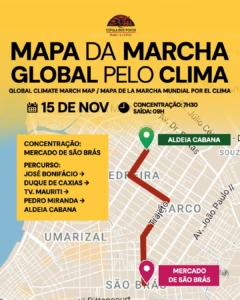
March Route – November 15
7:30 am – Gathering at São Brás Market, in the São Brás neighborhood
9:00 am – Departure from São Brás Market
11:00 am – Arrival at Aldeia Cabana, in the Pedreira neighborhood
Route – Duque de Caxias Avenue, Mauriti Street and Pedro Miranda Avenue